

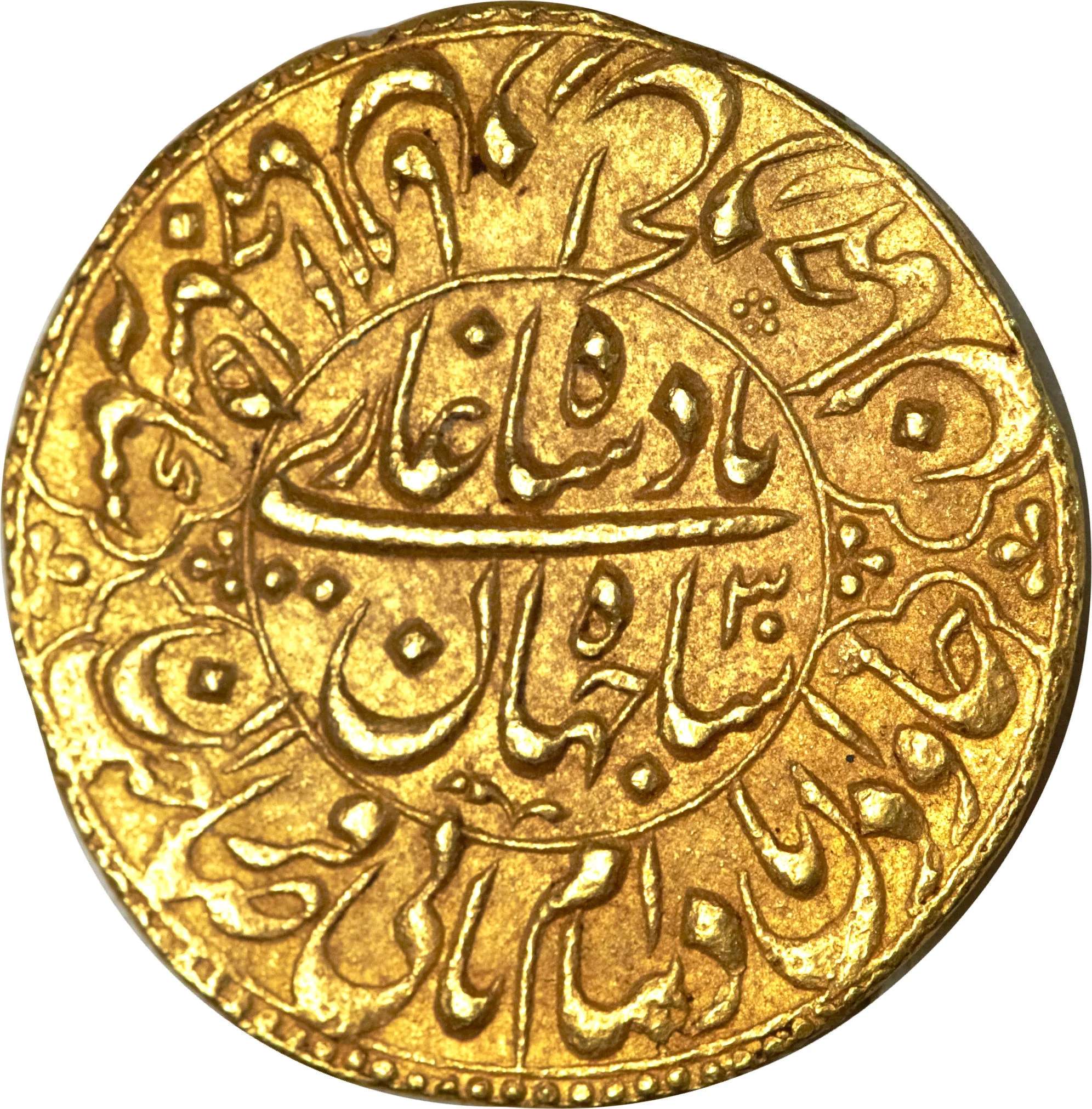
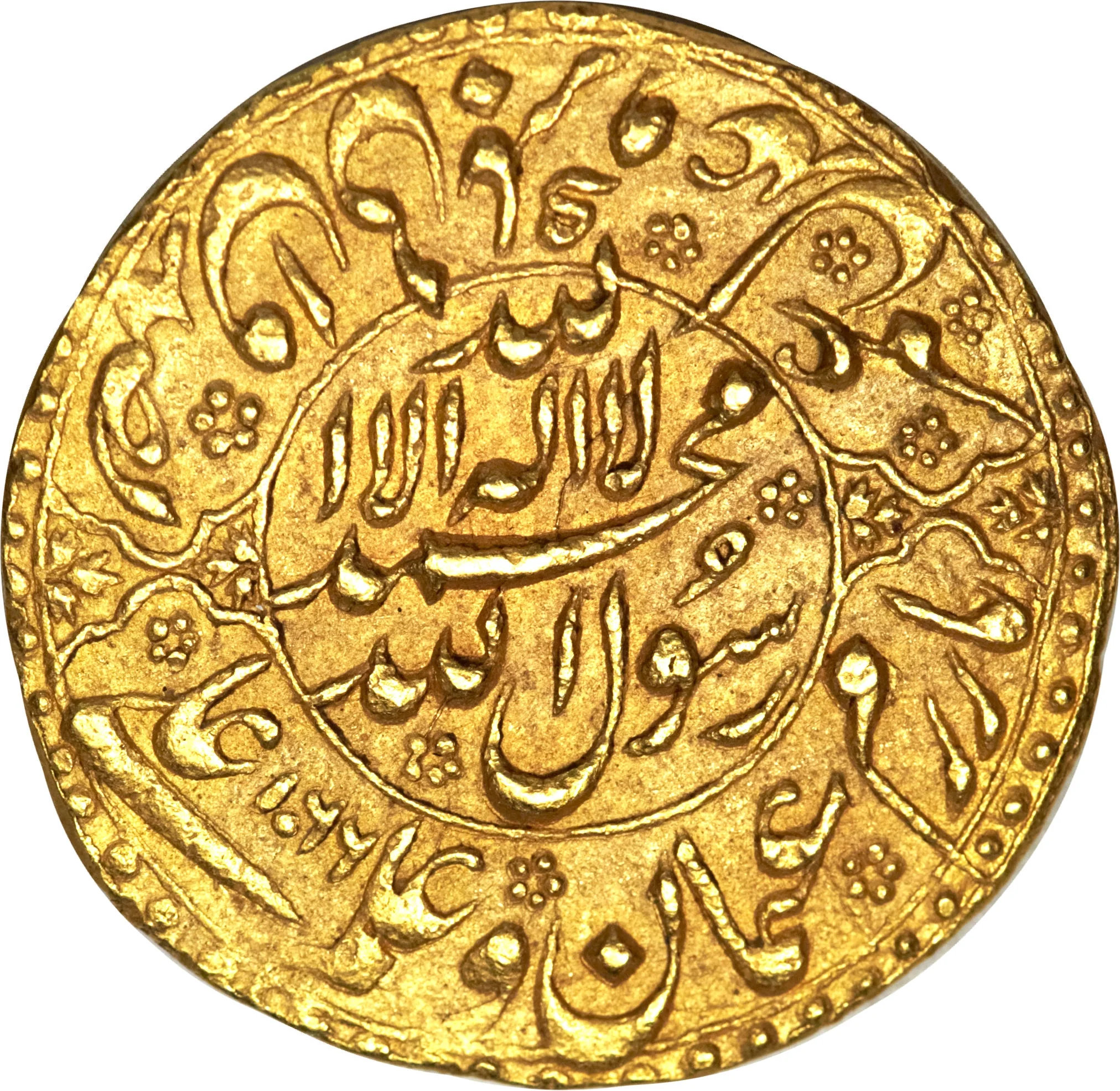
1 Mohur – Mughal Empire
India
Context
Years: 1651–1657
Country: India 
Issuer: Mughal Empire
Ruler: Shah Jahan
Currency:
(1540—1842)
Demonetized: Yes
References
KM: #Click to copy to clipboard262.1
Numista: #50462
Value
Bullion value: $1836.90
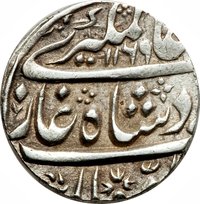
Obverse
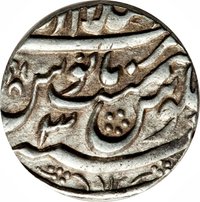
Reverse
Edge
Mintings
| Year | Mint Mark | Mintage | Quality | Collection |
|---|---|---|---|---|
| 1651 | — | — | ||
| 1652 | — | — | ||
| 1655 | — | — | ||
| 1656 | — | — | ||
| 1657 | — | — |
Historical background
By 1651, the Mughal Empire's currency system under Shah Jahan was a sophisticated and highly standardized bimetallic structure, central to the administration and economy of one of the world's richest polities. The system was built upon two principal coins: the silver rupee and the gold mohur. The rupee, the primary unit of account and medium for revenue and large transactions, was minted to a high purity standard (approximately 96%) and a consistent weight, ensuring its wide acceptance across the subcontinent and in international trade. The gold mohur, while valuable, played a more limited role, often used for hoarding, large gifts, and ceremonial purposes rather than everyday commerce. Copper dams served as the ubiquitous small change for local markets and daily wages, with a theoretically fixed exchange rate (40 dams to 1 rupee) that could fluctuate regionally.
This period saw the empire at its zenith of centralized monetary control. Coins were struck in imperial mints (dar-ul-zarb) across major cities like Delhi, Agra, Lahore, and Ahmedabad, bearing standardized inscriptions that proclaimed the emperor's name, titles, and the mint location, thus asserting sovereign authority. The system was remarkably successful, facilitating both the massive land revenue collection that funded the state and the flourishing commerce that connected Mughal ports with global networks from the Arabian Sea to Southeast Asia. The reliability of the Mughal rupee made it a de facto trade currency in many Indian Ocean regions.
However, the stability of 1651 was not without underlying pressures. Shah Jahan's immense architectural projects, including the ongoing construction of the Taj Mahal, and costly military campaigns in Central Asia and the Deccan placed continuous strain on the treasury. While not yet critical, this expenditure required efficient revenue extraction and a steady inflow of precious metals, primarily silver from the New World via European trade. Any disruption to this flow or excessive debasement of the coinage to raise short-term funds would threaten the very foundation of Mughal financial power—a warning sign that would become more acute in the decades to follow under his successors.
This period saw the empire at its zenith of centralized monetary control. Coins were struck in imperial mints (dar-ul-zarb) across major cities like Delhi, Agra, Lahore, and Ahmedabad, bearing standardized inscriptions that proclaimed the emperor's name, titles, and the mint location, thus asserting sovereign authority. The system was remarkably successful, facilitating both the massive land revenue collection that funded the state and the flourishing commerce that connected Mughal ports with global networks from the Arabian Sea to Southeast Asia. The reliability of the Mughal rupee made it a de facto trade currency in many Indian Ocean regions.
However, the stability of 1651 was not without underlying pressures. Shah Jahan's immense architectural projects, including the ongoing construction of the Taj Mahal, and costly military campaigns in Central Asia and the Deccan placed continuous strain on the treasury. While not yet critical, this expenditure required efficient revenue extraction and a steady inflow of precious metals, primarily silver from the New World via European trade. Any disruption to this flow or excessive debasement of the coinage to raise short-term funds would threaten the very foundation of Mughal financial power—a warning sign that would become more acute in the decades to follow under his successors.
✨ Legendary