

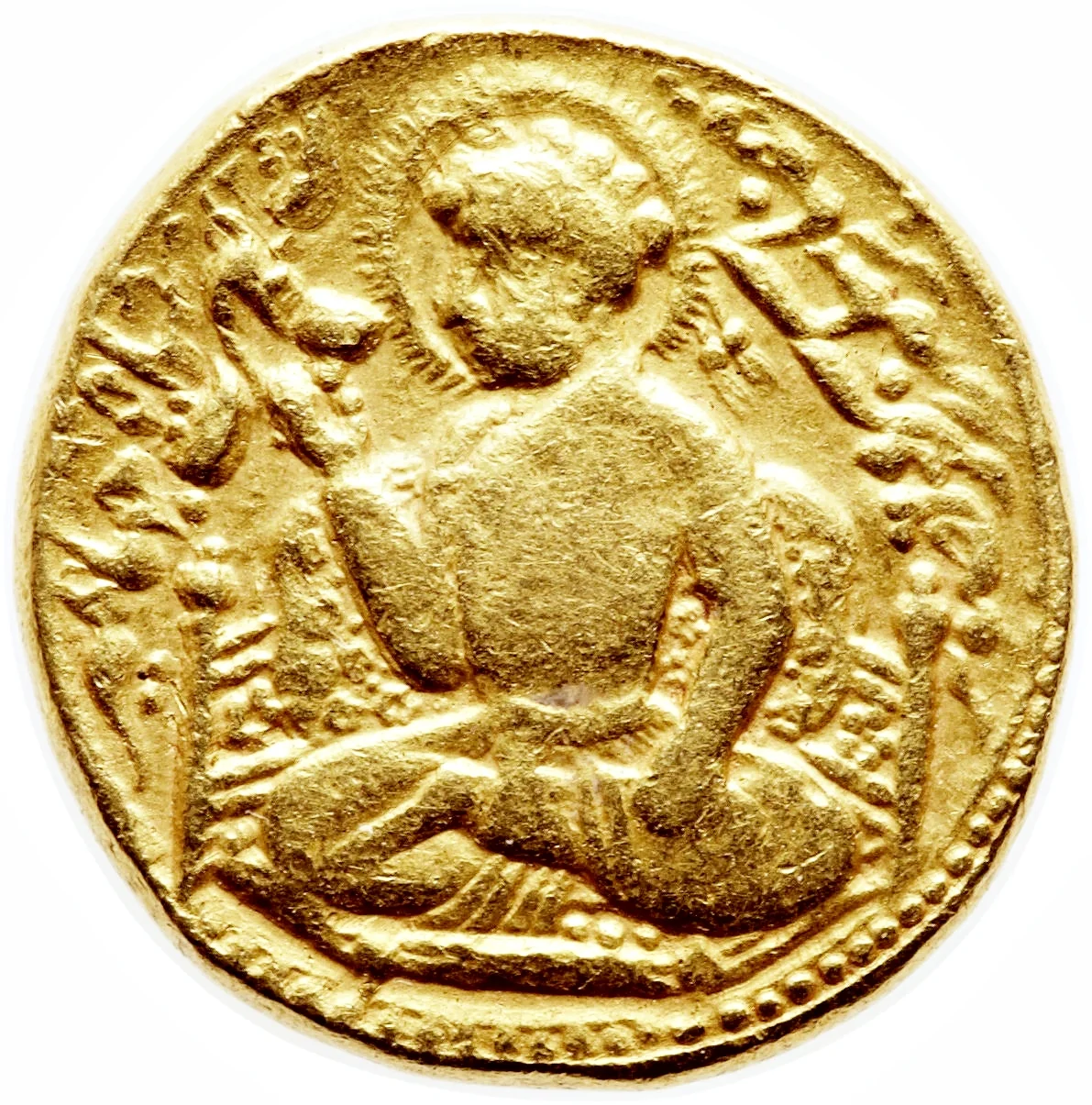
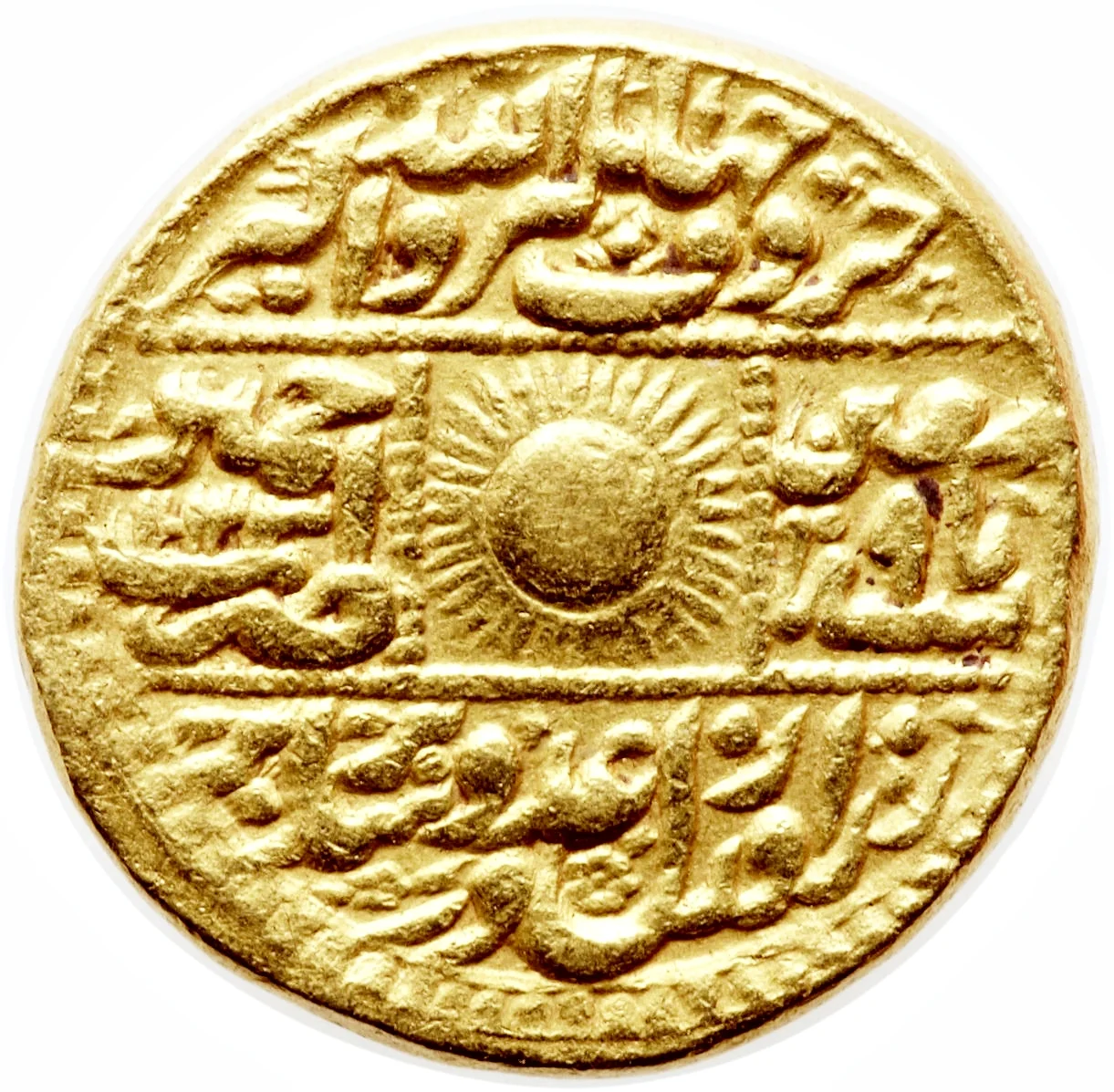
1 Mohur – Mughal Empire
India
Context
Year: 1614
Islamic (Hijri) Year: 1023
Country: India 
Issuer: Mughal Empire
Ruler: Jahangir I
Currency:
(1540—1842)
Demonetized: Yes
References
KM: #Click to copy to clipboard179.6
Numista: #50458
Value
Bullion value: $1818.10
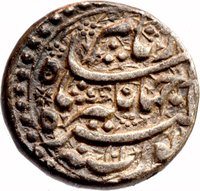
Obverse
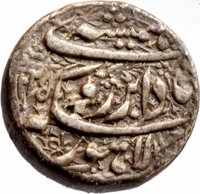
Reverse
Edge
Mintings
| Year | Mint Mark | Mintage | Quality | Collection |
|---|---|---|---|---|
| 1614 | — | — |
Historical background
In 1614, the Mughal Empire's currency system under Emperor Jahangir was robust, standardized, and a cornerstone of imperial authority and economic integration. The foundation was the silver rupee (or rupaiya), a high-purity coin that served as the primary unit of account and medium for revenue collection, trade, and large transactions. It was complemented by the gold mohur, used for hoarding, prestigious gifts, and international trade, and the copper dam, the ubiquitous small-change currency for daily bazaar transactions. This trimetallic system, centrally minted with strict weight and purity standards (sikka), facilitated a complex economy and bound the empire's diverse regions together.
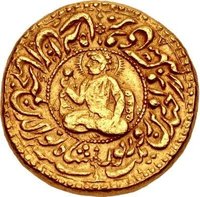
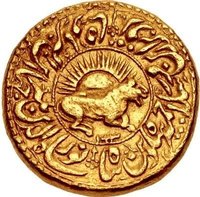
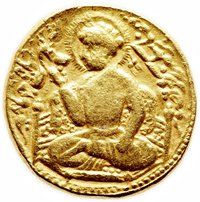
The year 1614 falls within a period of notable numismatic innovation for Jahangir. Having consolidated his rule, he began experimenting with coinage as an artistic and political canvas. Most famously, he introduced a series of portrait rupees, featuring not only his own likeness but also, in a break from Islamic tradition, allegorical images of the zodiac. This reflected his personal intellectual curiosity and a desire to project Mughal sovereignty as universal and cosmically ordained. While these special issues were limited in circulation, they symbolized the confidence and stability of the imperial mint, which operated on a vast scale from major cities like Agra, Lahore, and Ahmedabad.
Despite this central strength, the currency situation was not without its challenges. The empire's immense silver rupee stock depended heavily on a continuous influx of American (Spanish) silver, imported via trade with Europe through the Red Sea and the Persian Gulf. Any disruption to these maritime trade routes could theoretically cause monetary stress. Furthermore, while counterfeiting was a capital offence, the sheer volume of copper dams in local circulation made them susceptible to debasement and forgery at the provincial level. Nevertheless, in 1614, the system functioned effectively, providing the monetary stability that supported the Empire's flourishing commerce, monumental architecture, and the lavish court culture for which Jahangir's reign is renowned.
The year 1614 falls within a period of notable numismatic innovation for Jahangir. Having consolidated his rule, he began experimenting with coinage as an artistic and political canvas. Most famously, he introduced a series of portrait rupees, featuring not only his own likeness but also, in a break from Islamic tradition, allegorical images of the zodiac. This reflected his personal intellectual curiosity and a desire to project Mughal sovereignty as universal and cosmically ordained. While these special issues were limited in circulation, they symbolized the confidence and stability of the imperial mint, which operated on a vast scale from major cities like Agra, Lahore, and Ahmedabad.
Despite this central strength, the currency situation was not without its challenges. The empire's immense silver rupee stock depended heavily on a continuous influx of American (Spanish) silver, imported via trade with Europe through the Red Sea and the Persian Gulf. Any disruption to these maritime trade routes could theoretically cause monetary stress. Furthermore, while counterfeiting was a capital offence, the sheer volume of copper dams in local circulation made them susceptible to debasement and forgery at the provincial level. Nevertheless, in 1614, the system functioned effectively, providing the monetary stability that supported the Empire's flourishing commerce, monumental architecture, and the lavish court culture for which Jahangir's reign is renowned.
✨ Legendary