

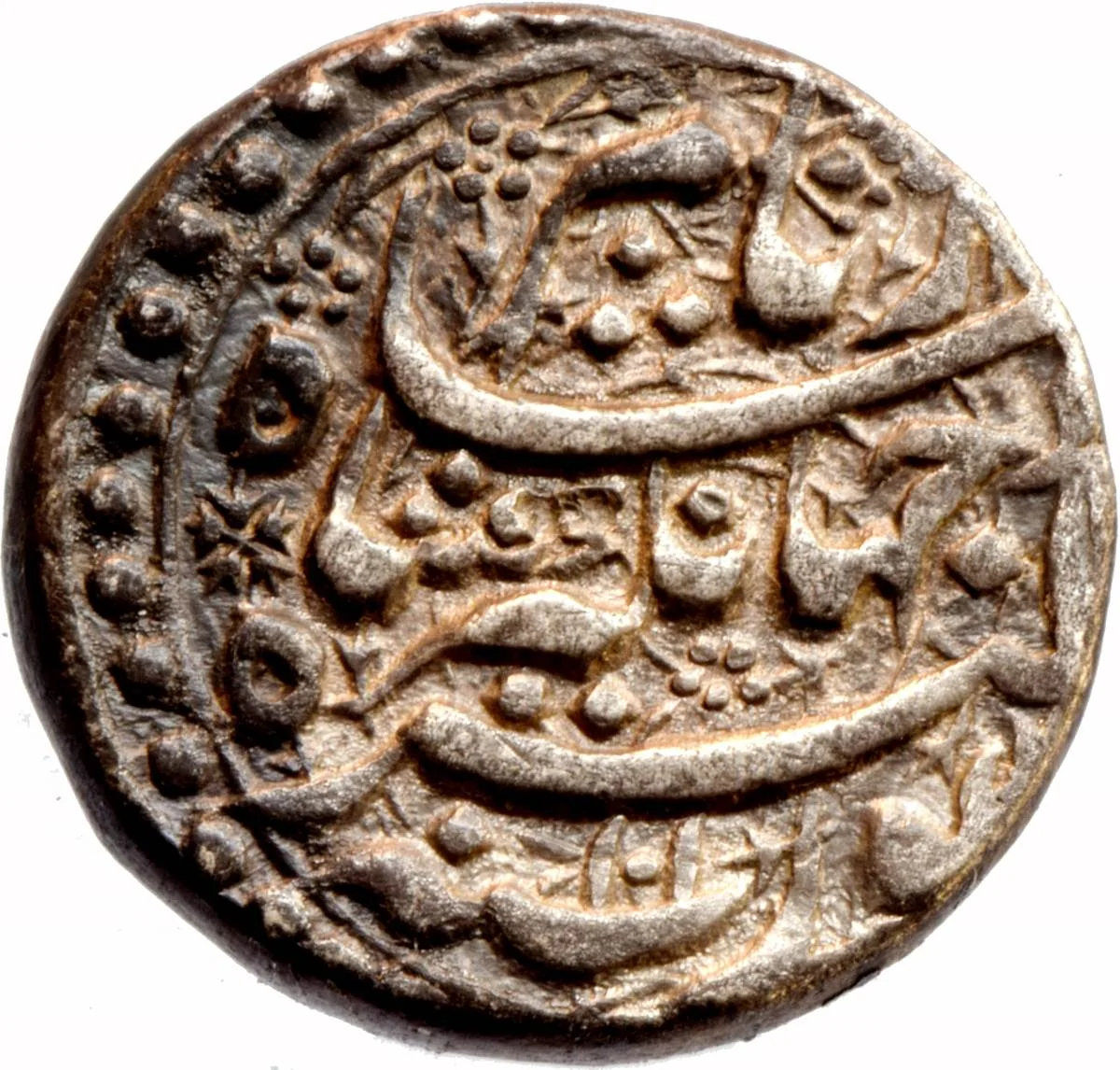
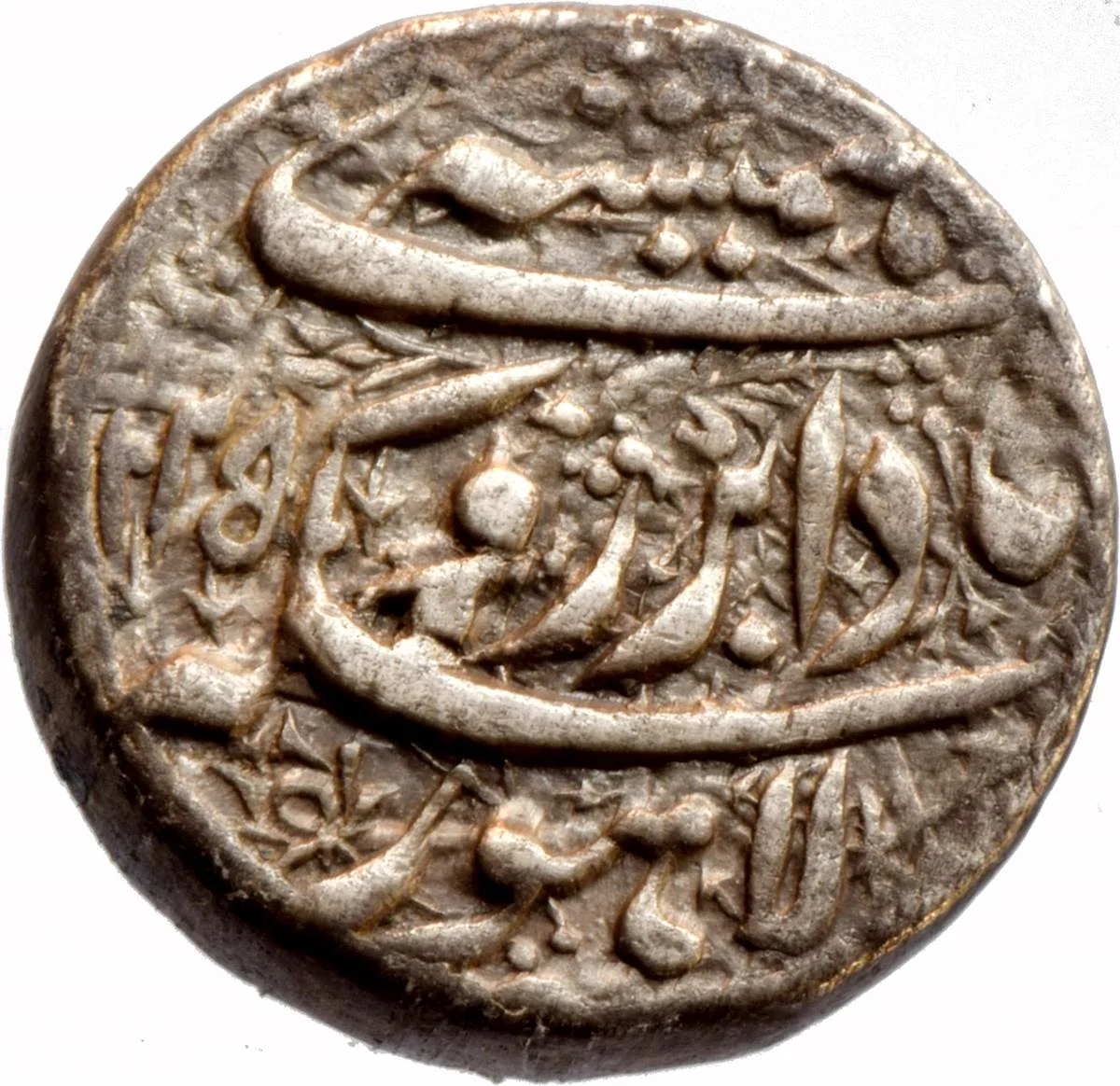
1 Rupee – Mughal Empire
India
Context
Years: 1616–1620
Country: India 
Issuer: Mughal Empire
Ruler: Jahangir I
Currency:
(1540—1842)
Demonetized: Yes
References
KM: #Click to copy to clipboard149.14
Numista: #187995
Value
Bullion value: $31.81
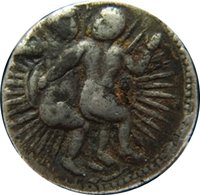
Obverse
Description:
Hamisha on Lahore's coin.
Inscription:
١٠٢٥
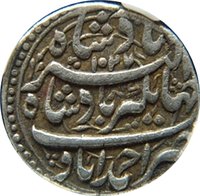
Reverse
Description:
Jahangir, son of Akbar.
Inscription:
١١
Edge
Plain
Mintings
| Year | Mint Mark | Mintage | Quality | Collection |
|---|---|---|---|---|
| 1616 | — | — | ||
| 1617 | — | — | ||
| 1618 | — | — | ||
| 1619 | — | — | ||
| 1620 | — | — |
Historical background
In 1616, the Mughal Empire under Emperor Jahangir enjoyed a highly sophisticated and stable monetary system, largely inherited and refined from his father, Akbar. The empire operated on a bimetallic standard, with the silver rupee and the gold mohur as the primary coins. The rupee, particularly the consistently high-purity Jahangiri rupee, served as the principal currency for revenue collection, large-scale trade, and state expenditure, establishing a uniform monetary zone across vast territories. Gold coins were used for hoarding, high-value transactions, and ceremonial purposes, while a ubiquitous system of copper dams (40 dams = 1 rupee) facilitated everyday local trade and small-scale transactions for the common populace.
This system was underpinned by immense economic strength. The annual influx of New World silver, primarily via European traders at Surat and other ports, provided the crucial bullion to mint coins in vast quantities, preventing deflation and fueling commerce. The empire's centralized mints (sikkas) in major provincial capitals like Delhi, Agra, Lahore, and Ahmedabad strictly enforced standardized weights and designs, bearing the emperor's name and the mint location, which guaranteed their acceptance. This reliability made the Mughal rupee a respected trade currency beyond the empire's borders, circulating throughout the Indian Ocean region.
However, the system was not without its strains. The sheer volume of trade and administration required constant minting, and regional governors sometimes issued coins of slightly lower weight or purity. Furthermore, while the core provinces were well-monetized, more remote areas still relied heavily on barter or copper coinage. In 1616, these were minor fissures; the system was at its peak efficiency, providing the financial backbone for the empire's administrative machinery, monumental architecture, and luxurious court culture. The stability of the currency was a direct reflection of Jahangir's secure political control and the flourishing Indo-Islamic economy of the early 17th century.
This system was underpinned by immense economic strength. The annual influx of New World silver, primarily via European traders at Surat and other ports, provided the crucial bullion to mint coins in vast quantities, preventing deflation and fueling commerce. The empire's centralized mints (sikkas) in major provincial capitals like Delhi, Agra, Lahore, and Ahmedabad strictly enforced standardized weights and designs, bearing the emperor's name and the mint location, which guaranteed their acceptance. This reliability made the Mughal rupee a respected trade currency beyond the empire's borders, circulating throughout the Indian Ocean region.
However, the system was not without its strains. The sheer volume of trade and administration required constant minting, and regional governors sometimes issued coins of slightly lower weight or purity. Furthermore, while the core provinces were well-monetized, more remote areas still relied heavily on barter or copper coinage. In 1616, these were minor fissures; the system was at its peak efficiency, providing the financial backbone for the empire's administrative machinery, monumental architecture, and luxurious court culture. The stability of the currency was a direct reflection of Jahangir's secure political control and the flourishing Indo-Islamic economy of the early 17th century.
✨ Legendary