

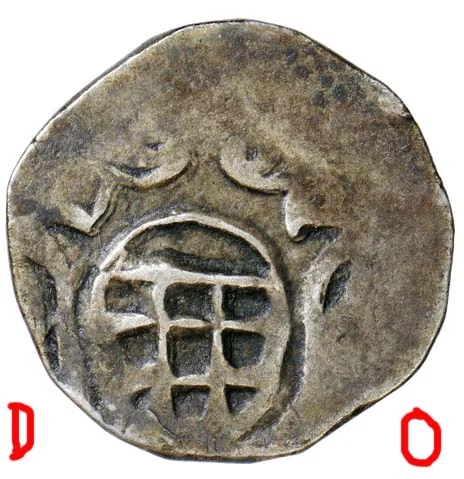
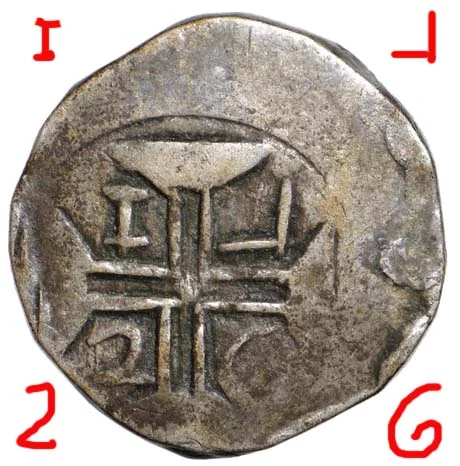
150 Reis – Portuguese India
India
Context
Years: 1716–1724
Country: India 
Issuer: Portuguese India
Issuing organization: Casa da Moeda de Diu
Ruler: João V
Currency:
(1706—1880)
Subdivision: 150 Reis = ½ Pardao=¼ Rupia
Demonetized: Yes
Material
Diameter: 18 mm
Weight: 3.1 g
Silver weight: 3.10 g
Shape: Irregular round
Composition: Silver
Standard: Gold tenth ounce
Magnetic: No
Technique: Hammered
References
KM: #Click to copy to clipboard19
Numista: #50456
Value
Bullion value: $8.64
Mintings
| Year | Mint Mark | Mintage | Quality | Collection |
|---|---|---|---|---|
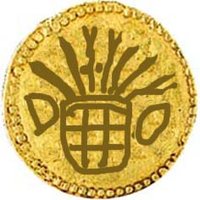
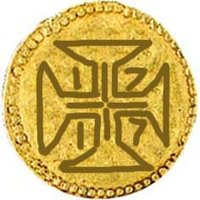
| 1716 | D-O | — | ||
| 1724 | D-O | — |
Historical background
In 1716, the currency situation in Portuguese India, centered at Goa, was a complex tapestry of official Portuguese issues, pervasive foreign coinage, and chronic scarcity. The official currency was the Portuguese real, with higher-value gold cruzados and silver xerafins, but the Estado da India’s weakened economic and minting capacity meant these were often in short supply. Instead, the daily economic life of the territory was dominated by a plethora of foreign coins, reflecting Goa’s role as a commercial hub. Silver Spanish pieces of eight (reales), gold Mughal mohurs, and various Venetian, Ottoman, and other regional currencies circulated freely, their values fluctuating against the official standards based on metallic purity and market demand.
This monetary pluralism was both a necessity and a significant administrative headache for the Portuguese authorities. The Viceroy and the Royal Treasury faced constant challenges in setting exchange rates (the tabela), collecting taxes in a stable medium, and financing the administration. Debasement of local coinage and the outflow of full-weight silver to pay for trade deficits with other Asian regions exacerbated the scarcity of reliable currency. Furthermore, the widespread practice of clipping and counterfeiting, especially of the ubiquitous Spanish reales, created a climate of uncertainty in commerce.
Ultimately, the currency chaos of 1716 was a direct symptom of Portugal’s declining imperial power in the Indian Ocean. Unable to enforce a uniform monetary system, the Estado da India was forced to accommodate the very currencies of its commercial rivals and neighbors. This situation would persist throughout the 18th century, with periodic and largely ineffective attempts at monetary reform, leaving Portuguese India’s economy fundamentally tied to the ebb and flow of foreign silver and the vitality of intra-Asian trade networks beyond its control.
This monetary pluralism was both a necessity and a significant administrative headache for the Portuguese authorities. The Viceroy and the Royal Treasury faced constant challenges in setting exchange rates (the tabela), collecting taxes in a stable medium, and financing the administration. Debasement of local coinage and the outflow of full-weight silver to pay for trade deficits with other Asian regions exacerbated the scarcity of reliable currency. Furthermore, the widespread practice of clipping and counterfeiting, especially of the ubiquitous Spanish reales, created a climate of uncertainty in commerce.
Ultimately, the currency chaos of 1716 was a direct symptom of Portugal’s declining imperial power in the Indian Ocean. Unable to enforce a uniform monetary system, the Estado da India was forced to accommodate the very currencies of its commercial rivals and neighbors. This situation would persist throughout the 18th century, with periodic and largely ineffective attempts at monetary reform, leaving Portuguese India’s economy fundamentally tied to the ebb and flow of foreign silver and the vitality of intra-Asian trade networks beyond its control.
✨ Legendary