

1 tanga – Portuguese India
Add to wishlist
India
Context
Years: 1729–1738
Country: India
Issuer: Portuguese India
Ruler: João V
Currency:
(1706—1880)
Demonetized: Yes
Material
Diameter: 15 mm
Weight: 1.2 g
Silver Weight:: 1.20 g
Shape: Irregular round
Composition: Silver
Magnetic: No
Technique: Hammered
References
KM: #
Numista: #50406
Value
Bullion value: $3.01
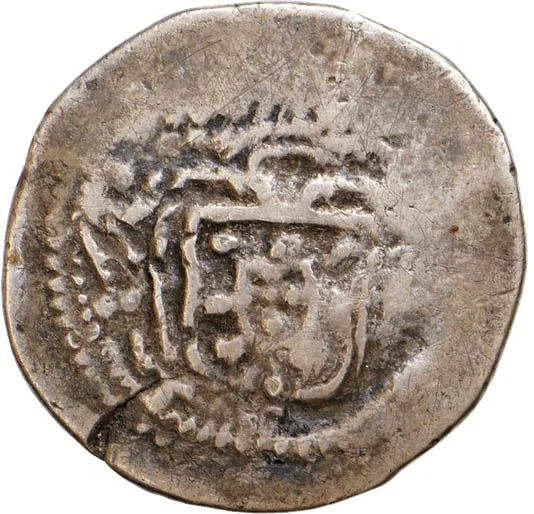
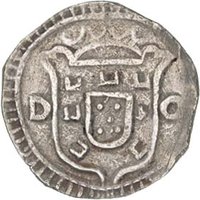
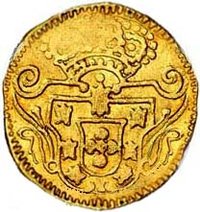
Obverse
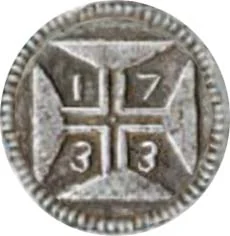
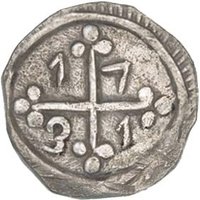
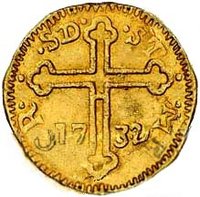
Reverse
Inscription:
1-7
3-3
3-3
Edge
Mints
| Name | Mark |
|---|---|
| Goa | — |
Mintings
| Year | Mint Mark | Mintage | Quality | Collection |
|---|---|---|---|---|
| 1729 | — | — | ||
| 1730 | — | — | ||
| 1733 | — | — | ||
| 1738 | — | — |
Historical background
In 1729, the currency situation in Portuguese India was a complex tapestry of official and unofficial systems, reflecting both local economic realities and the declining power of the Estado da Índia. The official currency was the xerafim (plural: xerafins), a silver coin minted at the Goa Mint. However, its value and circulation were under immense pressure. A chronic shortage of precious metals, especially silver, plagued the colonial administration, leading to irregular minting and frequent debasement of coinage to stretch limited resources. This undermined confidence in the official currency and fueled a vibrant parallel economy.
Consequently, the daily economic life of Goa, Damão, and Diu was dominated by a multitude of foreign coins. The most important of these was the Mughal silver rupia (rupee), which served as the de facto standard for large transactions and trade due to its consistent silver content and wide acceptance across the subcontinent. Alongside it circulated a host of other coins: gold mohurs, Persian larins, and various European currencies like Spanish pieces of eight. This created a chaotic exchange environment where merchants and money-changers (sarafs) held significant power, determining exchange rates that fluctuated based on coin weight, fineness, and demand.
The Portuguese administration struggled to assert monetary control. Attempts to fix the value of the xerafim against the ubiquitous rupee were largely ineffective, as market forces prevailed. Furthermore, the loss of key trade hubs to the Dutch and English earlier in the century had drastically reduced Lisbon's access to the regional bullion flows that once sustained its currency. Thus, in 1729, the monetary landscape was one of pragmatic hybridity—a weakened official coinage coexisting with, and often subordinate to, stronger foreign currencies, symbolizing the broader erosion of Portuguese commercial hegemony in the Indian Ocean.
Consequently, the daily economic life of Goa, Damão, and Diu was dominated by a multitude of foreign coins. The most important of these was the Mughal silver rupia (rupee), which served as the de facto standard for large transactions and trade due to its consistent silver content and wide acceptance across the subcontinent. Alongside it circulated a host of other coins: gold mohurs, Persian larins, and various European currencies like Spanish pieces of eight. This created a chaotic exchange environment where merchants and money-changers (sarafs) held significant power, determining exchange rates that fluctuated based on coin weight, fineness, and demand.
The Portuguese administration struggled to assert monetary control. Attempts to fix the value of the xerafim against the ubiquitous rupee were largely ineffective, as market forces prevailed. Furthermore, the loss of key trade hubs to the Dutch and English earlier in the century had drastically reduced Lisbon's access to the regional bullion flows that once sustained its currency. Thus, in 1729, the monetary landscape was one of pragmatic hybridity—a weakened official coinage coexisting with, and often subordinate to, stronger foreign currencies, symbolizing the broader erosion of Portuguese commercial hegemony in the Indian Ocean.
✨ Legendary