

½ Rupee – Bengal Presidency
India

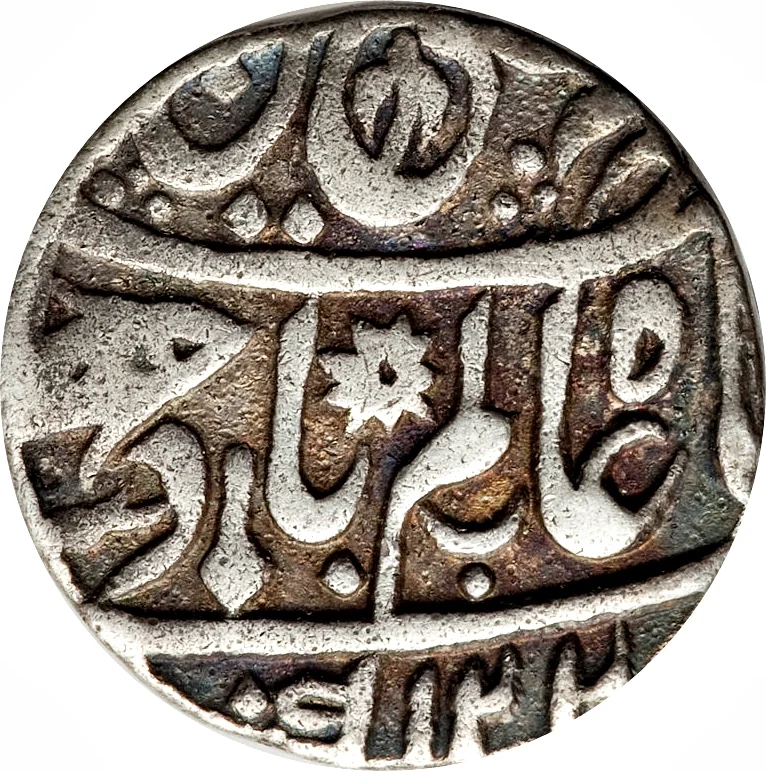
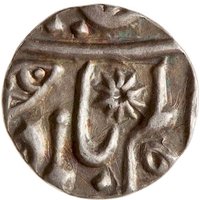
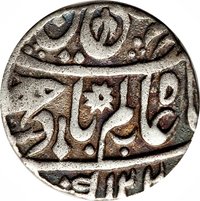
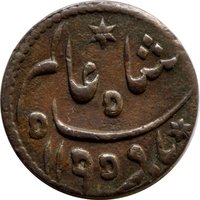
Obverse
Description:
Legend (Persian, partially off flan): "Struck across seven climes by the shadow of divine grace, protector of the faith Muhammad, Shah Alam Badshah" (AH date).
Inscription:
شاه عالم بادشاه
حامي دين محمد
ساى فضل لله
سكة زد بر حفت كشور
حامي دين محمد
ساى فضل لله
سكة زد بر حفت كشور
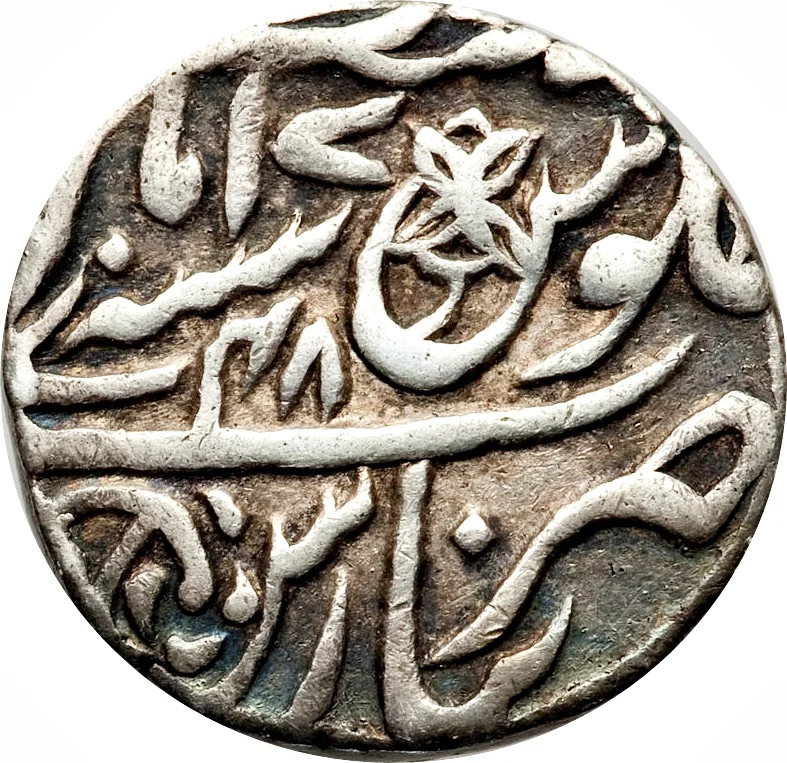
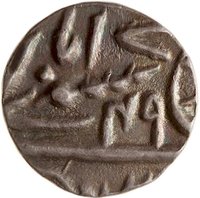
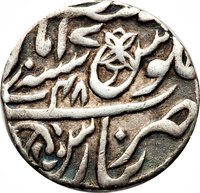
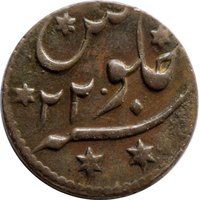
Reverse
Description:
Zarb Muhammadabad Banaras, sanat 17 julus maimanat manus.
Edge
Plain
Mintings
| Year | Mint Mark | Mintage | Quality | Collection |
|---|---|---|---|---|
| 1779 | — | — | ||
| 1809 | — | — | ||
| 1810 | — | — | ||
| 1811 | — | — |
Historical background
By 1779, the currency situation in the Bengal Presidency was a complex and destabilizing crisis, primarily stemming from the East India Company's transition from a trading entity to a territorial ruler after the Battle of Plassey (1757) and the acquisition of the diwani (revenue rights) in 1765. The Company inherited a fragmented monetary system with a multitude of Mughal-era silver rupees, local cowrie shells, and gold mohurs in circulation, alongside a flood of debased and forged coins from regional mints. This lack of uniform, trustworthy currency severely hampered revenue collection, trade, and administration, creating widespread economic uncertainty.
The Company's initial attempts to reform the system, notably through the establishment of the Calcutta Mint in 1757, had failed. A critical error was the decision to mint a new silver rupee of lower purity than the widely accepted and trusted Arcot rupee of the south. This "Calcutta rupee" was rejected by the public, leading to Gresham's Law in action, where "bad money drives out good." Hoarding of older, purer coins became rampant, and the new Company coins failed to gain legitimacy. Furthermore, the Company struggled to control numerous private and regional mints, which continued to produce inferior coins, exacerbating the confusion and devaluation.
Consequently, by 1779, the Presidency faced a severe shortage of credible specie, a crisis of confidence in the monetary system, and inflationary pressures. This financial chaos directly impacted the Company's ability to pay its troops and civil servants reliably and to efficiently collect land revenues, which were the bedrock of its power. The situation demanded a comprehensive overhaul, setting the stage for Lord Cornwallis's major currency reforms of the 1790s, which would finally introduce a standardized silver rupee as the sole legal tender.
The Company's initial attempts to reform the system, notably through the establishment of the Calcutta Mint in 1757, had failed. A critical error was the decision to mint a new silver rupee of lower purity than the widely accepted and trusted Arcot rupee of the south. This "Calcutta rupee" was rejected by the public, leading to Gresham's Law in action, where "bad money drives out good." Hoarding of older, purer coins became rampant, and the new Company coins failed to gain legitimacy. Furthermore, the Company struggled to control numerous private and regional mints, which continued to produce inferior coins, exacerbating the confusion and devaluation.
Consequently, by 1779, the Presidency faced a severe shortage of credible specie, a crisis of confidence in the monetary system, and inflationary pressures. This financial chaos directly impacted the Company's ability to pay its troops and civil servants reliably and to efficiently collect land revenues, which were the bedrock of its power. The situation demanded a comprehensive overhaul, setting the stage for Lord Cornwallis's major currency reforms of the 1790s, which would finally introduce a standardized silver rupee as the sole legal tender.
✨ Legendary