

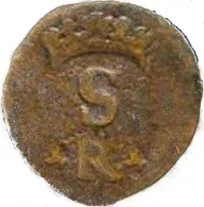
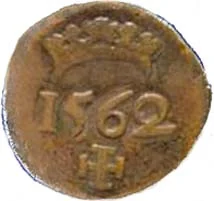
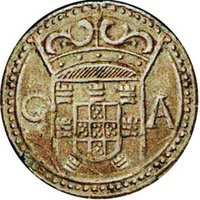
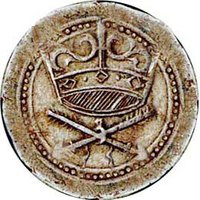
1 real – Portuguese India
Add to wishlist
India
Context
Years: 1562–1564
Country: India
Issuer: Portuguese India
Ruler: Sebastião I
Currency:
(1509—1580)
Demonetized: Yes
Material
References
KM: #
Numista: #50001
Mints
| Name | Mark |
|---|---|
| Goa | — |
Mintings
| Year | Mint Mark | Mintage | Quality | Collection |
|---|---|---|---|---|
| 1562 | — | — | ||
| 1564 | G | — |
Historical background
In 1562, the currency situation in Portuguese India was a complex tapestry of local and imported coinage, reflecting the Estado da India's role as a commercial hub rather than a fully sovereign territorial power. The Portuguese administration in Goa, the capital, officially minted its own silver coins, most notably the tanga and its fractions. However, the supply of these was often insufficient, and their value was intrinsically linked to and competed with a flood of pre-existing and highly trusted regional currencies. The most important of these was the Xerafim, a silver coin that served as the main accounting unit for large transactions, alongside gold pardaus and a plethora of smaller copper and billon coins like bazarucos used in everyday market trade.
This monetary ecosystem was fundamentally shaped by the relentless influx of Spanish reales from the New World, which arrived via Lisbon and were essential for financing the Crown's Asian trade. Furthermore, the vibrant trade networks of the Indian Ocean basin brought in a multitude of other coins: Mughal rupees, Vijayanagara pagodas, Persian lari, and various Arab and Southeast Asian issues circulated freely. The Portuguese state attempted to control this system by setting official exchange rates (tabelas) between these currencies, but the market rates often diverged significantly, leading to arbitrage and constant monetary instability.
Consequently, the currency scenario was one of pragmatic pluralism under strained central oversight. While the Portuguese crown sought to impose order and profit from seigniorage, the economic reality was that trade in Goa, Cochin, and other settlements was conducted through a variable cocktail of coins. Merchants and officials had to be adept at assessing the weight, purity, and fluctuating value of dozens of different issues, making the money changers (sarrafos) crucial economic players. This unstable and competitive environment ultimately undermined attempts at financial consolidation, leaving the currency system fragmented and responsive more to regional bullion flows than to Portuguese royal decree.
This monetary ecosystem was fundamentally shaped by the relentless influx of Spanish reales from the New World, which arrived via Lisbon and were essential for financing the Crown's Asian trade. Furthermore, the vibrant trade networks of the Indian Ocean basin brought in a multitude of other coins: Mughal rupees, Vijayanagara pagodas, Persian lari, and various Arab and Southeast Asian issues circulated freely. The Portuguese state attempted to control this system by setting official exchange rates (tabelas) between these currencies, but the market rates often diverged significantly, leading to arbitrage and constant monetary instability.
Consequently, the currency scenario was one of pragmatic pluralism under strained central oversight. While the Portuguese crown sought to impose order and profit from seigniorage, the economic reality was that trade in Goa, Cochin, and other settlements was conducted through a variable cocktail of coins. Merchants and officials had to be adept at assessing the weight, purity, and fluctuating value of dozens of different issues, making the money changers (sarrafos) crucial economic players. This unstable and competitive environment ultimately undermined attempts at financial consolidation, leaving the currency system fragmented and responsive more to regional bullion flows than to Portuguese royal decree.
✨ Legendary