

1 pardau – Portuguese India
Add to wishlist
India
Context
Years: 1558–1578
Country: India
Issuer: Portuguese India
Ruler: Sebastião I
Currency:
(1509—1580)
Demonetized: Yes
Material
References
KM: #
Numista: #49490
Value
Bullion value: $457.89
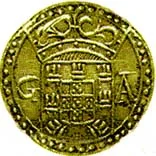
Obverse
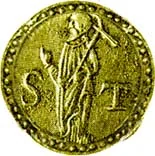
Reverse
Edge
Mintings
| Year | Mint Mark | Mintage | Quality | Collection |
|---|---|---|---|---|
| — | — | — |
Historical background
In 1558, the currency situation in Portuguese India was a complex tapestry of local and imported coinage, reflecting the Estado da India's role as a commercial intermediary rather than a sovereign monetary power. The Portuguese administration in Goa, the capital, did not possess the resources or mints to impose a uniform currency across its scattered territories. Consequently, the day-to-day economy relied heavily on a multitude of existing regional currencies. The most important of these was the gold hūn (or pardau) from the Vijayanagara Empire and the silver larin, a bent wire coin originating from Persia, which served as a key trade coin across the Indian Ocean. Alongside these, a plethora of other coins, including Mughal rupees and various Sultanate issues, circulated freely in markets.
The Portuguese did strike their own limited coinage to facilitate local trade and administration. The most notable was the tanga, a silver coin first minted in Goa around 1510, often stamped with the Cross of the Order of Christ. However, its value and acceptance were largely dependent on its intrinsic silver content and its linkage to the dominant regional standards. The Portuguese Crown's main monetary intervention was the periodic issuance of cruzados (gold) and serafins (gold, later silver), which were used for larger state transactions, paying soldiers, and long-distance trade. Their value was officially pegged against the hūn, but this ratio fluctuated with market forces.
This multi-currency environment created a constant challenge of valuation and exchange, leading to the proliferation of money changers (sarafs). The Portuguese treasury (Fazenda Real) had to constantly assay coins and publish official exchange rates (tabelas) to govern transactions, tax collection, and trade duties. The system was inherently unstable, as the inflow of New World silver via Lisbon began to affect global bullion flows, and the declining power of Vijayanagara after 1565 would soon destabilize the gold hūn, the region's key monetary anchor. Thus, in 1558, the currency landscape was one of pragmatic hybridity, underpinned by the economic realities of Asian trade networks that the Portuguese participated in but did not yet control.
The Portuguese did strike their own limited coinage to facilitate local trade and administration. The most notable was the tanga, a silver coin first minted in Goa around 1510, often stamped with the Cross of the Order of Christ. However, its value and acceptance were largely dependent on its intrinsic silver content and its linkage to the dominant regional standards. The Portuguese Crown's main monetary intervention was the periodic issuance of cruzados (gold) and serafins (gold, later silver), which were used for larger state transactions, paying soldiers, and long-distance trade. Their value was officially pegged against the hūn, but this ratio fluctuated with market forces.
This multi-currency environment created a constant challenge of valuation and exchange, leading to the proliferation of money changers (sarafs). The Portuguese treasury (Fazenda Real) had to constantly assay coins and publish official exchange rates (tabelas) to govern transactions, tax collection, and trade duties. The system was inherently unstable, as the inflow of New World silver via Lisbon began to affect global bullion flows, and the declining power of Vijayanagara after 1565 would soon destabilize the gold hūn, the region's key monetary anchor. Thus, in 1558, the currency landscape was one of pragmatic hybridity, underpinned by the economic realities of Asian trade networks that the Portuguese participated in but did not yet control.
✨ Legendary