

½ xerafim – Portuguese India
Add to wishlist
India
Obverse
Description:
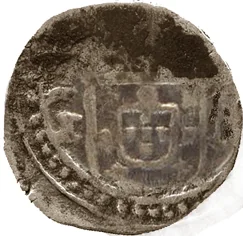
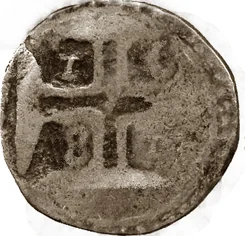
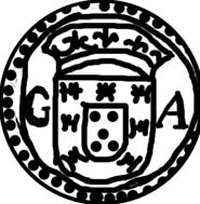
Gomes/2013: PR 06.01-06.06, Arms per fess Gules and Argent.
Inscription:
G - A
Script: Latin
Reverse
Edge
Mints
| Name | Mark |
|---|---|
| Goa | — |
Mintings
| Year | Mint Mark | Mintage | Quality | Collection |
|---|---|---|---|---|
| 1672 | G-A | — | ||
| 1673 | G-A | — | ||
| 1680 | G-A | — | ||
| 1681 | G-A | — | ||
| 1682 | G-A | — | ||
| 1683 | G-A | — |
Historical background
In 1672, the currency situation in Portuguese India was a complex tapestry of official and unofficial systems, reflecting the Estado da Índia's diminished economic power. The official Portuguese currency, the cruzado, remained the nominal unit of account, but its circulation was limited and its value unstable. Decades of imperial overstretch, competition from other European powers, and a chronic shortage of precious metals from Lisbon had severely debased the official coinage. The Royal Treasury in Goa frequently resorted to minting low-quality tangas and reis coins of poor silver content, leading to widespread distrust and hoarding of older, purer issues.
The real day-to-day monetary landscape was dominated by a plethora of foreign coins that circulated freely due to their reliable intrinsic value. The most important of these was the Spanish piece of eight (or peso), a global trade currency that served as the backbone of high-value transactions. Alongside it, various gold mohurs from the Mughal Empire, Venetian ducats, and even coins from neighboring Indian states were readily accepted. This de facto bimetallic system (gold and silver) operated with fluctuating exchange rates, creating a challenging environment for merchants and the colonial administration alike, who had to constantly navigate between official Portuguese denominations and the market-driven values of foreign specie.
This monetary fragmentation was symptomatic of Goa's transformed role from a sovereign imperial hub to a commercial node dependent on regional networks. The Portuguese authorities, recognizing the necessity of these foreign currencies for trade, officially tolerated their use but struggled to profit from it. Attempts to levy seigniorage or force the use of local coinage often failed, as the market's preference for trusted foreign metal was overwhelming. Thus, in 1672, the currency situation was one of pragmatic hybridity, where the Estado da Índia's fiscal weakness was starkly visible in the coins that passed through the hands of its merchants, soldiers, and administrators.
The real day-to-day monetary landscape was dominated by a plethora of foreign coins that circulated freely due to their reliable intrinsic value. The most important of these was the Spanish piece of eight (or peso), a global trade currency that served as the backbone of high-value transactions. Alongside it, various gold mohurs from the Mughal Empire, Venetian ducats, and even coins from neighboring Indian states were readily accepted. This de facto bimetallic system (gold and silver) operated with fluctuating exchange rates, creating a challenging environment for merchants and the colonial administration alike, who had to constantly navigate between official Portuguese denominations and the market-driven values of foreign specie.
This monetary fragmentation was symptomatic of Goa's transformed role from a sovereign imperial hub to a commercial node dependent on regional networks. The Portuguese authorities, recognizing the necessity of these foreign currencies for trade, officially tolerated their use but struggled to profit from it. Attempts to levy seigniorage or force the use of local coinage often failed, as the market's preference for trusted foreign metal was overwhelming. Thus, in 1672, the currency situation was one of pragmatic hybridity, where the Estado da Índia's fiscal weakness was starkly visible in the coins that passed through the hands of its merchants, soldiers, and administrators.

✨ Legendary