

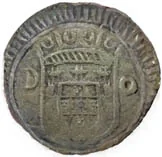
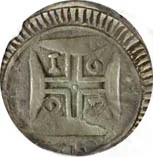
½ xerafim – Portuguese India
Add to wishlist
India
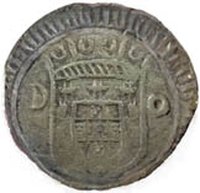
Obverse
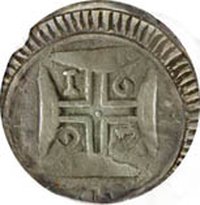
Reverse
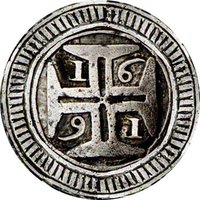
Edge
Mintings
| Year | Mint Mark | Mintage | Quality | Collection |
|---|---|---|---|---|
| 1684 | D-O | — | ||
| 1690 | D-O | — | ||
| 1691 | D-O | — | ||
| 1692 | D-O | — | ||
| 1694 | D-O | — | ||
| 1697 | D-O | — |
Historical background
In 1684, the currency situation in Portuguese India was a complex and challenging reflection of the Estado da Índia's diminished economic power. The official currency, the Portuguese real, was increasingly scarce and often debased, struggling to maintain authority against a flood of foreign coins that circulated freely. The most dominant of these was the Mughal silver rupia, a high-purity coin that served as the de facto standard for major trade and taxation in the region. Alongside it, a multitude of other coins—including Venetian ducats, Spanish pieces of eight, and various Indian and Arabian issues—facilitated the bustling commerce of Goa, creating a fragmented monetary landscape.
This monetary pluralism was a symptom of Portugal's weakened grip on regional trade, as the Dutch and English East India Companies eroded its monopoly. The Portuguese administration attempted to regulate this system by setting official exchange rates (tabelas) between the various foreign coins and the real, but these rates frequently failed to reflect market reality. Consequently, transactions required constant negotiation and expertise, while the state faced difficulties in extracting consistent fiscal revenue. The chronic shortage of reliable specie also encouraged the use of credit instruments and commodity money in everyday transactions.
Ultimately, the currency chaos of 1684 underscored a period of administrative strain and economic adaptation. While the Portuguese crown lacked the resources to impose a unified currency, the system functioned through pragmatic acceptance of foreign coinage, particularly the Mughal rupia. This reality acknowledged that the economic vitality of Portuguese India was now deeply embedded within, and dependent upon, the wider monetary networks of the Indian Ocean world, rather than being directed from Lisbon.
This monetary pluralism was a symptom of Portugal's weakened grip on regional trade, as the Dutch and English East India Companies eroded its monopoly. The Portuguese administration attempted to regulate this system by setting official exchange rates (tabelas) between the various foreign coins and the real, but these rates frequently failed to reflect market reality. Consequently, transactions required constant negotiation and expertise, while the state faced difficulties in extracting consistent fiscal revenue. The chronic shortage of reliable specie also encouraged the use of credit instruments and commodity money in everyday transactions.
Ultimately, the currency chaos of 1684 underscored a period of administrative strain and economic adaptation. While the Portuguese crown lacked the resources to impose a unified currency, the system functioned through pragmatic acceptance of foreign coinage, particularly the Mughal rupia. This reality acknowledged that the economic vitality of Portuguese India was now deeply embedded within, and dependent upon, the wider monetary networks of the Indian Ocean world, rather than being directed from Lisbon.


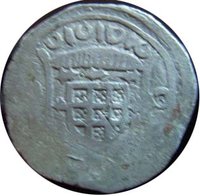
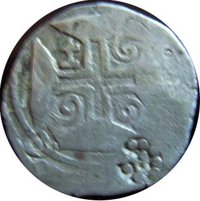

✨ Legendary