



½ Leal – Portuguese India
India
Context
Years: 1510–1521
Country: India 
Issuer: Portuguese India
Ruler: Manuel I
Currency:
(1509—1580)
Subdivision: ½ Leal = 1 Real
Demonetized: Yes
Material
References
KM: #Click to copy to clipboard4
Numista: #49533
Obverse
Description:
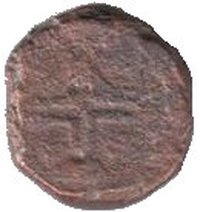
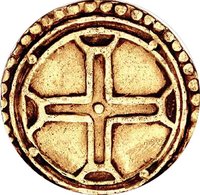
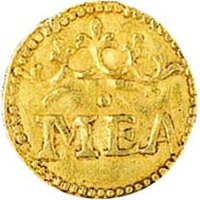
Gomes/2013: "04.01" Christo Cross, letters G-A.
Reverse
Description:
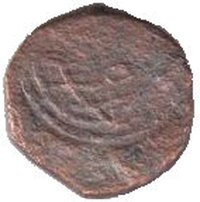
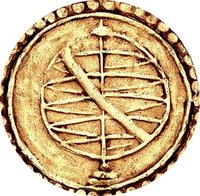
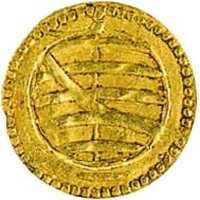
Armillary Sphere
Edge
Mintings
| Year | Mint Mark | Mintage | Quality | Collection |
|---|---|---|---|---|
| — | G-A | — |
Historical background
In 1510, the currency situation in Portuguese India was a complex tapestry of existing indigenous systems and newly imposed Portuguese elements, centered on the critical port city of Goa, which Afonso de Albuquerque had conquered that same year. The region was deeply integrated into the sophisticated monetary networks of the Indian Ocean trade, dominated by gold huns from Vijayanagara, silver tankas from the Deccan Sultanates, and a vast circulation of low-value copper and lead coins for local transactions. Most importantly, the silver cruzado and the gold português were introduced by the Portuguese, not to replace local currencies, but to facilitate Crown transactions, pay soldiers, and integrate Goa into Lisbon's fiscal orbit.
The Portuguese administration under Albuquerque adopted a pragmatic, dual-system approach. They recognized that the vitality of Goa's trade—its lifeblood—depended on merchants continuing to use the familiar and trusted local currencies. Thus, while the cruzado became the official unit of account for the Estado da Índia’s treasury and official contracts, the markets operated on a multi-currency basis. The Portuguese even began minting their own crude lead and tin bazarucos for small-scale local use, but the authoritative silver rupia of the Sultan of Gujarat remained a dominant trade coin in the wider region.
Consequently, 1510 marked not a sudden monetary revolution, but the beginning of a layered and often chaotic financial environment. The Portuguese Crown sought to extract wealth and control high-value transactions, while the bazaar economy functioned on its own terms. This created a dynamic of competing currencies, where exchange rates fluctuated and the success of Portuguese coins depended entirely on their intrinsic metallic value and acceptance by local and international traders, setting a precedent for the complex monetary history of Portuguese India.
The Portuguese administration under Albuquerque adopted a pragmatic, dual-system approach. They recognized that the vitality of Goa's trade—its lifeblood—depended on merchants continuing to use the familiar and trusted local currencies. Thus, while the cruzado became the official unit of account for the Estado da Índia’s treasury and official contracts, the markets operated on a multi-currency basis. The Portuguese even began minting their own crude lead and tin bazarucos for small-scale local use, but the authoritative silver rupia of the Sultan of Gujarat remained a dominant trade coin in the wider region.
Consequently, 1510 marked not a sudden monetary revolution, but the beginning of a layered and often chaotic financial environment. The Portuguese Crown sought to extract wealth and control high-value transactions, while the bazaar economy functioned on its own terms. This created a dynamic of competing currencies, where exchange rates fluctuated and the success of Portuguese coins depended entirely on their intrinsic metallic value and acceptance by local and international traders, setting a precedent for the complex monetary history of Portuguese India.


✨ Legendary