Logo Title
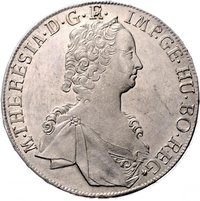
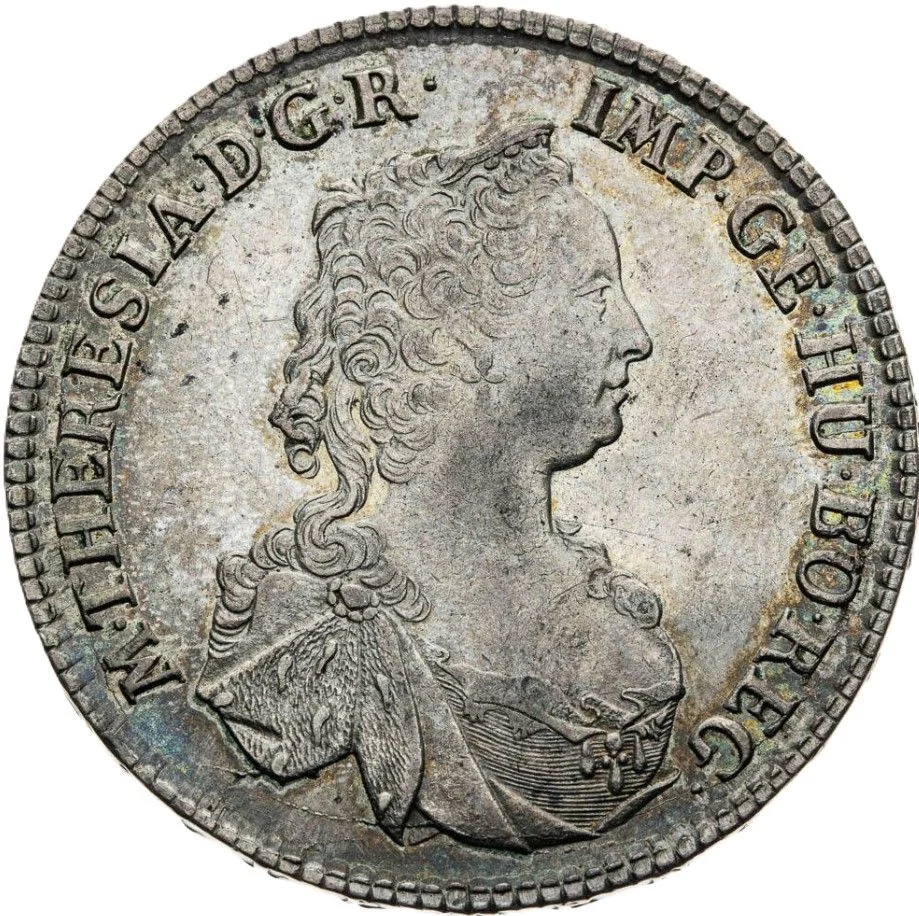
obverse
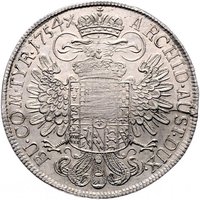
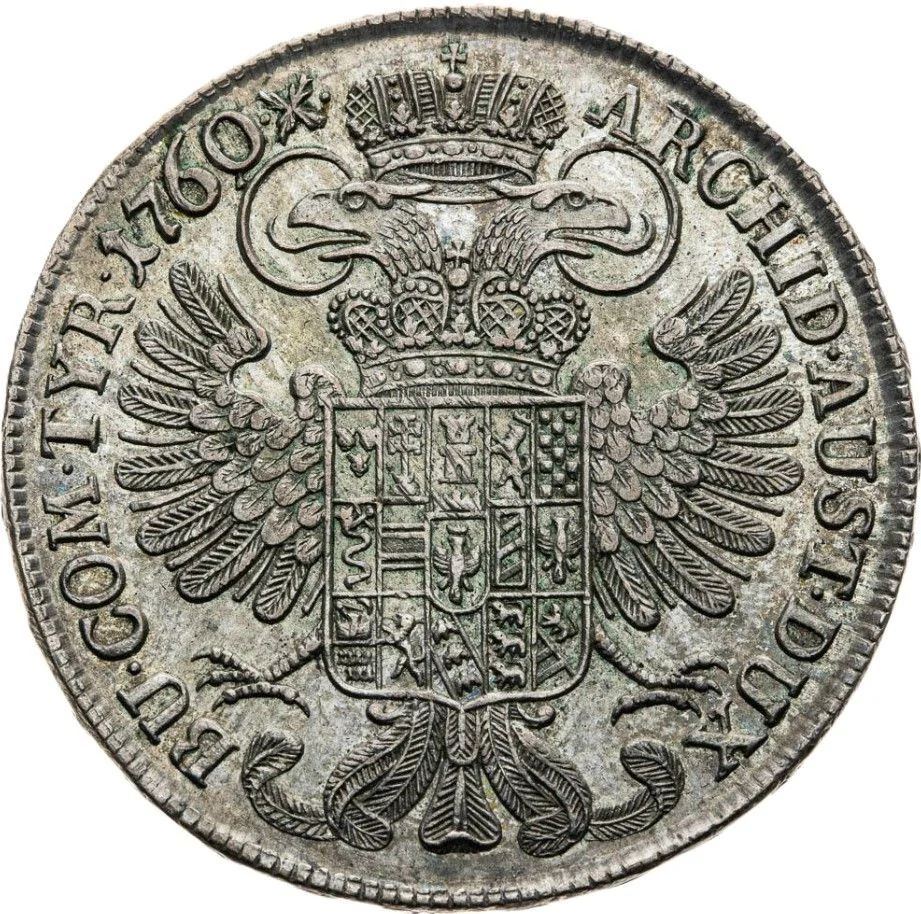
reverse
Macho & Chlapovič a.s.
Austria
Context
Years: 1756–1765
Country: Austria Country flag
Currency:
Demonetized: Yes
Material
Diameter: 35 mm
Weight: 14 g
Silver weight: 11.66 g
Shape: Round
Composition: 83.3% Silver
Magnetic: No
References
KM: #Click to copy to clipboard1821
Numista: #77644
Value
Bullion value: $32.72

Obverse

Description:
Portrait right in robe, legend begins at 7 o'clock.
Inscription:
M THERESIA D G R IMP GE HU BO REG
Script: Latin

Reverse

Description:
Imperial double-headed eagle with breast shield and central Tyrol escutcheon.
Inscription:
ARCHID AUST DUX BU COM TYR 1760 X
Script: Latin

Edge

Plain

Mints

NameMark
Hall

Mintings

YearMint MarkMintageQualityCollection
1756
1757
1759
1760
1761
1762
1763
1764
1765

Historical background

In 1756, the County of Tyrol, a crown land of the Habsburg Monarchy, operated within a complex and fragmented monetary landscape characteristic of the Holy Roman Empire. The region did not have a uniform, exclusive currency. Instead, circulation was dominated by the Tyrolean Konventionstaler and its subdivisions (Gulden, Kreuzer), which were part of the broader South German monetary standard agreed upon in the 1753 Imperial Coinage Convention (Reichsmünzfuß). This convention aimed to standardize silver content across the Empire, and Tyrol, as a significant silver producer from its Schwaz mines, was a crucial participant. However, the system was not exclusive, and older local coins, as well as currencies from neighboring states like Bavaria and Venice, also circulated, creating a perpetual challenge of exchange rates and valuation.

The monetary situation was intrinsically linked to Tyrol's strategic importance to Vienna. Control over Tyrol's silver was a vital fiscal resource for the Habsburg state, especially as Europe edged toward the global conflict of the Seven Years' War (1756-1763). The Habsburg government in Innsbruck, therefore, exercised strict regulatory control over the minting operations, seeking to prevent the export of raw silver and to ensure that coinage served state revenue needs. This period saw a constant tension between the need for stable, high-quality currency to facilitate commerce and the state's temptation to engage in debasement or monetary manipulation to fund military preparations.

Consequently, for merchants and the populace in Tyrol's towns and Alpine valleys, daily transactions were often a practical exercise in assay and calculation. The simultaneous circulation of various silver and small change coins, each with fluctuating intrinsic and face values, required expertise and fostered a degree of distrust. While the Konventionstaler provided a relatively stable anchor, the overall system was prone to instability, especially as the impending war would increase fiscal pressures on Vienna, threatening the silver standard and the purchasing power of the currency in the years immediately following 1756.
💎 Extremely Rare