


Obverse
Description:
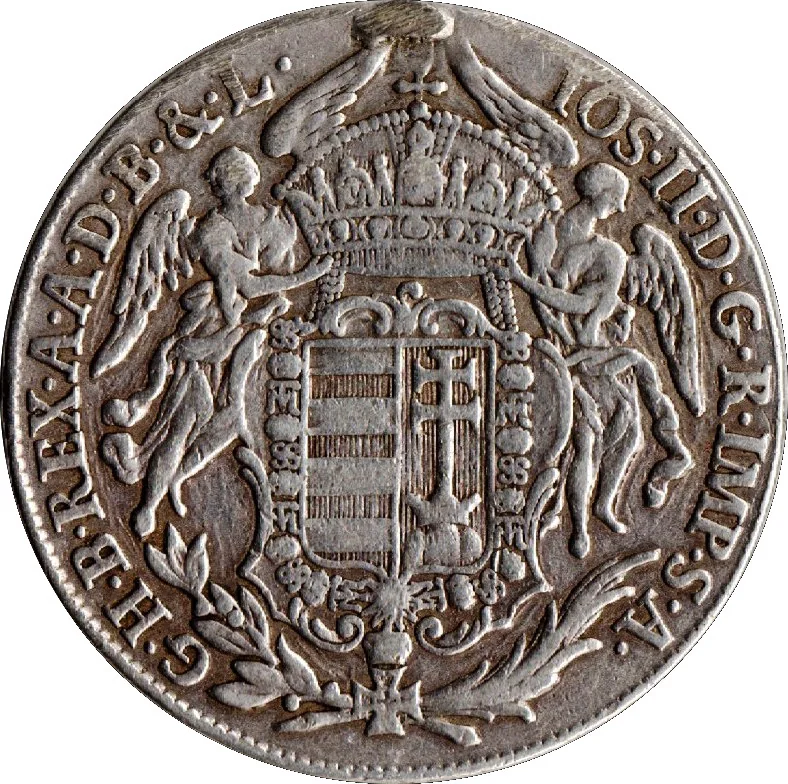
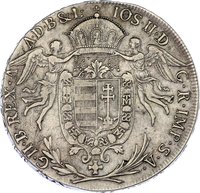
Angels suspended midair, holding a crowned, double Hungarian shield in a cartouche. Their wings are spread, and they glance backward.
Inscription:
IOS · II · D · G · R · IMP · S · A · G · H · B · REX · A-A · D · B & L
Script: Latin
Reverse
Description:
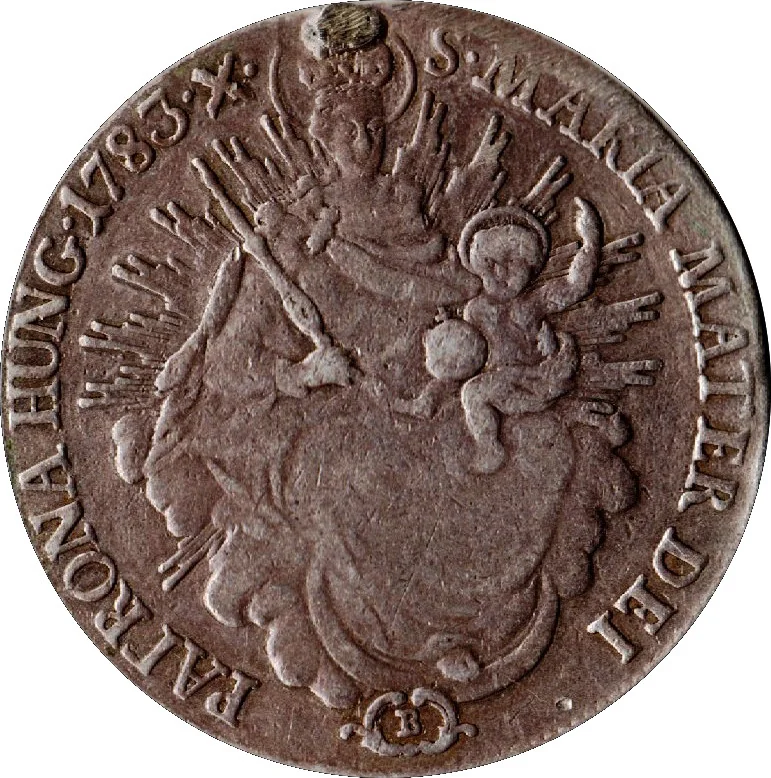
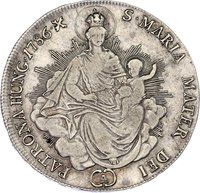
Enlarged crowned Madonna with child seated on a crescent, mintmark in cartouche below.
Inscription:
S · MARIA MATER DEI PATRONA HVNG · 1782 · X
Script: Latin
Edge
Mints
| Name | Mark |
|---|---|
| Münze Österreich | A |
| Kremnica | B |
Historical background
In 1782, the currency situation in the Kingdom of Hungary was characterized by significant complexity and instability, a direct legacy of the financial strains of the recent Seven Years' War (1756-1763). The Habsburg Monarchy, of which Hungary was a part, had financed the conflict through heavy borrowing and the extensive debasement of coinage, particularly the silver thaler and the smaller kreuzer. By the 1780s, this resulted in a severe shortage of high-quality, full-weight specie in circulation. Instead, the economy relied on a confusing mix of depreciated domestic coins, older valid coins, and various foreign currencies, leading to widespread uncertainty in trade and daily transactions.
This monetary chaos was a primary concern for Emperor Joseph II, who ruled as co-regent with his mother, Maria Theresa, until her death in 1780, and thereafter as sole sovereign. As part of his broader centralizing and modernizing reforms, Joseph sought to standardize the currency across his realms. In the early 1780s, preparations were underway for a major monetary reform, which would culminate in the patent of 1783/1784. The goal was to replace the debased currency with new, stable coins based on the Conventionsmünze standard (20 gulden to a Cologne mark of fine silver) that had been established across the Habsburg lands in the 1750s but poorly implemented in Hungary due to wartime pressures.
Consequently, the year 1782 represents a pivotal moment of transition. The economy was still grappling with the negative effects of a depreciated and unreliable currency, which hampered commerce and state finances. Yet, it was also a period of active planning from Vienna to impose order through a unified, imperial coinage system. This reform was a key component of Joseph II's enlightened absolutism, aiming to stimulate economic integration and increase fiscal efficiency, though it would also further subordinate Hungary's financial autonomy to the central administration in Vienna.
This monetary chaos was a primary concern for Emperor Joseph II, who ruled as co-regent with his mother, Maria Theresa, until her death in 1780, and thereafter as sole sovereign. As part of his broader centralizing and modernizing reforms, Joseph sought to standardize the currency across his realms. In the early 1780s, preparations were underway for a major monetary reform, which would culminate in the patent of 1783/1784. The goal was to replace the debased currency with new, stable coins based on the Conventionsmünze standard (20 gulden to a Cologne mark of fine silver) that had been established across the Habsburg lands in the 1750s but poorly implemented in Hungary due to wartime pressures.
Consequently, the year 1782 represents a pivotal moment of transition. The economy was still grappling with the negative effects of a depreciated and unreliable currency, which hampered commerce and state finances. Yet, it was also a period of active planning from Vienna to impose order through a unified, imperial coinage system. This reform was a key component of Joseph II's enlightened absolutism, aiming to stimulate economic integration and increase fiscal efficiency, though it would also further subordinate Hungary's financial autonomy to the central administration in Vienna.
💎 Extremely Rare