

2 Ducats – Hungary
Hungary

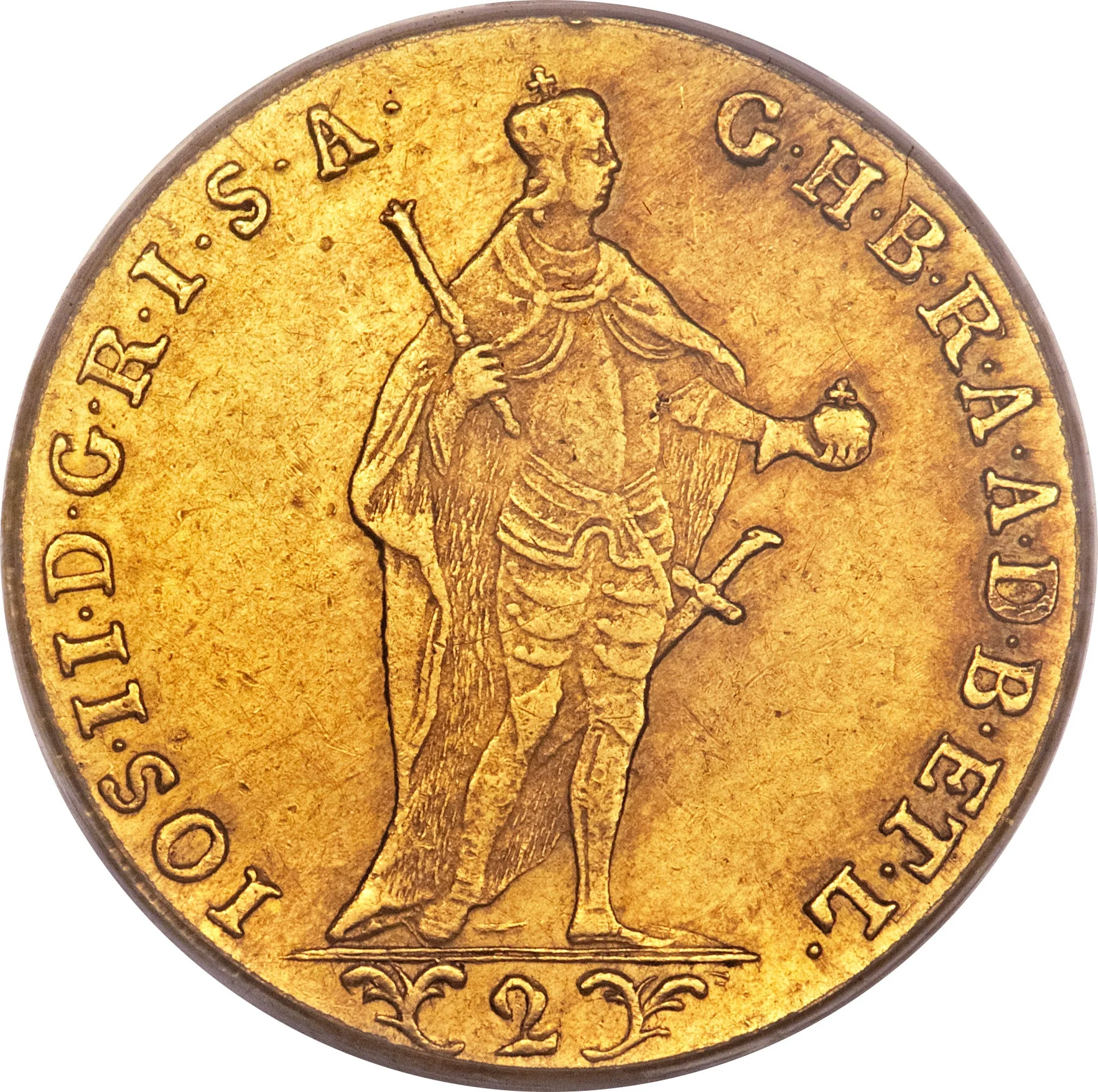
Obverse
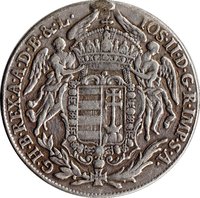
Description:
Monarch facing right, holding scepter and orb. Value (2) below.
Inscription:
IOS · II · D · G · R · I · S · AG · H · B · R · A · A · D ·B · ET · L
Script: Latin
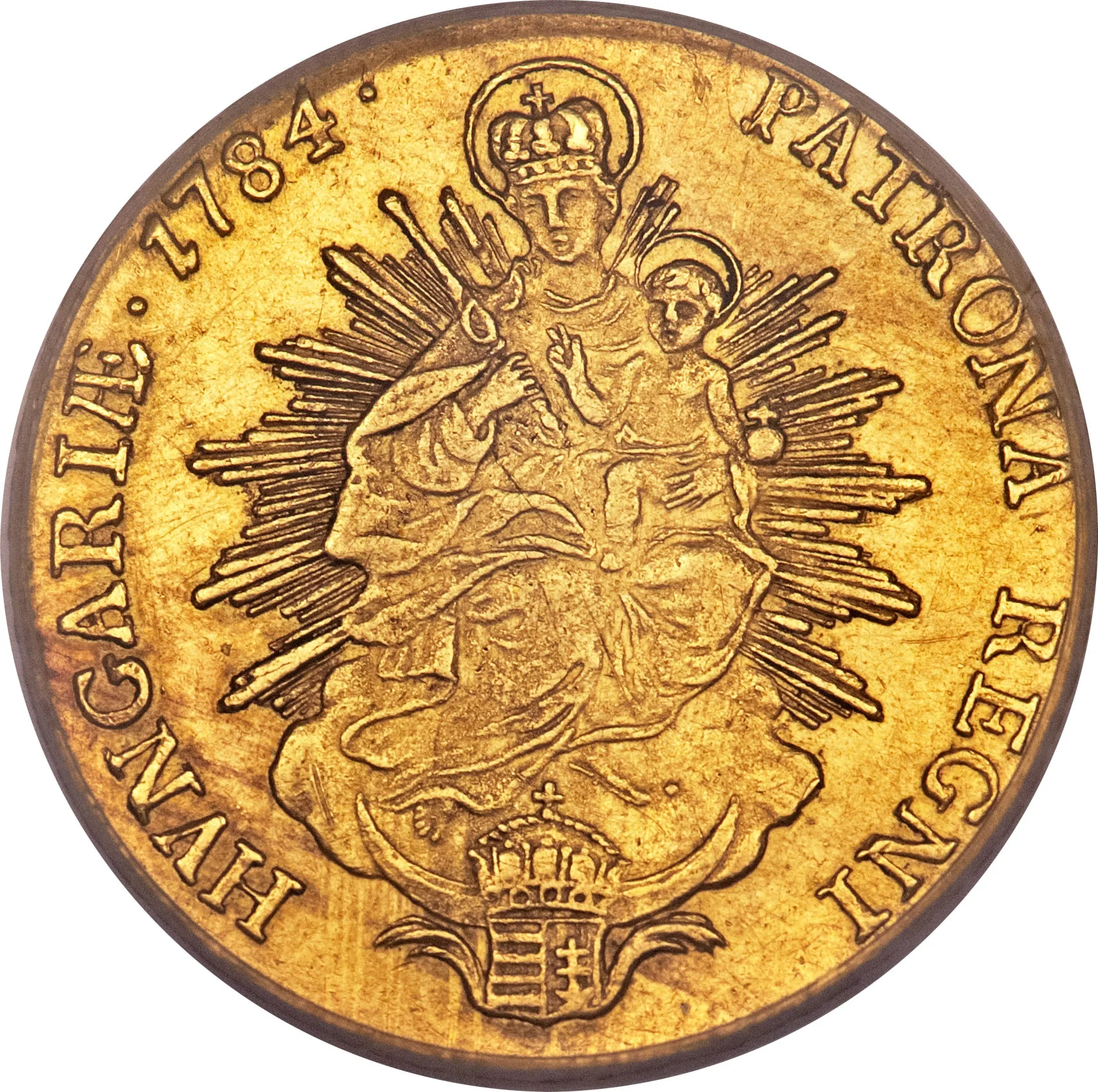
Reverse
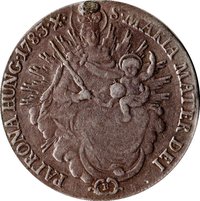
Description:
Enthroned Madonna on a crescent, holding the child, an orb, and a scepter. A double-crowned Hungarian shield rests below.
Inscription:
PATRONA REGNI HVNGARIÆ · 1784 ·
Script: Latin
Edge
Mintings
| Year | Mint Mark | Mintage | Quality | Collection |
|---|---|---|---|---|
| 1781 | — | — | ||
| 1782 | — | — | ||
| 1783 | — | — | ||
| 1784 | — | — | ||
| 1785 | — | — |
Historical background
In 1781, Hungary operated under a complex and strained monetary system as part of the Habsburg Monarchy. The official currency was the Habsburg Conventionsthaler (or Konvenciós forint in Hungarian), a large silver coin established by the monetary convention of 1753. However, the reality was one of bimetallism and chronic shortage. The state struggled to maintain a fixed exchange rate between silver and gold, while the economy suffered from a persistent lack of small-denomination coins for everyday trade, leading to widespread use of obsolete and foreign coins.
This monetary instability was exacerbated by the financial demands of the state, particularly the costs of Empress Maria Theresa’s military reforms and administrative centralization. To raise funds, the Habsburg state frequently resorted to debasement—reducing the precious metal content in coins—and the issuance of low-value copper kreuzers. This practice eroded public trust in the currency, fueled inflation, and created a disconnect between the official monetary standard and the depreciated coins actually in circulation, harming both commerce and peasant livelihoods.
The situation reflected Hungary’s integrated yet subordinate position within the Habsburg fiscal framework. While the Conventionsthaler provided a uniform standard across the monarchy, Hungarian estates had limited control over monetary policy. The coinage problems of 1781 were thus a symptom of broader tensions between the crown’s centralizing fiscal ambitions and the local economic realities, setting the stage for ongoing monetary reforms under Maria Theresa’s successor, Joseph II.
This monetary instability was exacerbated by the financial demands of the state, particularly the costs of Empress Maria Theresa’s military reforms and administrative centralization. To raise funds, the Habsburg state frequently resorted to debasement—reducing the precious metal content in coins—and the issuance of low-value copper kreuzers. This practice eroded public trust in the currency, fueled inflation, and created a disconnect between the official monetary standard and the depreciated coins actually in circulation, harming both commerce and peasant livelihoods.
The situation reflected Hungary’s integrated yet subordinate position within the Habsburg fiscal framework. While the Conventionsthaler provided a uniform standard across the monarchy, Hungarian estates had limited control over monetary policy. The coinage problems of 1781 were thus a symptom of broader tensions between the crown’s centralizing fiscal ambitions and the local economic realities, setting the stage for ongoing monetary reforms under Maria Theresa’s successor, Joseph II.
✨ Legendary