

Peru
Context

Material
Weight: 6.77 g
Gold weight: 6.21 g
Shape: Irregular round
Composition: 91.7% Gold
Magnetic: No
Technique: Hammered
References
KM: #Click to copy to clipboard57
Numista: #48026
Value
Bullion value: $1035.10
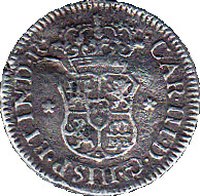
Obverse
Description:
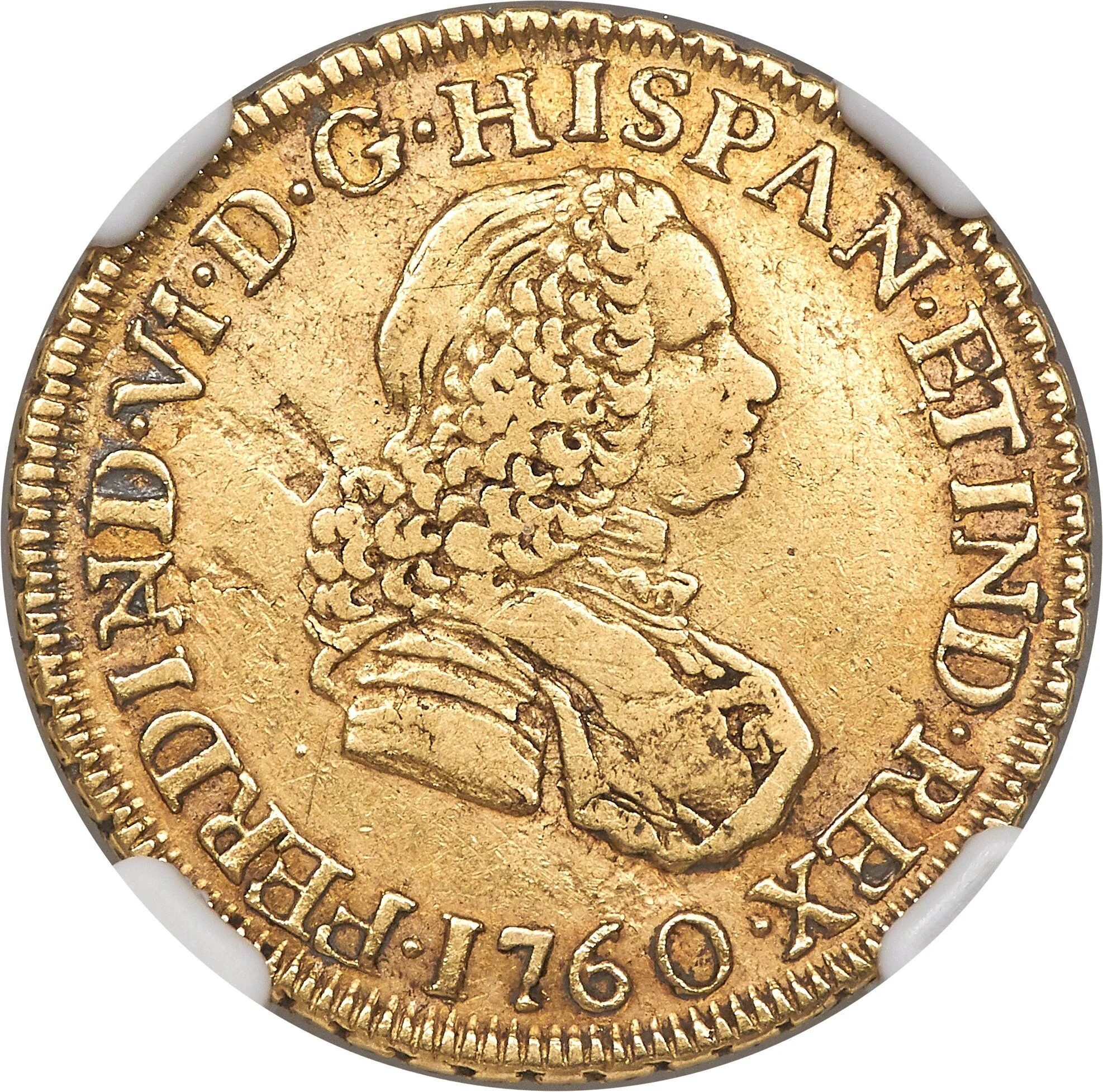
Smaller bust of Ferdinand VI right; ligate NAN.
Inscription:
• FERDINAND • VI • D • G • HISPAN • ET IND • REX •
1760
1760
Script: Latin
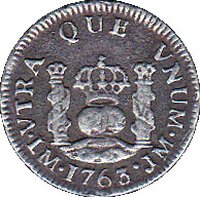
Reverse
Description:
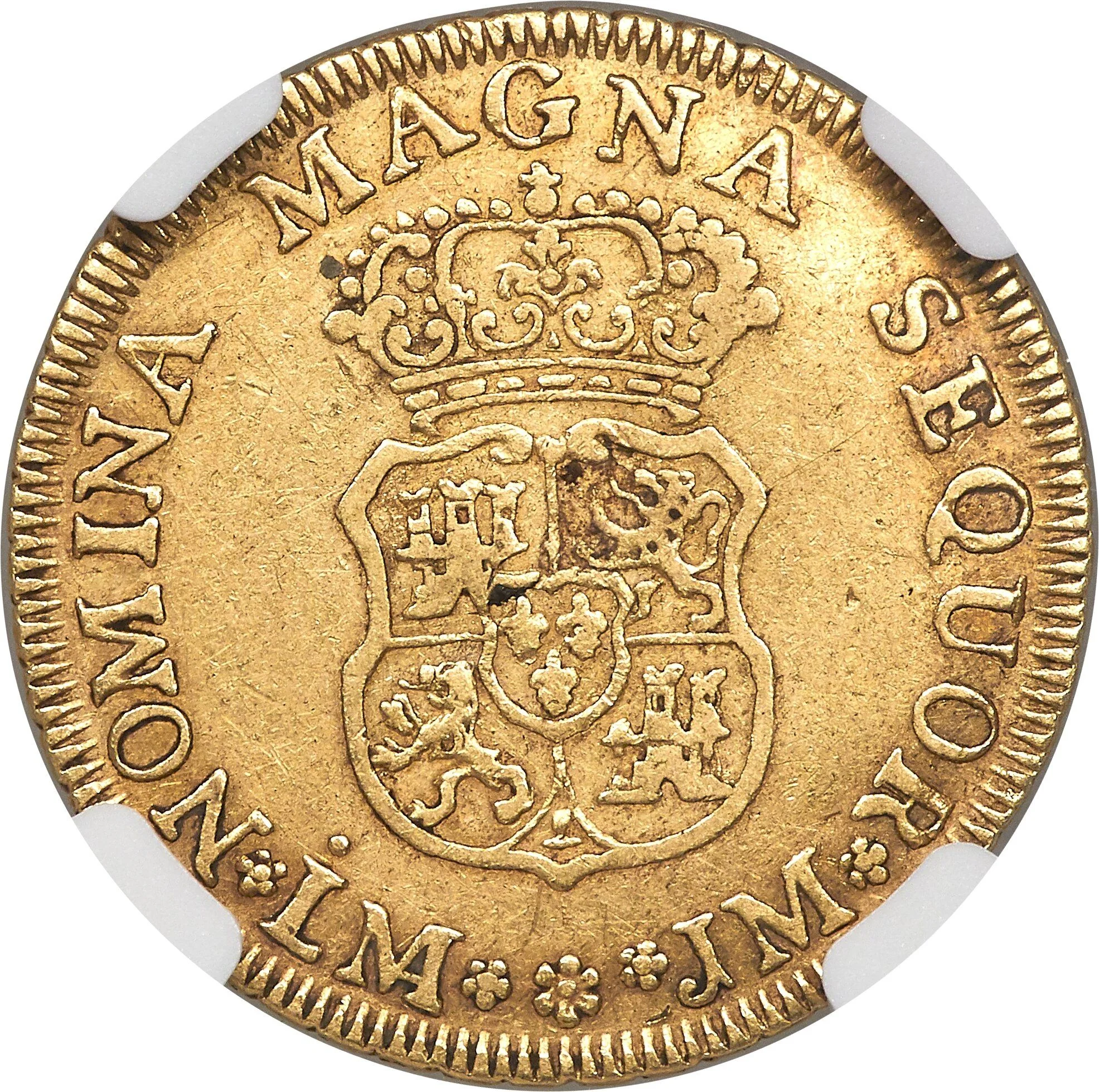
Crowned arms; mintmark of two monograms.
Inscription:
NOMINA MAGNA SEQUOR
✿ LIMA ✿ ✿ ✿ JM ✿
✿ LIMA ✿ ✿ ✿ JM ✿
Script: Latin
Edge
Mints
| Name | Mark |
|---|---|
| Lima | LIMA |
Mintings
Historical background
In 1755, the Viceroyalty of Peru operated under a complex and strained monetary system inherited from Spain. The official currency was based on the silver real and the gold escudo, with 16 reales to 1 escudo. The heart of this system was the legendary silver from the Potosí mines (in modern Bolivia), which was minted into coins at the royal mint in Lima and in Potosí itself. These coins, especially the famous "piece of eight" (8 reales), were the lifeblood of both local commerce and global trade, flowing across the Pacific to Asia via the Manila Galleon and across the Atlantic to Spain.
However, the system was plagued by chronic shortages of circulating coinage for everyday transactions. This was due to several factors: the massive export of silver to Spain, hoarding of specie by a wealthy elite, and the high cost and inefficiency of minting. To compensate, a wide variety of unofficial and often debased coins circulated alongside official currency, including crude macuquinas (hand-struck "cob" coins) from earlier periods and coins minted in other Spanish territories. Furthermore, the economy relied heavily on barter and credit, especially outside major urban centers like Lima, Cuzco, and Arequipa.
This period also fell within the broader context of the Bourbon Reforms, as the Spanish Crown sought to increase control and revenue from its colonies. While major monetary reforms, such as the introduction of modern, machine-struck coins from the Lima mint, were still a few decades away (beginning in the 1770s), the pressures for change were building. The currency situation in 1755 thus reflected a colonial economy of immense mineral wealth paradoxically struggling with liquidity, awaiting the centralizing and modernizing impulses that would soon arrive from Madrid.
However, the system was plagued by chronic shortages of circulating coinage for everyday transactions. This was due to several factors: the massive export of silver to Spain, hoarding of specie by a wealthy elite, and the high cost and inefficiency of minting. To compensate, a wide variety of unofficial and often debased coins circulated alongside official currency, including crude macuquinas (hand-struck "cob" coins) from earlier periods and coins minted in other Spanish territories. Furthermore, the economy relied heavily on barter and credit, especially outside major urban centers like Lima, Cuzco, and Arequipa.
This period also fell within the broader context of the Bourbon Reforms, as the Spanish Crown sought to increase control and revenue from its colonies. While major monetary reforms, such as the introduction of modern, machine-struck coins from the Lima mint, were still a few decades away (beginning in the 1770s), the pressures for change were building. The currency situation in 1755 thus reflected a colonial economy of immense mineral wealth paradoxically struggling with liquidity, awaiting the centralizing and modernizing impulses that would soon arrive from Madrid.
✨ Legendary