

8 escudos – Peru
Add to wishlist
Peru
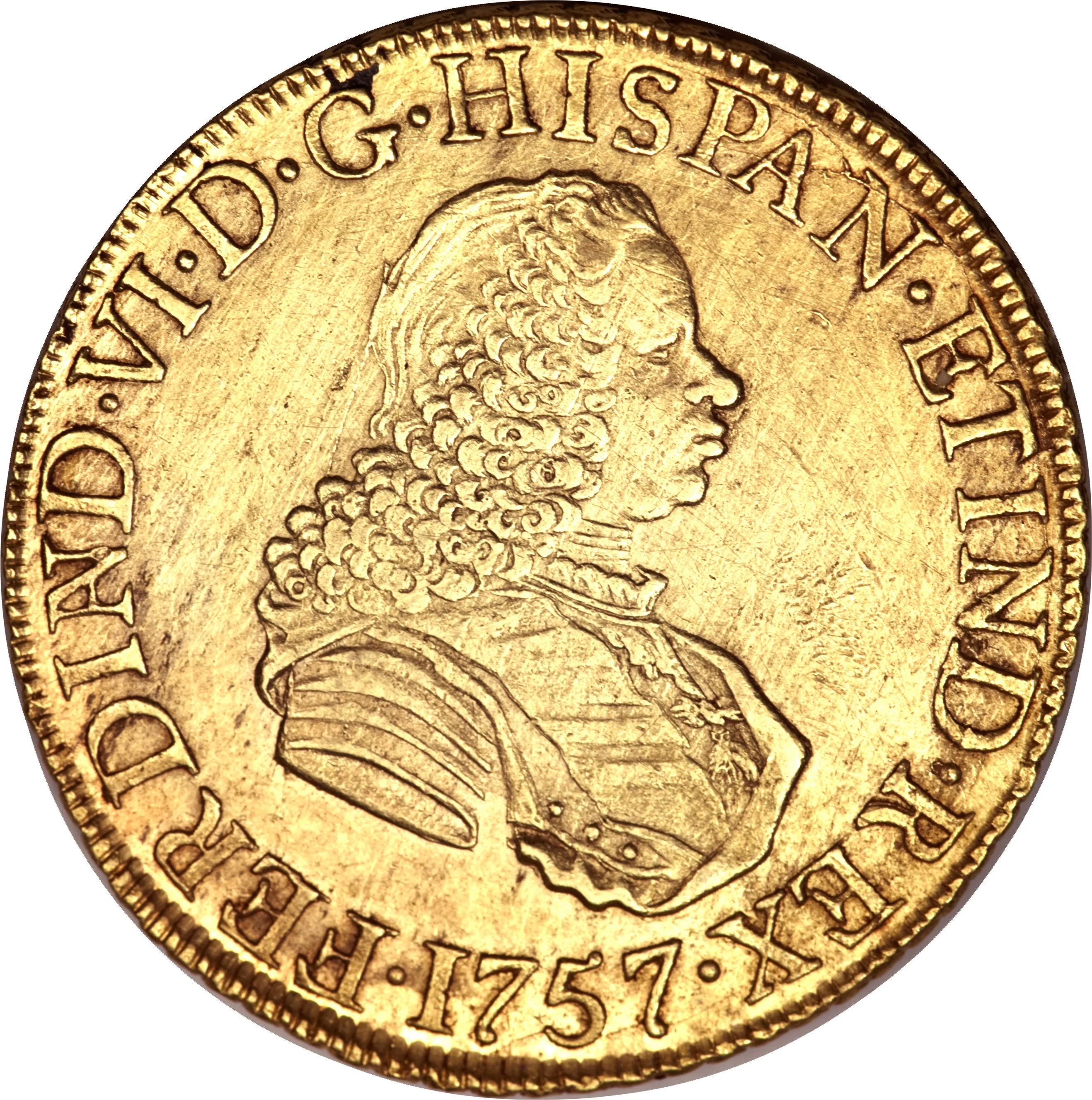
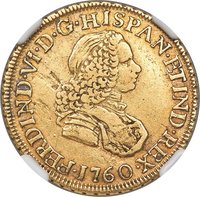
Obverse
Description:
Bust right, monogram NAN within inscription.
Inscription:
FERDINAND VI D G HISPAN ETIND REX
1757
1757
Script: Latin
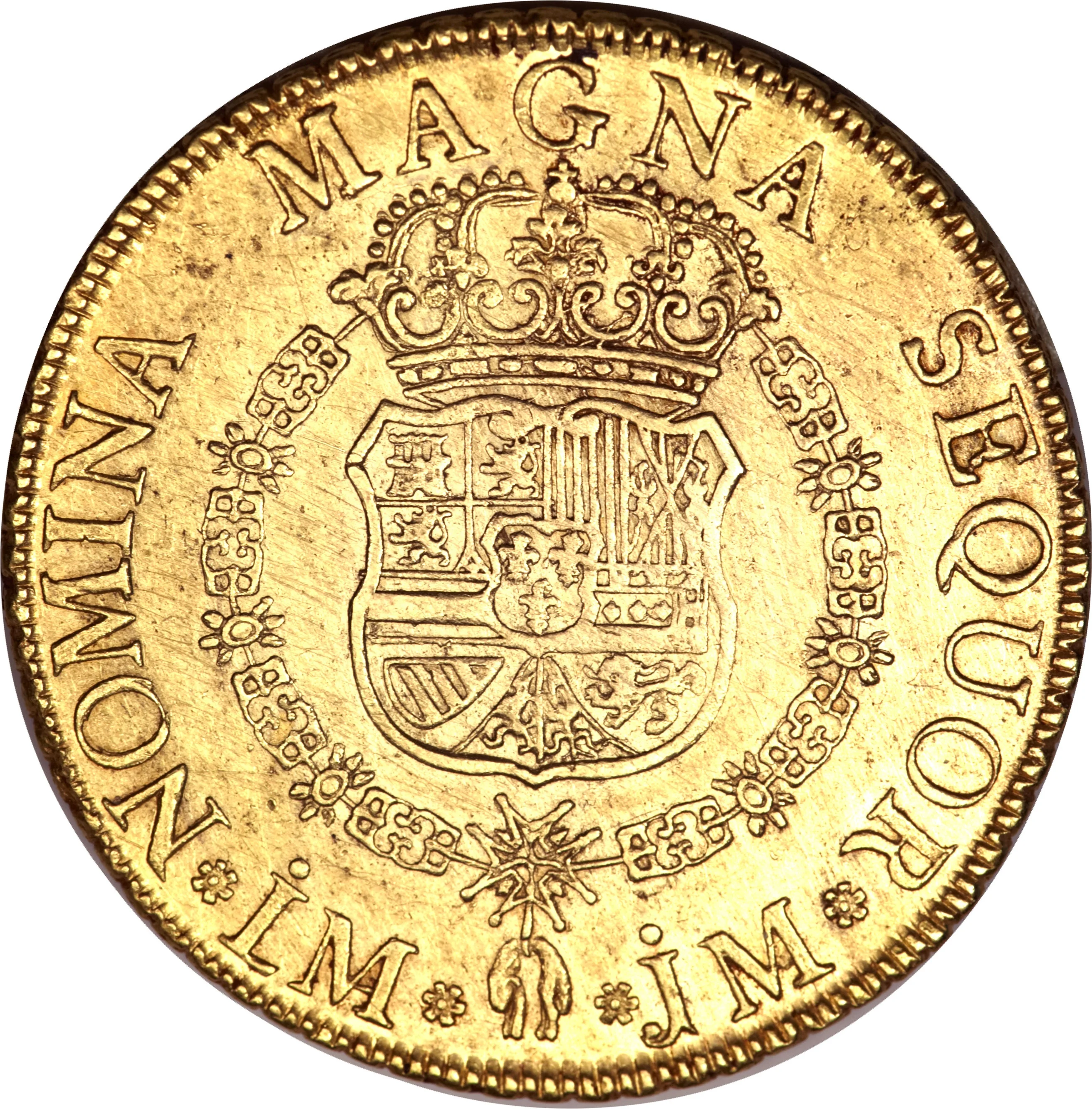
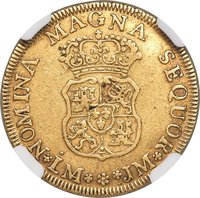
Reverse
Edge
Mints
| Name | Mark |
|---|---|
| Lima | — |
Mintings
| Year | Mint Mark | Mintage | Quality | Collection |
|---|---|---|---|---|
| 1754 | LMJD | — | ||
| 1755 | LMJM | — | ||
| 1756 | LMJM | — | ||
| 1757 | LMJM | — | ||
| 1758 | LMJM | — | ||
| 1759 | LMJM | — | ||
| 1760 | LMJM | — |
Historical background
In 1754, the Viceroyalty of Peru operated under a complex and strained monetary system inherited from Spanish colonial policy. The official currency was silver, primarily minted into coins at the famed Lima mint (Casa de Moneda de Lima). The most common unit was the silver real, with eight reales making a peso (or "piece of eight"), a coin of global trade significance. Alongside these, gold escudos were minted for higher-value transactions. However, the system was plagued by a chronic shortage of circulating specie, especially lower-denomination coins, which severely hampered everyday commerce for the majority of the population.
This scarcity was a direct result of Spain's mercantilist policies. Vast quantities of silver from Peruvian mines, particularly Potosí (in the Audiencia of Charcas, still under the Viceroyalty's administrative umbrella), were extracted and shipped to Spain as bullion or as minted coins to fill the royal coffers. Furthermore, a significant portion of Peruvian silver was diverted through Manila to finance the Spanish Empire's trade in Asia. This external drain, combined with the hoarding of coins by elites and the Church, left the local economy with insufficient currency for its internal needs, leading to widespread use of barter and credit notes in place of hard cash.
The situation was further complicated by the circulation of debased and counterfeit coins. In response to the shortage, the Spanish crown had periodically authorized the minting of lower-purity silver coins, such as the macuquina (crudely cut "cob" coins), which remained in circulation alongside newer, milled-edge coins. The prevalence of counterfeiting, both locally and from abroad, eroded trust in the currency. Consequently, in 1754, Peruvian merchants and officials were actively petitioning the crown for monetary reforms, seeking a more stable and abundant supply of standardized coinage to support the growing regional economy, setting the stage for the broader Bourbon reforms that would intensify in the latter half of the century.
This scarcity was a direct result of Spain's mercantilist policies. Vast quantities of silver from Peruvian mines, particularly Potosí (in the Audiencia of Charcas, still under the Viceroyalty's administrative umbrella), were extracted and shipped to Spain as bullion or as minted coins to fill the royal coffers. Furthermore, a significant portion of Peruvian silver was diverted through Manila to finance the Spanish Empire's trade in Asia. This external drain, combined with the hoarding of coins by elites and the Church, left the local economy with insufficient currency for its internal needs, leading to widespread use of barter and credit notes in place of hard cash.
The situation was further complicated by the circulation of debased and counterfeit coins. In response to the shortage, the Spanish crown had periodically authorized the minting of lower-purity silver coins, such as the macuquina (crudely cut "cob" coins), which remained in circulation alongside newer, milled-edge coins. The prevalence of counterfeiting, both locally and from abroad, eroded trust in the currency. Consequently, in 1754, Peruvian merchants and officials were actively petitioning the crown for monetary reforms, seeking a more stable and abundant supply of standardized coinage to support the growing regional economy, setting the stage for the broader Bourbon reforms that would intensify in the latter half of the century.
✨ Legendary