

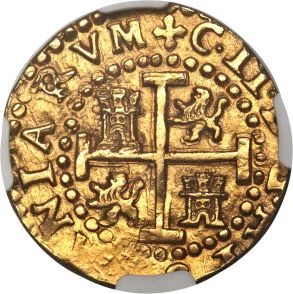
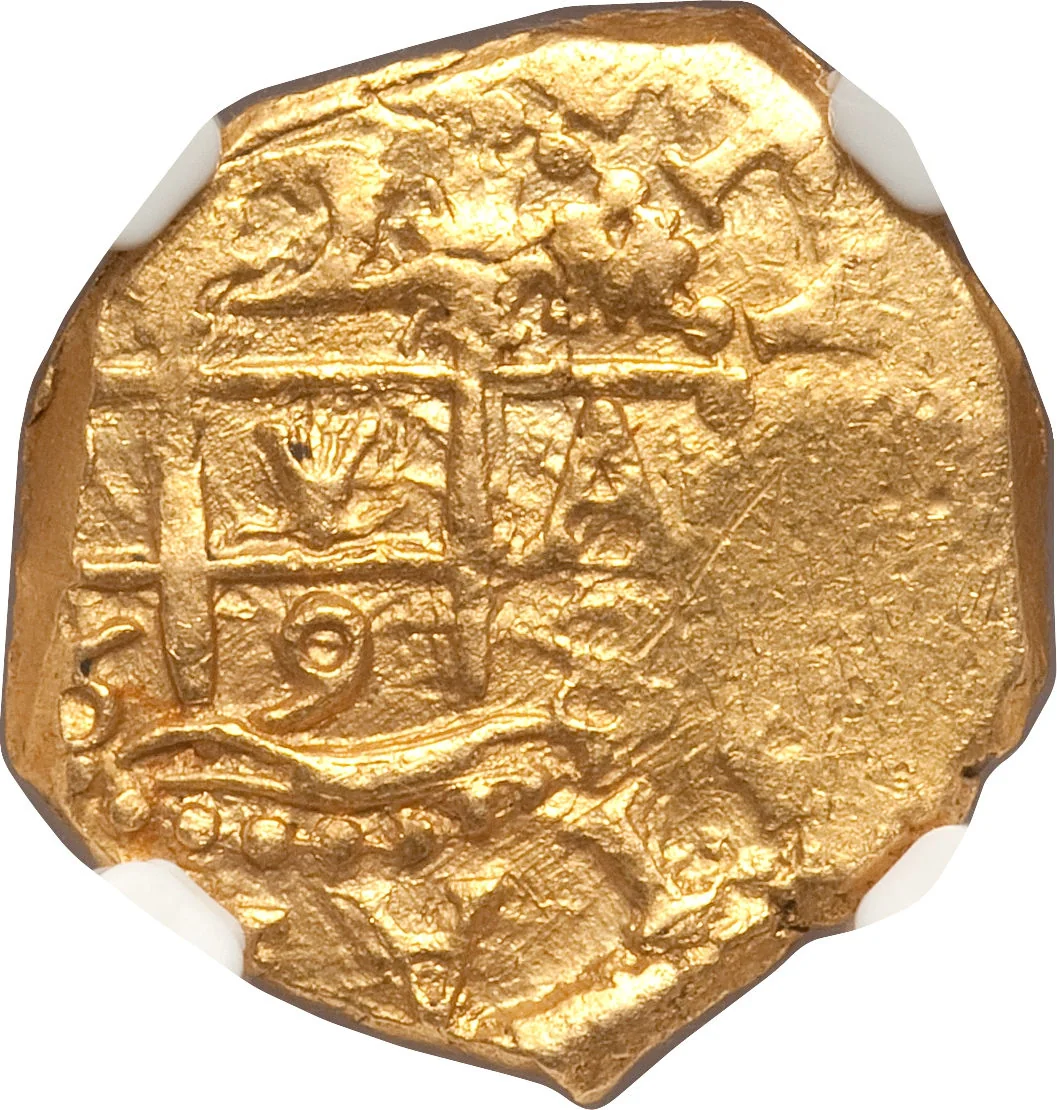

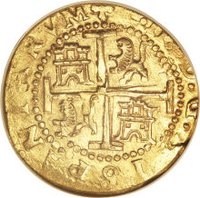
Obverse
Description:
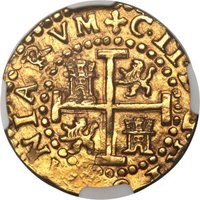
Jerusalem cross with lions and castles in its quarters.
Inscription:
C • II D • G • HISPANIARVM
Script: Latin
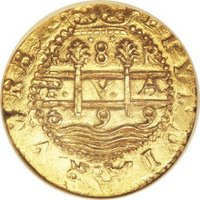
Reverse
Edge
Mintings
| Year | Mint Mark | Mintage | Quality | Collection |
|---|---|---|---|---|
| 1696 | LH | — | ||
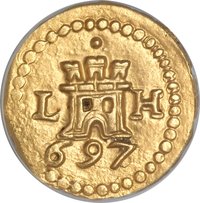
| 1697 | LH | — | ||
| 1698 | LH | — | ||
| 1699 | LR | — | ||
| 1700 | LH | — | ||
| 1701 | LH | — |
Historical background
In 1696, the Viceroyalty of Peru was grappling with a severe and chronic currency crisis rooted in the depletion of its silver mines, particularly the legendary Potosí. After a century of prodigious output, the mines' yields had sharply declined, drastically reducing the raw material for minting coins at the royal mint in Lima. This scarcity of silver bullion led to a crippling shortage of circulating currency, hampering commerce from the capital to the most remote provinces. The local economy increasingly relied on barter and a proliferation of credit notes, creating a chaotic and inefficient monetary environment that stifled trade and government revenue.
Compounding the scarcity was the rampant debasement and counterfeiting of coins. Faced with the silver shortage, authorities and private individuals alike resorted to cutting or clipping precious metal from the edges of already-minted coins. Furthermore, a flood of low-quality, counterfeit reales entered circulation, often produced in clandestine workshops. This eroded public trust in the currency's value, as the content of precious metal in any given coin became uncertain. The problem was so widespread that legitimate, full-weight coins were often hoarded, removing them from circulation entirely and worsening the shortage—a classic example of Gresham's Law, where "bad money drives out good."
The Spanish Crown's response, directed by Viceroy Melchor Portocarrero, 3rd Count of Monclova, was largely ineffective. Attempts to introduce a new, milled-edge coinage to prevent clipping were slow and insufficient to meet demand. More critically, the Crown maintained rigid mercantilist policies, insisting that Peru's scarce silver be shipped to Spain to support imperial finances, further draining the colony of its monetary lifeblood. Consequently, in 1696, Peru's economy was caught in a vicious cycle: depleted mines, a starved and adulterated currency, and imperial policies that prioritized the metropolis over the solvency of the viceroyalty, setting the stage for continued economic stagnation in the early 18th century.
Compounding the scarcity was the rampant debasement and counterfeiting of coins. Faced with the silver shortage, authorities and private individuals alike resorted to cutting or clipping precious metal from the edges of already-minted coins. Furthermore, a flood of low-quality, counterfeit reales entered circulation, often produced in clandestine workshops. This eroded public trust in the currency's value, as the content of precious metal in any given coin became uncertain. The problem was so widespread that legitimate, full-weight coins were often hoarded, removing them from circulation entirely and worsening the shortage—a classic example of Gresham's Law, where "bad money drives out good."
The Spanish Crown's response, directed by Viceroy Melchor Portocarrero, 3rd Count of Monclova, was largely ineffective. Attempts to introduce a new, milled-edge coinage to prevent clipping were slow and insufficient to meet demand. More critically, the Crown maintained rigid mercantilist policies, insisting that Peru's scarce silver be shipped to Spain to support imperial finances, further draining the colony of its monetary lifeblood. Consequently, in 1696, Peru's economy was caught in a vicious cycle: depleted mines, a starved and adulterated currency, and imperial policies that prioritized the metropolis over the solvency of the viceroyalty, setting the stage for continued economic stagnation in the early 18th century.
Series: 1696 Peru circulation coins
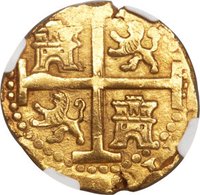
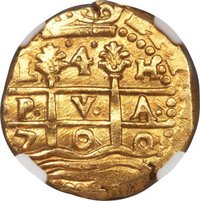
✨ Legendary