

Peru

Obverse
Description:
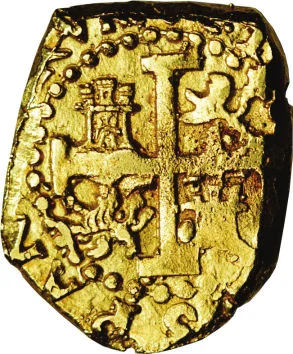
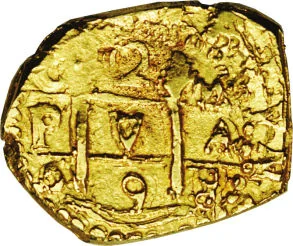
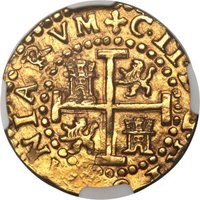
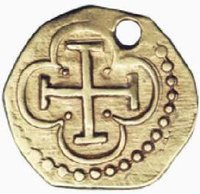
Jerusalem cross with lions and castles in its quarters.
Inscription:
C • II D • G • HISPANIARVM
Script: Latin
Reverse
Edge
Mintings
| Year | Mint Mark | Mintage | Quality | Collection |
|---|---|---|---|---|
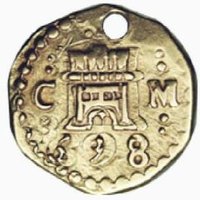
| 1698 | CM | — |
Historical background
In 1698, the Viceroyalty of Peru was grappling with a severe and multifaceted currency crisis rooted in the systemic flaws of the Spanish colonial monetary system. The primary unit of account was the silver peso, minted at the famed Potosí mint (in modern-day Bolivia), but its value and integrity had been catastrophically undermined by decades of debasement. Throughout the 17th century, royal authorities, desperate for revenue, had systematically reduced the silver content in coins while maintaining their face value, leading to widespread mistrust. Furthermore, a massive influx of counterfeit coins, often of even lower purity, flooded local markets, creating a chaotic monetary environment where the value of money was highly unstable and uncertain.
The economic consequences were profound and debilitating. This currency instability disrupted all forms of commerce, from large-scale transatlantic trade to local markets in Lima and beyond. Merchants and miners faced unpredictable losses, as the coins they received could be worth far less than their nominal value. This environment stifled economic growth, discouraged investment, and fueled inflation, as prices adjusted to account for the poor quality of the circulating medium. The crisis also eroded the Crown's fiscal authority and damaged the credibility of the entire colonial financial system, upon which the administration and defense of Spain's richest viceroyalty depended.
In response, the Spanish Crown had initiated a major monetary reform, ordering the establishment of a new mint in Lima in 1683. However, by 1698, this solution was still in a fraught implementation phase. The new Lima mint was tasked with producing high-quality, milled-edge coins (known as columnarios or pillar dollars) to replace the old, easily clipped and counterfeited hammer-struck pieces. The process of recalling the old currency and introducing the new was slow, disruptive, and met with resistance. Thus, 1698 represents a pivotal moment of transition, caught between the lingering chaos of a broken system and the uncertain promise of a standardized, royal currency meant to restore stability to the heart of Spain's South American empire.
The economic consequences were profound and debilitating. This currency instability disrupted all forms of commerce, from large-scale transatlantic trade to local markets in Lima and beyond. Merchants and miners faced unpredictable losses, as the coins they received could be worth far less than their nominal value. This environment stifled economic growth, discouraged investment, and fueled inflation, as prices adjusted to account for the poor quality of the circulating medium. The crisis also eroded the Crown's fiscal authority and damaged the credibility of the entire colonial financial system, upon which the administration and defense of Spain's richest viceroyalty depended.
In response, the Spanish Crown had initiated a major monetary reform, ordering the establishment of a new mint in Lima in 1683. However, by 1698, this solution was still in a fraught implementation phase. The new Lima mint was tasked with producing high-quality, milled-edge coins (known as columnarios or pillar dollars) to replace the old, easily clipped and counterfeited hammer-struck pieces. The process of recalling the old currency and introducing the new was slow, disruptive, and met with resistance. Thus, 1698 represents a pivotal moment of transition, caught between the lingering chaos of a broken system and the uncertain promise of a standardized, royal currency meant to restore stability to the heart of Spain's South American empire.
✨ Legendary