

16 skilling – Denmark
Add to wishlist
Denmark
Context
Years: 1713–1716
Issuer: Denmark
Ruler: Frederick IV
Currency:
(1625—1813)
Demonetization: 31 July 1726
Material
References
KM: #
Numista: #47932
Value
Bullion value: $8.27
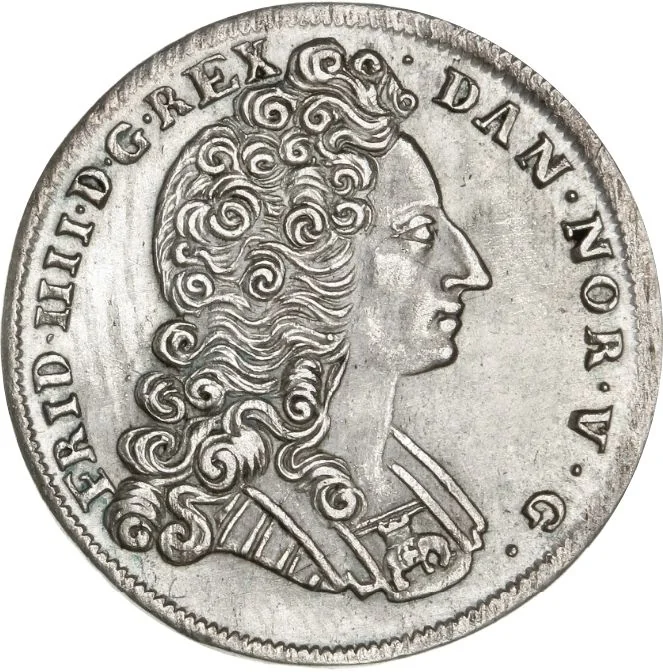
Obverse
Description:
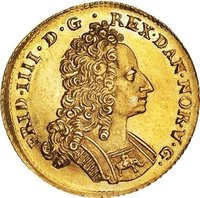
King's bust right, curly hair dividing legend.
Inscription:
FRID • IIII • D • G • REX | • DAN • NOR • V • G •
Script: Latin
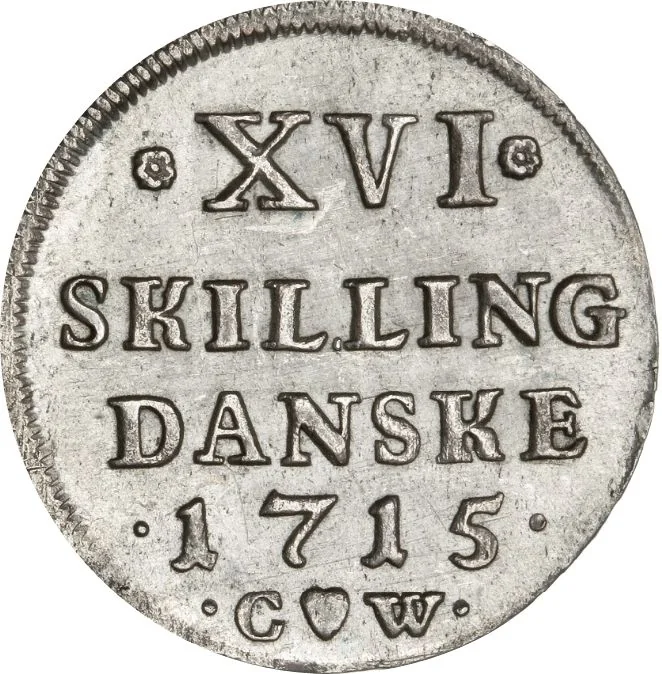
Reverse
Description:
Value and date above.
Mintmark below, centered heart.
Mintmark below, centered heart.
Inscription:
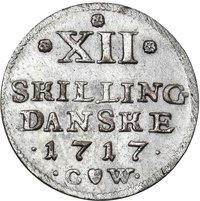
* XVI *
SKILLING
DANSKE
• 1715 •
• C ♥ W •
SKILLING
DANSKE
• 1715 •
• C ♥ W •
Script: Latin
Edge
Mints
| Name | Mark |
|---|---|
| Copenhagen | ♥ |
Mintings
| Year | Mint Mark | Mintage | Quality | Collection |
|---|---|---|---|---|
| 1713 | CW; | — | ||
| 1714 | CW; | — | ||
| 1715 | CW; | — | ||
| 1716 | CW; | — |
Historical background
In 1713, Denmark found itself in a dire monetary crisis, a direct consequence of the immense financial strain of the Great Northern War (1700-1721). King Frederick IV had committed vast resources to the conflict, funding a large army and navy. With state coffers depleted, the government resorted to the repeated debasement of the currency, notably the skilling. By reducing the silver content in coins while maintaining their face value, the crown aimed to create more money to pay its bills, but this triggered severe inflation and a collapse in public trust.
The situation was chaotic, characterized by a confusing circulation of both old, high-value coins and new, debased ones. This led to Gresham's Law in practice, where "bad money drives out good"; people hoarded the older, purer silver coins and used the worthless new coins for transactions, further destabilizing the economy. Prices soared, and foreign trade suffered as merchants refused the debased Danish currency. The monetary system was on the verge of breakdown, causing widespread hardship and economic paralysis.
Recognizing the catastrophe, the Danish government initiated a major reform in 1713, laying the groundwork for the transformative Kurant system. This involved calling in all old, debased coins and issuing new, stable currency based on the kurantdaler, a unit of account tied to silver. While the full stabilization would take several years to implement, 1713 marked the pivotal low point and the beginning of the deliberate, state-led effort to restore monetary order and credibility, which would eventually establish a foundation for Denmark's 18th-century economic recovery.
The situation was chaotic, characterized by a confusing circulation of both old, high-value coins and new, debased ones. This led to Gresham's Law in practice, where "bad money drives out good"; people hoarded the older, purer silver coins and used the worthless new coins for transactions, further destabilizing the economy. Prices soared, and foreign trade suffered as merchants refused the debased Danish currency. The monetary system was on the verge of breakdown, causing widespread hardship and economic paralysis.
Recognizing the catastrophe, the Danish government initiated a major reform in 1713, laying the groundwork for the transformative Kurant system. This involved calling in all old, debased coins and issuing new, stable currency based on the kurantdaler, a unit of account tied to silver. While the full stabilization would take several years to implement, 1713 marked the pivotal low point and the beginning of the deliberate, state-led effort to restore monetary order and credibility, which would eventually establish a foundation for Denmark's 18th-century economic recovery.
⭐ Rare