

12 skilling – Denmark
Add to wishlist
Denmark
Context
Material
References
KM: #
Numista: #49177
Value
Bullion value: $5.60
Obverse
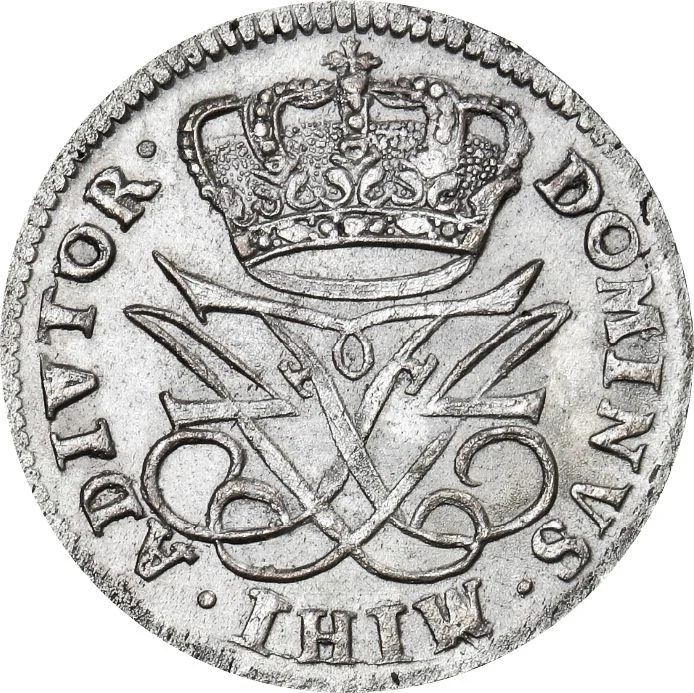
Description:
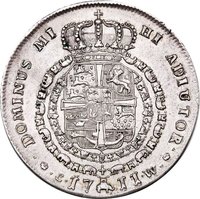
Crown over royal monogram. Motto encircling.
Inscription:
DOMINVS · MIHI · ADIVTOR ·
Script: Latin
Reverse
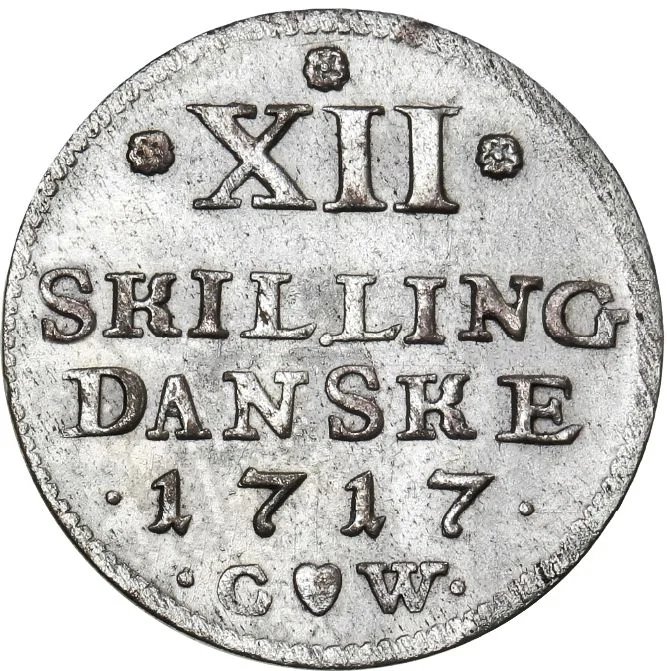
Description:
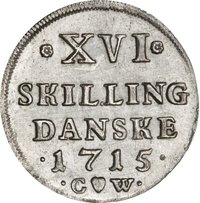
Value and date in letters and Roman numerals on four lines. Below, the mintmark with a central heart.
Inscription:
*
*XII*
SKILLING
DANSKE
·1717·
·C ♥ W·
*XII*
SKILLING
DANSKE
·1717·
·C ♥ W·
Script: Latin
Edge
Mints
| Name | Mark |
|---|---|
| Copenhagen | ♥ |
Mintings
| Year | Mint Mark | Mintage | Quality | Collection |
|---|---|---|---|---|
| 1712 | CW; | — | ||
| 1713 | CW; | — | ||
| 1714 | CW; | — | ||
| 1715 | CW; | — | ||
| 1716 | CW; | — | ||
| 1717 | CW; | — | ||
| 1718 | CW; | — | ||
| 1719 | CW; | — |
Historical background
In 1712, Denmark found itself in a precarious monetary situation, a direct consequence of its prolonged involvement in the Great Northern War (1700-1721). The conflict had placed an immense strain on state finances, leading King Frederick IV and his government to resort to repeated currency debasements. The silver content of coins was systematically reduced to create more money from the same amount of precious metal, effectively financing the war through inflation. This created a confusing and unstable system where older, purer coins were hoarded, while the newer, inferior coins circulated at a discounted value, damaging public trust.
The situation was further complicated by the circulation of multiple coin types. Alongside the debased domestic currency, older "good" Danish coins, as well as foreign currencies like the German reichsthaler and Dutch ducat, were in use, each valued differently. This led to a chaotic exchange environment where daily transactions required complex calculations. The state attempted to mandate exchange rates by decree, but these often failed to reflect market reality, leading to widespread economic disruption, price volatility, and hardship for ordinary people who saw their purchasing power erode.
By 1712, the negative effects were acute: rampant inflation, a loss of confidence in the crown's monetary policy, and significant difficulties in both domestic and international trade. The debasement had also severely damaged Denmark's creditworthiness. Recognizing the crisis, plans for a comprehensive monetary reform were already being formulated. These would culminate in the major reform of 1713, which introduced a new, stable silver-based rigsdaler and established the Danish central bank, Kurantbanken, in 1736, laying the foundation for a modern monetary system to restore stability after the war's conclusion.
The situation was further complicated by the circulation of multiple coin types. Alongside the debased domestic currency, older "good" Danish coins, as well as foreign currencies like the German reichsthaler and Dutch ducat, were in use, each valued differently. This led to a chaotic exchange environment where daily transactions required complex calculations. The state attempted to mandate exchange rates by decree, but these often failed to reflect market reality, leading to widespread economic disruption, price volatility, and hardship for ordinary people who saw their purchasing power erode.
By 1712, the negative effects were acute: rampant inflation, a loss of confidence in the crown's monetary policy, and significant difficulties in both domestic and international trade. The debasement had also severely damaged Denmark's creditworthiness. Recognizing the crisis, plans for a comprehensive monetary reform were already being formulated. These would culminate in the major reform of 1713, which introduced a new, stable silver-based rigsdaler and established the Danish central bank, Kurantbanken, in 1736, laying the foundation for a modern monetary system to restore stability after the war's conclusion.
⭐ Rare