

1 Rupee – Mughal Empire
India
Context
Years: 1738–1740
Country: India 
Issuer: Mughal Empire
Ruler: Muhammad Shah
Currency:
(1540—1842)
Demonetized: Yes
Material
References
KM: #Click to copy to clipboard435.1
Numista: #478806
Value
Bullion value: $32.55
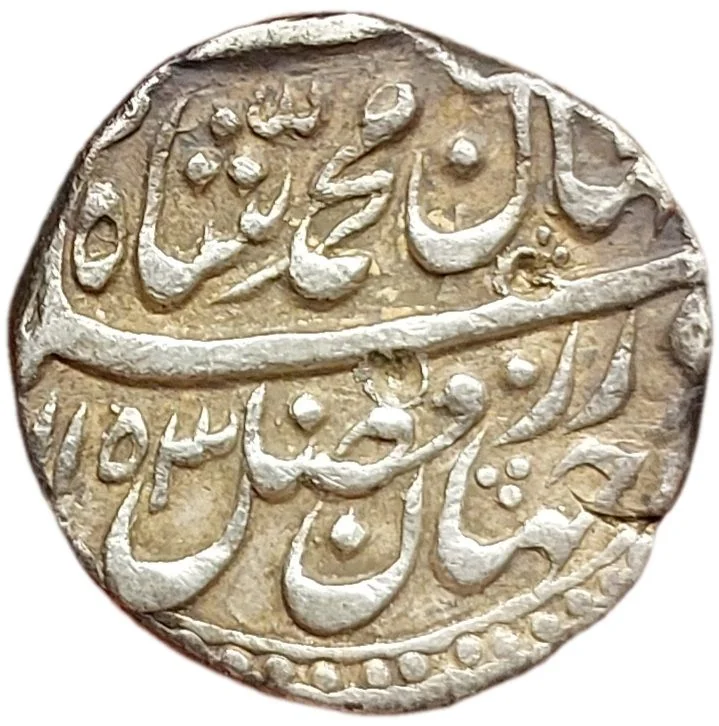
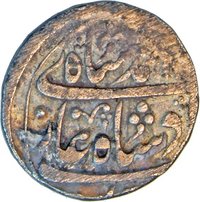
Obverse
Description:
Muhammad Shah, titled "Badshah-i-Jahan" (King of the World).
Inscription:
sikka zad dar jahan ze-fazl-ullah 1153AH
سکه زد در جهان ز فضل اله
Badshah-i-Jahan, Muhammad Shah
سکه زد در جهان ز فضل اله
Badshah-i-Jahan, Muhammad Shah
Script: Persian
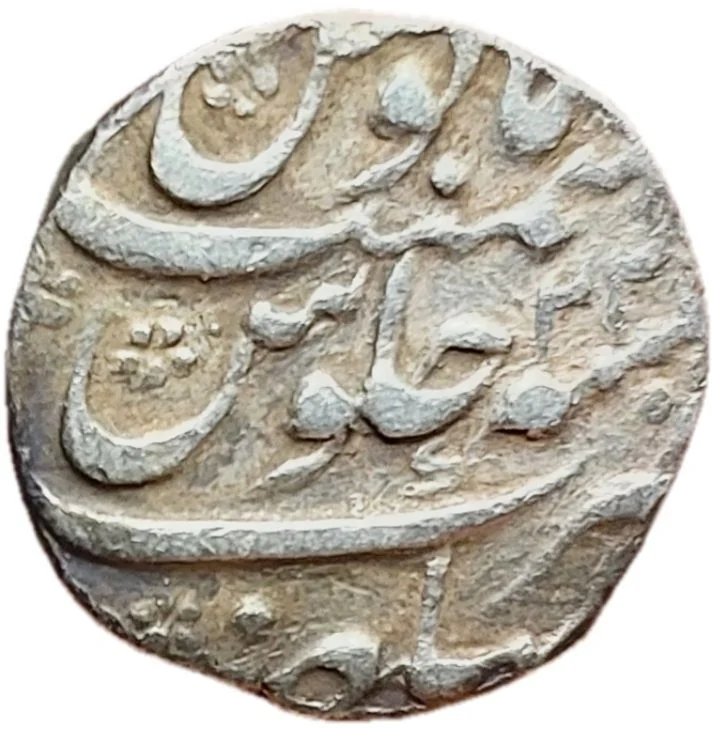
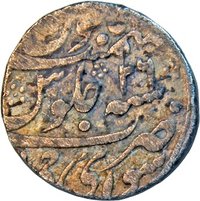
Reverse
Description:
Bhakkar Mint, RY22
Inscription:
Zarb Bhakkar
Sana 22, Jalos Manoos Memanat
Sana 22, Jalos Manoos Memanat
Script: Persian
Edge
Plain
Mintings
| Year | Mint Mark | Mintage | Quality | Collection |
|---|---|---|---|---|
| 1738 | — | — | ||
| 1739 | — | — | ||
| 1740 | — | — |
Historical background
By 1738, the Mughal Empire's currency system, once a pillar of its economic strength, was in a state of severe strain and fragmentation. The standard silver rupee, established by Emperor Sher Shah Suri and perfected under Akbar, remained the nominal unit of account, but its integrity was compromised. Decades of imperial decline, costly wars (particularly against the Marathas), and the enormous drain of wealth paid to Nadir Shah of Persia following his devastating invasion that very year had depleted the central treasury. This fiscal crisis led to a chronic shortage of precious metals, causing the mints in the capital, Delhi, to produce coins of inconsistent weight and purity.
The political decentralisation of the empire directly manifested in its coinage. While the Emperor Muhammad Shah still issued coins in his name, powerful regional governors and emerging successor states like Bengal, Awadh, and Hyderabad began striking their own rupees. These regional issues often maintained the imperial design out of tradition but varied significantly in silver content and weight, creating a complex monetary landscape where the value of a "rupee" depended on its origin. Furthermore, older Mughal coins from the reigns of Aurangzeb or earlier, which had higher intrinsic silver value, circulated at a premium compared to newer, debased issues, leading to Gresham's Law ("bad money drives out good money") in practice.
Consequently, the monetary system of 1738 was characterised by uncertainty and localisation. Trade and revenue collection were hampered by the need to constantly assess and discount various coins. The simultaneous circulation of Mughal, regional, and even foreign coins (like the Spanish silver real entering via trade) created a bazaar economy reliant on money-changers (sarrafs). The invasion of Nadir Shah, which culminated in 1739 with the sack of Delhi and the plunder of the Peacock Throne, would deliver the final blow, catastrophically draining the empire's remaining bullion reserves and accelerating the complete balkanisation of its currency, paving the way for the regional monetary systems of the 18th century.
The political decentralisation of the empire directly manifested in its coinage. While the Emperor Muhammad Shah still issued coins in his name, powerful regional governors and emerging successor states like Bengal, Awadh, and Hyderabad began striking their own rupees. These regional issues often maintained the imperial design out of tradition but varied significantly in silver content and weight, creating a complex monetary landscape where the value of a "rupee" depended on its origin. Furthermore, older Mughal coins from the reigns of Aurangzeb or earlier, which had higher intrinsic silver value, circulated at a premium compared to newer, debased issues, leading to Gresham's Law ("bad money drives out good money") in practice.
Consequently, the monetary system of 1738 was characterised by uncertainty and localisation. Trade and revenue collection were hampered by the need to constantly assess and discount various coins. The simultaneous circulation of Mughal, regional, and even foreign coins (like the Spanish silver real entering via trade) created a bazaar economy reliant on money-changers (sarrafs). The invasion of Nadir Shah, which culminated in 1739 with the sack of Delhi and the plunder of the Peacock Throne, would deliver the final blow, catastrophically draining the empire's remaining bullion reserves and accelerating the complete balkanisation of its currency, paving the way for the regional monetary systems of the 18th century.
✨ Legendary