

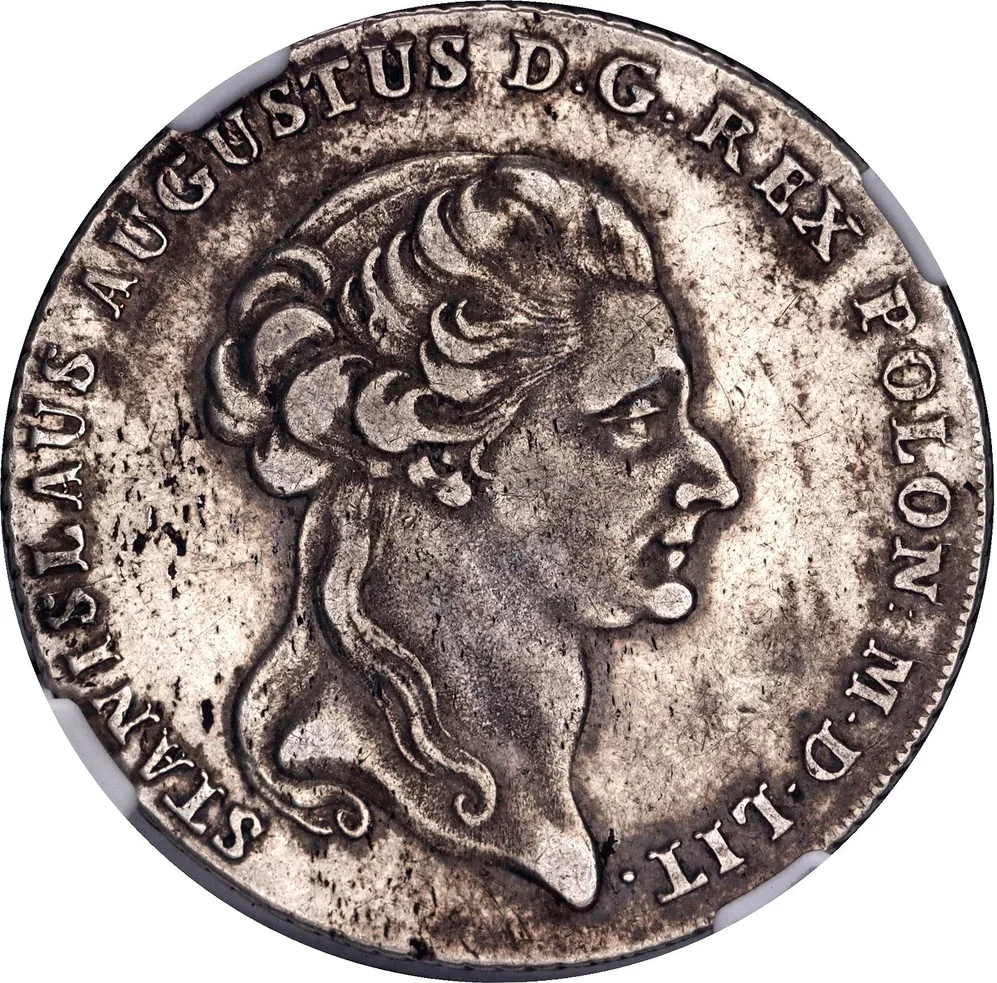
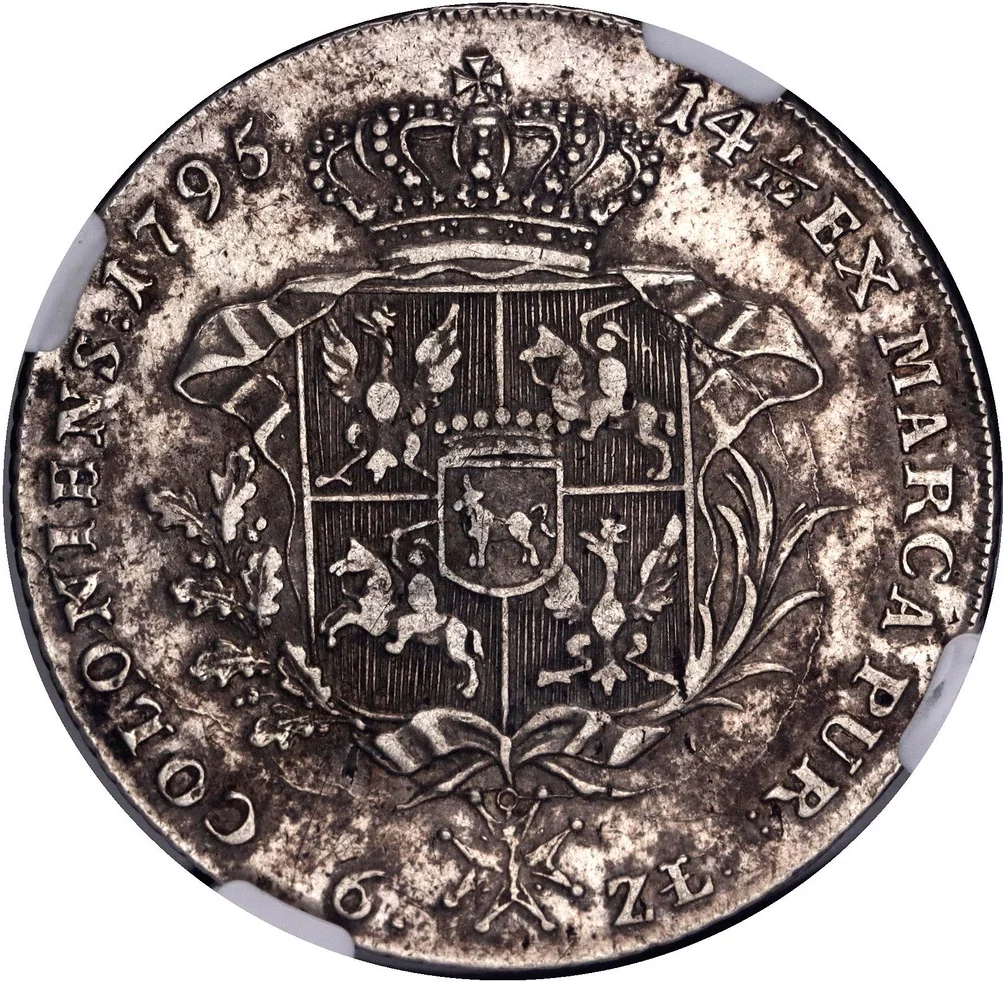
1 Thaler – Polish–Lithuanian Commonwealth
Poland
Context
Years: 1788–1792
Country: Poland 
Issuer: Polish–Lithuanian Commonwealth
Ruler: Stanisław II Augustus
Currency:
(1573—1795)
Demonetized: Yes
Total mintage: 30,557
Material
References
KM: #Click to copy to clipboard212
Numista: #104760
Value
Bullion value: $79.48
Obverse
Reverse
Description:
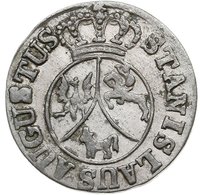
Crowned Polish-Lithuanian arms with White Eagle Order insignia, oak, and palm sprigs.
Inscription:
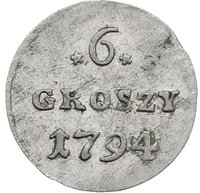
10 7/16 EX MARCA PURA COLONIENS 1788
Script: Latin
Edge
Script:Latin
Legend:
FIDEI PUBLICAE PIGNUS
Mints
| Name | Mark |
|---|---|
| Mint of Poland | — |
Mintings
| Year | Mint Mark | Mintage | Quality | Collection |
|---|---|---|---|---|
| 1788 | — | 30,557 | ||
| 1792 | — | — |
Historical background
By 1788, the currency situation in the Polish–Lithuanian Commonwealth was dire and symptomatic of the broader political paralysis plaguing the state. The monetary system was chaotic, characterized by a proliferation of debased coinage. The primary unit, the złoty, was not a physical coin but a unit of account, and the actual circulating coins included a confusing mix of domestic and foreign issues, notably heavily debased copper szelągi (shillings) and Prussian tymfy. This debasement, often sanctioned by the Treasury to generate short-term revenue for a cash-strapped government, had led to severe inflation, a loss of public confidence in the currency, and widespread economic hardship.
The root cause was the Commonwealth's weak central authority, as the Sejm (parliament) and the treasury were hamstrung by the liberum veto, which allowed any single deputy to block reforms. This prevented the establishment of a strong, central minting authority and consistent monetary policy. Furthermore, powerful magnates and foreign powers, particularly Prussia and Russia, actively circulated their own debased coinage within Poland-Lithuania to drain wealth and exert economic control, exploiting the Commonwealth's lack of monetary sovereignty for political gain.
This monetary crisis formed a crucial backdrop to the deliberations of the "Great" or "Four-Year Sejm," which convened in October 1788. Recognizing that a stable currency was foundational for a sovereign state, monetary reform became an urgent priority for the patriotic reformers. The subsequent Constitution of 3 May 1791 would explicitly entrust monetary policy to the government, paving the way for the landmark reforms of 1794, which finally introduced a modern, unified national currency based on a silver standard, though these came tragically late as the partitions soon erased the Commonwealth's independence.
The root cause was the Commonwealth's weak central authority, as the Sejm (parliament) and the treasury were hamstrung by the liberum veto, which allowed any single deputy to block reforms. This prevented the establishment of a strong, central minting authority and consistent monetary policy. Furthermore, powerful magnates and foreign powers, particularly Prussia and Russia, actively circulated their own debased coinage within Poland-Lithuania to drain wealth and exert economic control, exploiting the Commonwealth's lack of monetary sovereignty for political gain.
This monetary crisis formed a crucial backdrop to the deliberations of the "Great" or "Four-Year Sejm," which convened in October 1788. Recognizing that a stable currency was foundational for a sovereign state, monetary reform became an urgent priority for the patriotic reformers. The subsequent Constitution of 3 May 1791 would explicitly entrust monetary policy to the government, paving the way for the landmark reforms of 1794, which finally introduced a modern, unified national currency based on a silver standard, though these came tragically late as the partitions soon erased the Commonwealth's independence.
✨ Legendary