

8 reales – Spain
Add to wishlist
Spain
Obverse
Description:
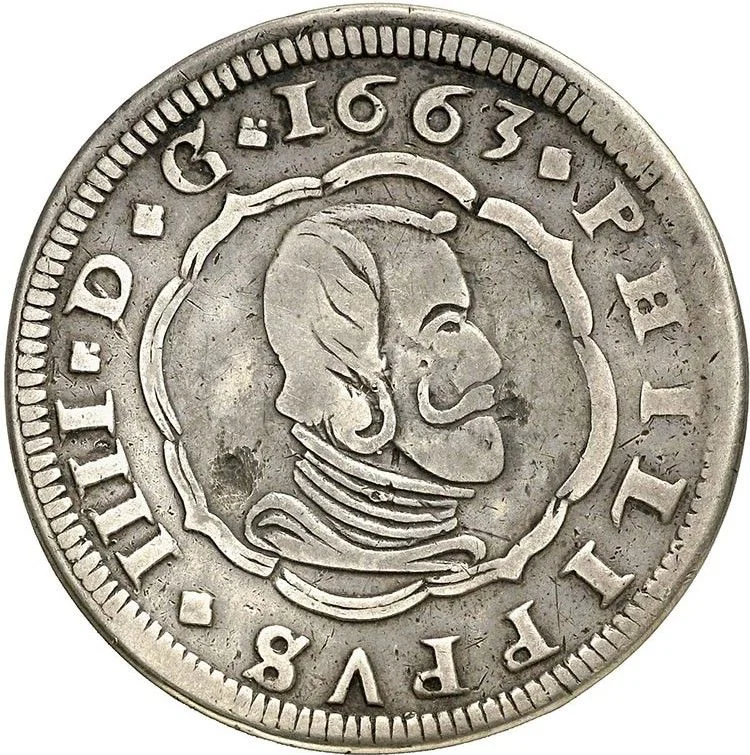
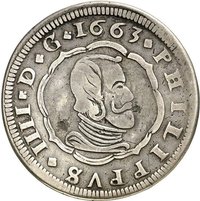
Bust of Philip IV in right-facing octolobe.
Inscription:
PHILIPPVS ✤ IIII ✤ D ✤ G ✤ 1663 ✤
Script: Latin
Reverse
Edge
Categories
| Person> Monarch |
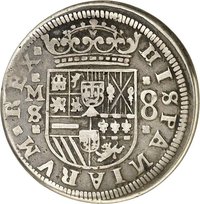
| Symbols> Coat of Arms |
Mints
| Name | Mark |
|---|---|
| Alcalá Gate of Madrid | M |
Mintings
| Year | Mint Mark | Mintage | Quality | Collection |
|---|---|---|---|---|
| 1663 | M | — |
Historical background
In 1663, the Spanish monetary system was in a state of profound crisis, a direct consequence of decades of fiscal mismanagement and the relentless demands of the Habsburg monarchy's endless wars. The primary currency, the silver real and its higher unit, the escudo (a gold coin), were suffering from severe debasement and scarcity. Successive governments, particularly under Philip IV and his chief minister, the Count-Duke of Olivares, had repeatedly resorted to clipping coinage, reducing its precious metal content to fund military campaigns in the Thirty Years' War and conflicts with France. This created a chaotic situation where the intrinsic value of coins was often less than their face value, leading to widespread hoarding of good-quality coins (Gresham's Law in action) and a loss of public trust.
The situation was exacerbated by a massive outflow of silver and gold from the American colonies, which, rather than strengthening the domestic economy, was largely siphoned off to pay foreign bankers and mercenaries. Much of the precious metal arriving at Seville's Casa de la Contratación was immediately pledged to Genoese and German creditors to service Spain's colossal debt. Furthermore, the crown frequently issued copper token money, the vellón, declaring it legal tender at artificially high rates. By 1663, the over-issuance of this nearly worthless copper currency had triggered rampant inflation, devastating wages and savings, and causing social unrest in cities.
Ultimately, the monetary chaos of 1663 was a glaring symptom of the broader "Decline of Spain." The economy, burdened by high taxes, stagnant production, and a rigid social structure, could not support the imperial ambitions of the state. Attempts at reform were piecemeal and ineffective. The monetary disorder stifled commerce, eroded the crown's credibility, and placed an unbearable strain on the populace, setting the stage for the further economic difficulties that would plague the final decades of the Habsburg dynasty.
The situation was exacerbated by a massive outflow of silver and gold from the American colonies, which, rather than strengthening the domestic economy, was largely siphoned off to pay foreign bankers and mercenaries. Much of the precious metal arriving at Seville's Casa de la Contratación was immediately pledged to Genoese and German creditors to service Spain's colossal debt. Furthermore, the crown frequently issued copper token money, the vellón, declaring it legal tender at artificially high rates. By 1663, the over-issuance of this nearly worthless copper currency had triggered rampant inflation, devastating wages and savings, and causing social unrest in cities.
Ultimately, the monetary chaos of 1663 was a glaring symptom of the broader "Decline of Spain." The economy, burdened by high taxes, stagnant production, and a rigid social structure, could not support the imperial ambitions of the state. Attempts at reform were piecemeal and ineffective. The monetary disorder stifled commerce, eroded the crown's credibility, and placed an unbearable strain on the populace, setting the stage for the further economic difficulties that would plague the final decades of the Habsburg dynasty.

✨ Legendary