Logo Title
Context
Years: 1772–1773
Currency:
Demonetized: Yes
Material
Diameter: 25.6 mm
Weight: 5.2 g
Silver weight: 5.20 g
Shape: Round
Composition: Silver
Magnetic: No
References
KM: #Click to copy to clipboard503
Numista: #474118
Value
Bullion value: $14.58

Obverse

Description:
Rampant lion clutching a monogrammed shield.
Inscription:
80. STUCK EINE MARK FEIN.
Script: Latin

Reverse

Description:
Central inscription with date, denomination, and mintmarks, encircled by a legend.
Inscription:
FURSTL : HESS : LANDM .

* IUSTIRT *

✿6✿

EINEN

R: THAL:

1772.

F.U.
Script: Latin

Edge

Mints

NameMark
Kassel

Mintings

YearMint MarkMintageQualityCollection
1772
1773

Historical background

In 1772, the currency situation in the Landgraviate of Hesse-Cassel was one of notable stability and strength, a direct legacy of the fiscal discipline and mercantilist policies of Landgrave Frederick II. Unlike many contemporary German states that struggled with debased coinage and monetary fragmentation, Hesse-Cassel benefited from a well-managed treasury and a profitable economic model. This model was famously underpinned by the systematic leasing of Hessian soldiers to foreign powers, particularly Great Britain during the ongoing American Revolutionary War, which generated substantial foreign income. This influx of specie (hard coin, especially British subsidies) allowed the Landgraviate to maintain a currency based on reliable silver Thalers and Gulden, which enjoyed a strong reputation in regional trade.

The monetary system itself was complex, typical of the Holy Roman Empire, with a mix of local and imperial coinage circulating. The standard unit was the Hessian Thaler, which was subdivided into 32 Albuses or 24 Gutegroschen. Crucially, the Landgraviate adhered to the Reichsthaler standard as defined by the Imperial Coinage Act of 1566, ensuring its coins held predictable value against those of other imperial territories. This relative stability was actively managed by the state mint and careful control over the money supply, preventing the inflationary spirals that plagued neighbors who engaged in currency debasement to finance debts.

However, this stability existed within a fragmented broader context. The Landgraviate's borders saw circulation of not only its own reliable coins but also a variety of neighboring and foreign currencies, requiring constant exchange and valuation. The year 1772 fell within a period of consolidation, following the economic turmoil of the Seven Years' War (1756-1763). Frederick II’s post-war policies focused on rebuilding reserves and maintaining the currency's integrity, which positioned Hesse-Cassel as a financially formidable state. This robust fiscal position would soon be tested, but in 1772, the Landgraviate’s currency was a pillar of its political power and economic credibility in Central Europe.

Series: 1772 Landgraviate of Hesse-Cassel circulation coins

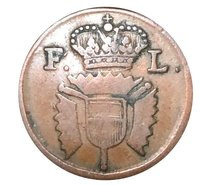
1 Pfennig obverse
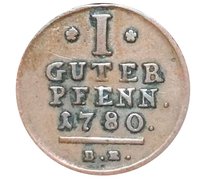
1 Pfennig reverse
1 Pfennig
1772-1785
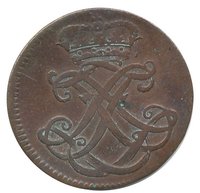
2 Hellers obverse
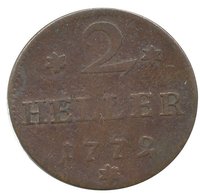
2 Hellers reverse
2 Hellers
1772
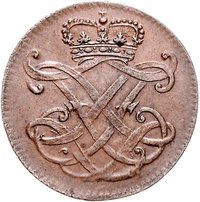
6 Hellers obverse
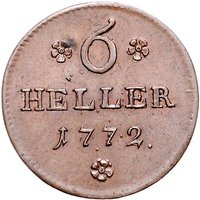
6 Hellers reverse
6 Hellers
1772
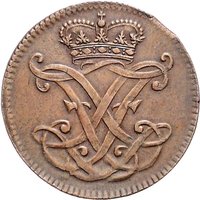
8 Hellers obverse
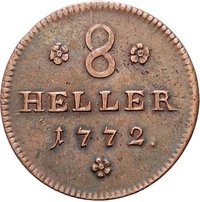
8 Hellers reverse
8 Hellers
1772
⅙ Thaler obverse
⅙ Thaler reverse
⅙ Thaler
1772-1773
Legendary