

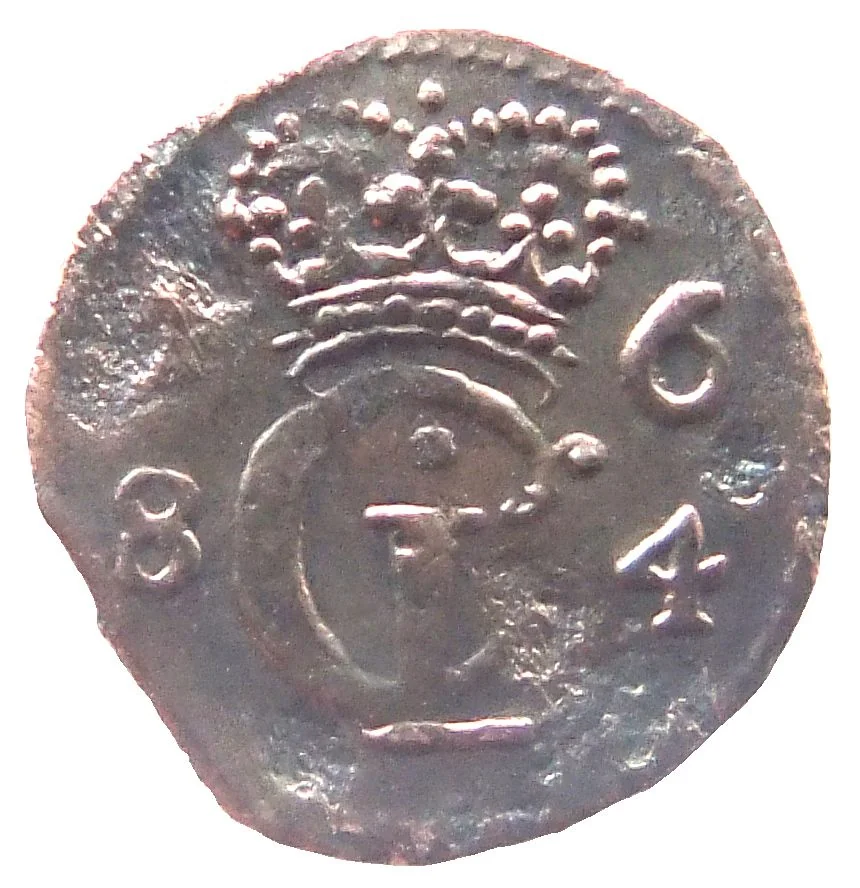
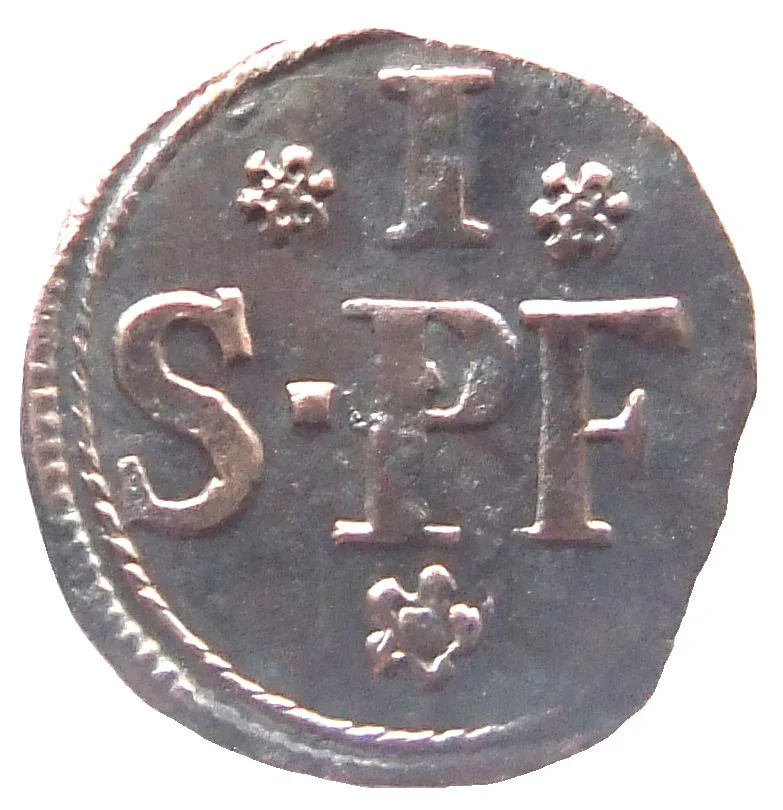
1 Pfennig – Landgraviate of Hesse-Cassel
Context
Material
Diameter: 12.5 mm
Weight: 0.43 g
Silver weight: 0.43 g
Shape: Irregular round
Composition: Silver
Magnetic: No
References
KM: #Click to copy to clipboard1
Numista: #472360
Value
Bullion value: $1.22
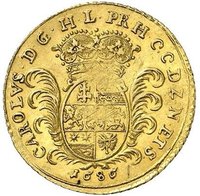
Obverse
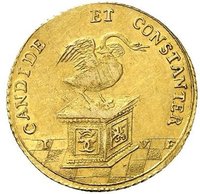
Reverse
Edge
Mintings
| Year | Mint Mark | Mintage | Quality | Collection |
|---|---|---|---|---|
| 1684 | — | — |
Historical background
In 1684, the currency situation in the Landgraviate of Hesse-Cassel was characterized by significant complexity and instability, a common challenge across the Holy Roman Empire. The monetary system was not unified, with a proliferation of different coins in circulation. These included not only coins minted by the Landgrave himself but also those from neighboring principalities, imperial thalers, and older, often debased, regional currencies. This created a chaotic environment for trade, as the value of coins depended on their metal content, age, and origin, requiring constant expert evaluation.
The root of this instability lay in the prerogative of coinage (Münzregal), a right held by the Landgrave which could be exploited for fiscal gain. During times of financial strain, such as the costly aftermath of the Thirty Years' War and the need to maintain a modern state apparatus, rulers were often tempted to engage in currency debasement. This involved reducing the precious metal content in newly minted coins while assigning them the same face value, thereby generating short-term profit but causing inflation and eroding public trust. Landgrave Charles I, ruling from 1677 to 1730, was aware of the economic damage caused by such practices.
Consequently, by the 1680s, there was a growing recognition within the Kassel administration of the need for monetary reform to ensure economic stability and facilitate commerce. The year 1684 falls within a period of gradual movement toward establishing a more reliable and standardized currency, a process that would see more concrete action in the following decades. The goal was to align Hesse-Cassel's currency more closely with the stable Reichsthaler standard of the Empire, reducing the multitude of circulating coins and curbing the harmful practice of debasement to strengthen the landgraviate's economy.
The root of this instability lay in the prerogative of coinage (Münzregal), a right held by the Landgrave which could be exploited for fiscal gain. During times of financial strain, such as the costly aftermath of the Thirty Years' War and the need to maintain a modern state apparatus, rulers were often tempted to engage in currency debasement. This involved reducing the precious metal content in newly minted coins while assigning them the same face value, thereby generating short-term profit but causing inflation and eroding public trust. Landgrave Charles I, ruling from 1677 to 1730, was aware of the economic damage caused by such practices.
Consequently, by the 1680s, there was a growing recognition within the Kassel administration of the need for monetary reform to ensure economic stability and facilitate commerce. The year 1684 falls within a period of gradual movement toward establishing a more reliable and standardized currency, a process that would see more concrete action in the following decades. The goal was to align Hesse-Cassel's currency more closely with the stable Reichsthaler standard of the Empire, reducing the multitude of circulating coins and curbing the harmful practice of debasement to strengthen the landgraviate's economy.
✨ Legendary