

1 Falus – City of Qandahar
Afghanistan
Context
Years: 1660–1669
Country: Afghanistan 
Issuer: City of Qandahar
Currency:
(1747—1891)
Demonetized: Yes
Material
References
KM: #Click to copy to clipboard84
Numista: #467886
Obverse
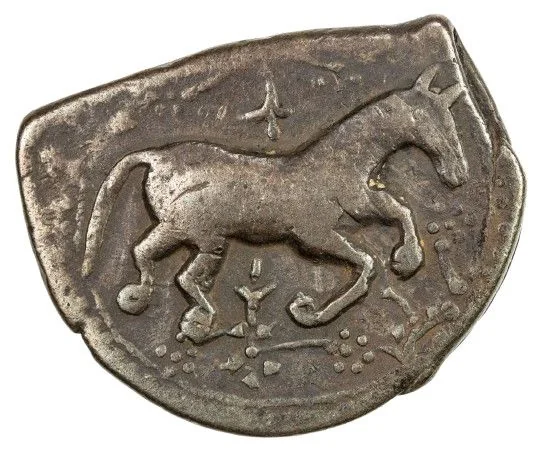
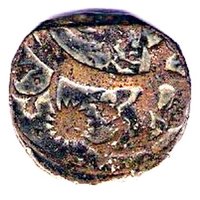
Description:
Galloping horse, right.
Reverse
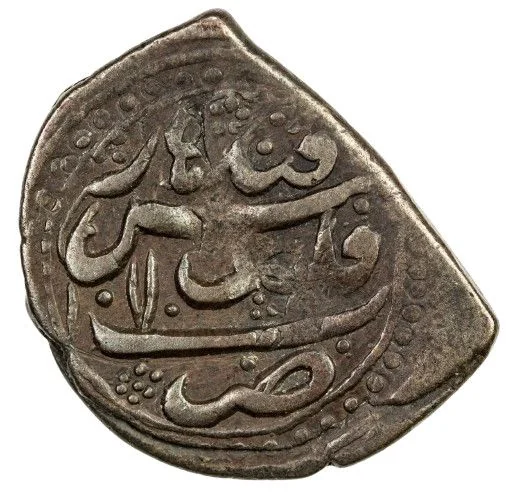
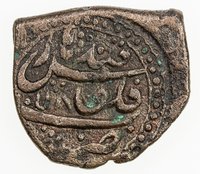
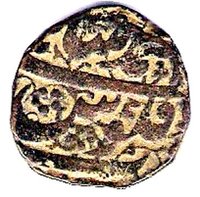
Inscription:
صرب فلوس قندهر
١٠۷۰
١٠۷۰
Edge
Mints
| Name | Mark |
|---|---|
| Kandahar | قندهر |
Mintings
| Year | Mint Mark | Mintage | Quality | Collection |
|---|---|---|---|---|
| 1660 | — | — | ||
| 1668 | — | — | ||
| 1669 | — | — |
Historical background
In 1660, Qandahar was a city of immense strategic and commercial importance, caught in a relentless tug-of-war between two mighty empires: the Sunni Mughal Empire based in India and the Shia Safavid Empire of Persia. Having changed hands multiple times in preceding decades, the city in 1660 was under firm Safavid control following Shah Abbas II’s successful siege in 1649. This political reality dictated the primary monetary environment, with the official currency being the Safavid silver ʿabbāsi (worth 200 dinars) and the gold tūmān (a unit of account worth 10,000 dinars). These coins, often minted in the major imperial cities like Isfahan, circulated alongside a variety of older Mughal and even earlier coins, creating a complex bazaar economy where merchants had to be expert in assessing the weight, purity, and origin of myriad coins.
The currency situation was further complicated by Qandahar’s role as a vital hub on the Silk Road caravan routes connecting India, Persia, and Central Asia. This brought a flood of foreign specie into the city’s markets. Indian rupees, Central Asian tankas, and even Ottoman coins were common in commercial transactions, their values fluctuating based on trade balances and the caravans’ arrivals. Money changers (ṣarrāfs) were thus pivotal figures in the city’s economic life, operating from stalls in the bazaar and providing essential services of assay, exchange, and even rudimentary banking, for a fee. Their benches formed the city’s de facto financial nerve center.
Despite the influx of foreign coin, the persistent warfare over the region created an underlying atmosphere of monetary instability. The ever-present threat of a renewed Mughal campaign, which would materialize just a few years later, led to hoarding of high-quality coins. Debasement of currency, a common practice to fund military expenses, was a constant concern for merchants. Consequently, major transactions, especially in long-distance trade, often relied on trusted bills of exchange (hundī or ṣuftaja) or direct barter of high-value goods like carpets, spices, and horses to mitigate the risks posed by fluctuating and uncertain metallic currency. Thus, Qandahar’s monetary landscape in 1660 was a fragile mosaic, reflective of its contested geography and its thriving, yet precarious, commercial crossroads.
The currency situation was further complicated by Qandahar’s role as a vital hub on the Silk Road caravan routes connecting India, Persia, and Central Asia. This brought a flood of foreign specie into the city’s markets. Indian rupees, Central Asian tankas, and even Ottoman coins were common in commercial transactions, their values fluctuating based on trade balances and the caravans’ arrivals. Money changers (ṣarrāfs) were thus pivotal figures in the city’s economic life, operating from stalls in the bazaar and providing essential services of assay, exchange, and even rudimentary banking, for a fee. Their benches formed the city’s de facto financial nerve center.
Despite the influx of foreign coin, the persistent warfare over the region created an underlying atmosphere of monetary instability. The ever-present threat of a renewed Mughal campaign, which would materialize just a few years later, led to hoarding of high-quality coins. Debasement of currency, a common practice to fund military expenses, was a constant concern for merchants. Consequently, major transactions, especially in long-distance trade, often relied on trusted bills of exchange (hundī or ṣuftaja) or direct barter of high-value goods like carpets, spices, and horses to mitigate the risks posed by fluctuating and uncertain metallic currency. Thus, Qandahar’s monetary landscape in 1660 was a fragile mosaic, reflective of its contested geography and its thriving, yet precarious, commercial crossroads.
✨ Legendary