

1 Falus – City of Qandahar
Afghanistan
Context
Year: 1648
Islamic (Hijri) Year: 1058
Country: Afghanistan 
Issuer: City of Qandahar
Currency:
(1747—1891)
Demonetized: Yes
Material
References
KM: #Click to copy to clipboard81
Numista: #467905
Obverse
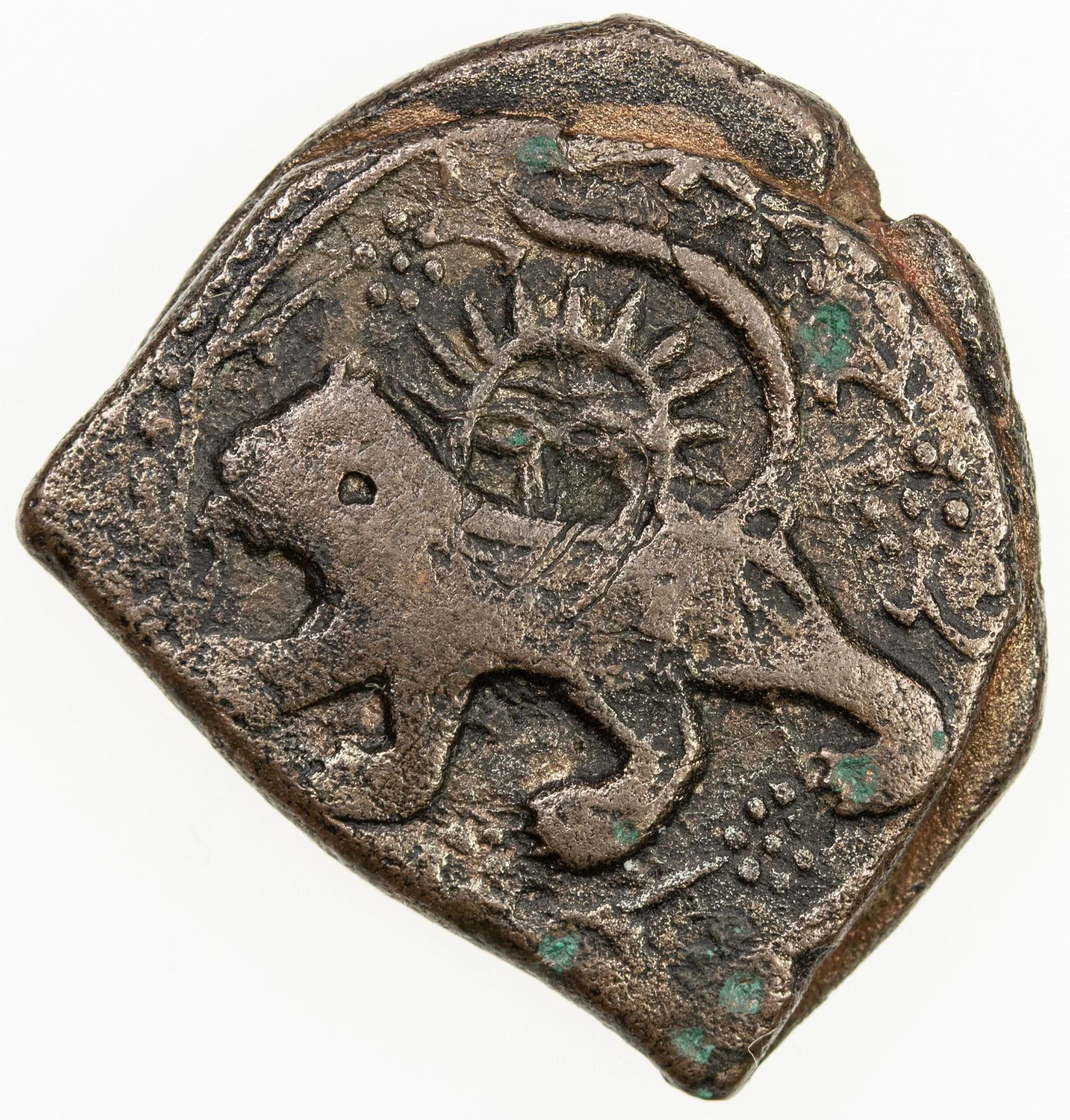
Description:
Lion left-facing with a rising sun on its back.
Reverse
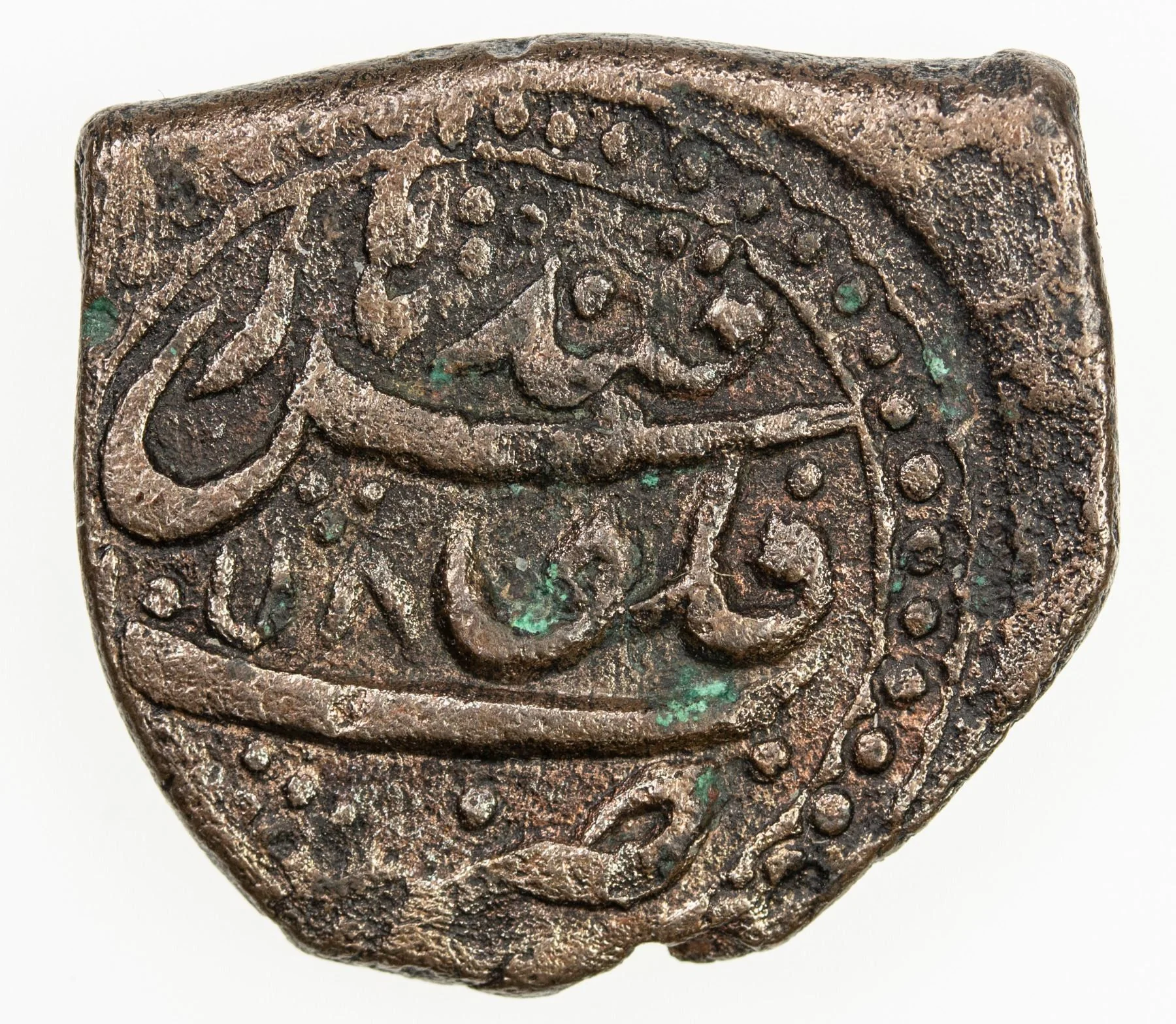
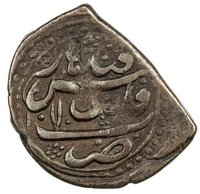
Inscription:
صرب فلوس قندهر
۱۰۵۸
۱۰۵۸
Edge
Mints
| Name | Mark |
|---|---|
| Kandahar | قندهر |
Mintings
| Year | Mint Mark | Mintage | Quality | Collection |
|---|---|---|---|---|
| 1648 | — | — |
Historical background
In 1648, the city of Qandahar was a contested and volatile economic hub, having recently changed hands from Safavid Persian to Mughal Indian control following a brutal siege in 1638. This political rupture fundamentally destabilized the monetary system. The city’s bazaars became a chaotic confluence of currencies: the Mughal silver rupee and copper dam circulated uneasily alongside the lingering Safavid silver abbasi and gold toman, while older Timurid and regional Afghan coins still held value for some transactions. The authority to mint coinage had shifted to the Mughals, but the legitimacy and purity of new coins issued from the local mint were often viewed with suspicion by a population whose loyalties were divided.
This monetary confusion was exacerbated by Qandahar’s critical role on the Silk Road. Caravans from Persia, Central Asia, and India brought a flood of foreign specie, from Ottoman altuns to Dutch leeuwendaalders and Spanish pieces of eight, all valued by weight and metal content rather than royal decree. Consequently, money changers (sarraf) wielded exceptional power, determining daily exchange rates and extracting hefty fees, which further hampered commerce. The Mughal administration, primarily concerned with military expenditure and extracting revenue, did little to impose a unified standard, preferring to tax trade in bulk silver.
Ultimately, the currency situation mirrored the city’s precarious geopolitical reality—a fractured economy under occupation. The lack of a trusted, uniform medium of exchange increased transaction costs, fostered distrust, and created opportunities for fraud. This financial instability weakened the Mughal hold on the city, fueling resentment and making the merchant classes and local Afghan tribes receptive to the inevitable Safavid attempts to recapture the fortress, which would succeed just a few years later in 1649. The money in one's purse, therefore, was not just a tool for trade but a tangible artifact of imperial conflict and uncertain sovereignty.
This monetary confusion was exacerbated by Qandahar’s critical role on the Silk Road. Caravans from Persia, Central Asia, and India brought a flood of foreign specie, from Ottoman altuns to Dutch leeuwendaalders and Spanish pieces of eight, all valued by weight and metal content rather than royal decree. Consequently, money changers (sarraf) wielded exceptional power, determining daily exchange rates and extracting hefty fees, which further hampered commerce. The Mughal administration, primarily concerned with military expenditure and extracting revenue, did little to impose a unified standard, preferring to tax trade in bulk silver.
Ultimately, the currency situation mirrored the city’s precarious geopolitical reality—a fractured economy under occupation. The lack of a trusted, uniform medium of exchange increased transaction costs, fostered distrust, and created opportunities for fraud. This financial instability weakened the Mughal hold on the city, fueling resentment and making the merchant classes and local Afghan tribes receptive to the inevitable Safavid attempts to recapture the fortress, which would succeed just a few years later in 1649. The money in one's purse, therefore, was not just a tool for trade but a tangible artifact of imperial conflict and uncertain sovereignty.
✨ Legendary