

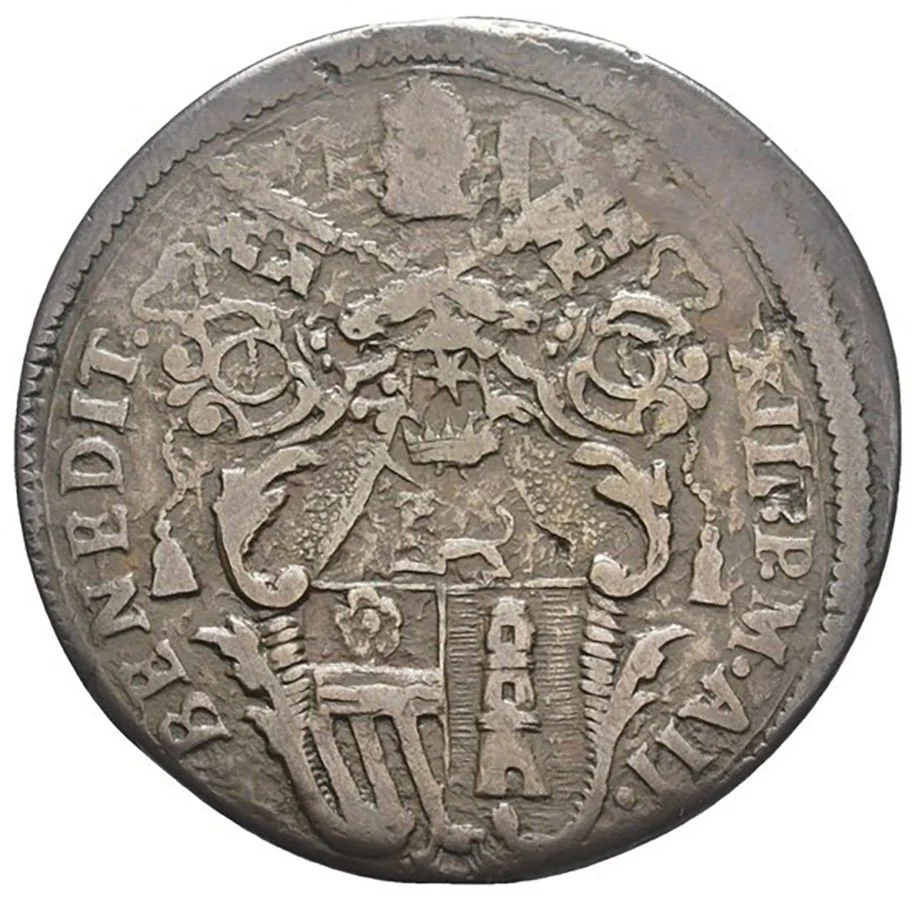
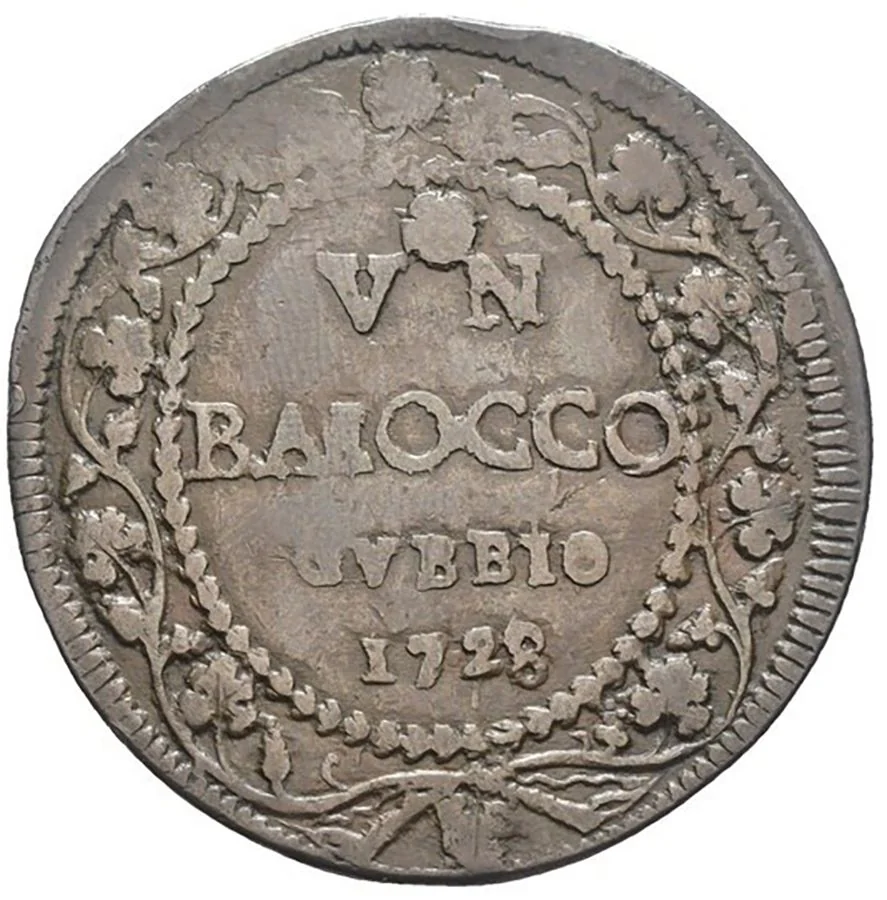
1 baiocco – Gubbio
Add to wishlist
Italy
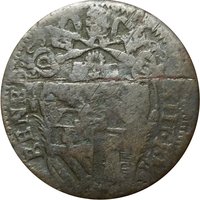
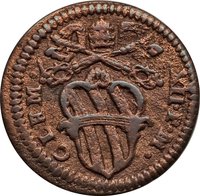
Obverse
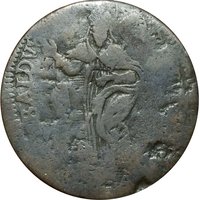
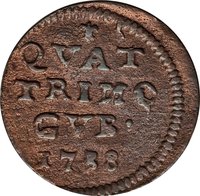
Reverse
Edge
Plain
Mints
| Name | Mark |
|---|---|
| Gubbio | — |
Mintings
| Year | Mint Mark | Mintage | Quality | Collection |
|---|---|---|---|---|
| 1726 | — | — | ||
| 1727 | — | — | ||
| 1728 | — | — | ||
| 1729 | — | — | ||
| 1730 | — | — |
Historical background
In 1726, the Italian city-state of Gubbio, like much of the Papal States under Pope Benedict XIII, operated within a complex and often chaotic monetary system. The official currency was the Papal scudo, a silver coin, but the reality in daily commerce was a jumble of circulating coins from other Italian states, foreign currencies from trade, and a plethora of older, clipped, and debased coins. This proliferation of specie of varying intrinsic value created constant friction in the marketplace, as merchants and citizens alike struggled with calculations of real worth, leading to frequent disputes and economic inefficiency.
The situation was exacerbated by a chronic shortage of small-denomination coinage, essential for everyday transactions. This scarcity led to the widespread use of moneta nera ("black money")—token coins of base metal or heavily debased silver issued by local authorities or even private entities to facilitate small change. The value of these tokens was highly unstable and often localized, undermining trust in the monetary system. Furthermore, counterfeiting was a persistent problem, adding another layer of risk and uncertainty for Gubbio's populace.
While Gubbio itself did not mint its own sovereign currency, its monetary fate was tied to the broader fiscal policies of the Papal States, which were often strained by debt and reliant on seigniorage. The year 1726 fell within a period of relative stagnation, where no major monetary reforms were enacted to address these deep-seated issues. Consequently, the citizens of Gubbio navigated an economic landscape defined by a confusing multiplicity of coins, the precarious value of small change, and an overarching reliance on a distant papal authority whose own financial health directly impacted the stability of their local commerce.
The situation was exacerbated by a chronic shortage of small-denomination coinage, essential for everyday transactions. This scarcity led to the widespread use of moneta nera ("black money")—token coins of base metal or heavily debased silver issued by local authorities or even private entities to facilitate small change. The value of these tokens was highly unstable and often localized, undermining trust in the monetary system. Furthermore, counterfeiting was a persistent problem, adding another layer of risk and uncertainty for Gubbio's populace.
While Gubbio itself did not mint its own sovereign currency, its monetary fate was tied to the broader fiscal policies of the Papal States, which were often strained by debt and reliant on seigniorage. The year 1726 fell within a period of relative stagnation, where no major monetary reforms were enacted to address these deep-seated issues. Consequently, the citizens of Gubbio navigated an economic landscape defined by a confusing multiplicity of coins, the precarious value of small change, and an overarching reliance on a distant papal authority whose own financial health directly impacted the stability of their local commerce.
💎 Extremely Rare