

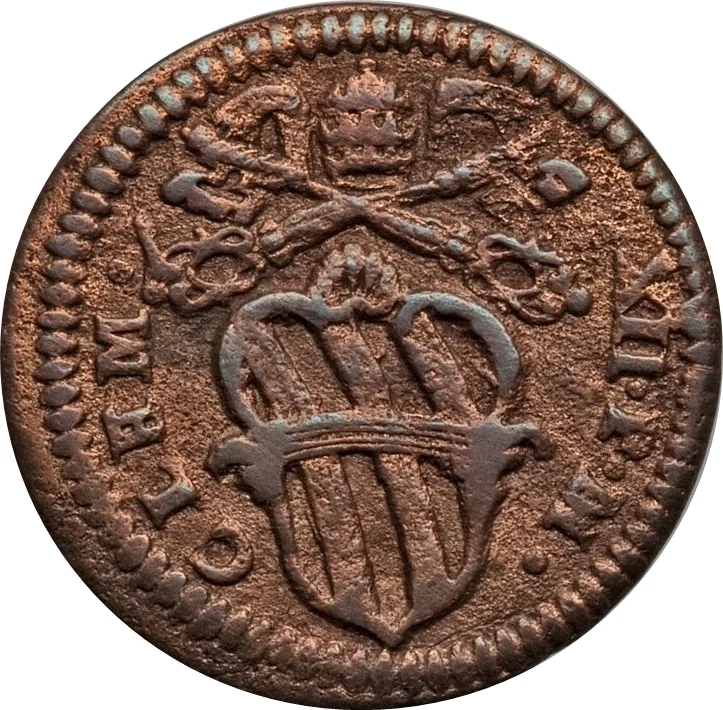
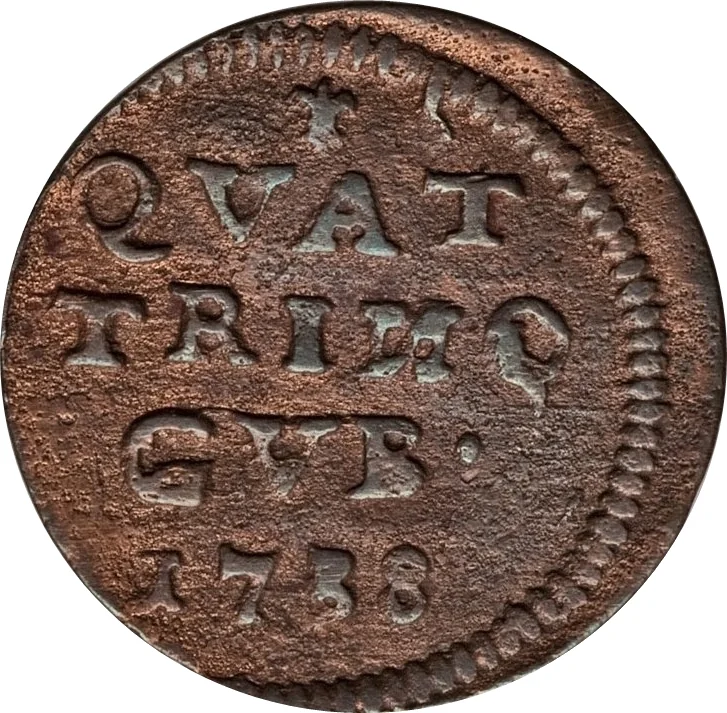
1 quattrino – Gubbio
Add to wishlist
Italy
Obverse
Reverse
Edge
Plain
Categories
| Symbol> Crown |
| Symbols> Coat of Arms |
Mints
| Name | Mark |
|---|---|
| Gubbio | — |
Mintings
| Year | Mint Mark | Mintage | Quality | Collection |
|---|---|---|---|---|
| 1738 | — | — | ||
| 1739 | — | — |
Historical background
In 1738, the Italian city-state of Gubbio, like much of the Papal States under Pope Clement XII, operated within a complex and fragmented monetary system. The official currency was the Papal scudo, subdivided into baiochi and quattrini, but in practice, Gubbio’s economy circulated a bewildering variety of coins. These included not only papal issues but also older regional coins from neighbouring duchies, Spanish silver pieces from the vast networks of Habsburg trade, and even worn and clipped coins from centuries past. This proliferation created constant confusion in daily commerce, as merchants and citizens had to negotiate the fluctuating values of dozens of different pieces based on their metal content, weight, and origin.
The situation was exacerbated by a chronic shortage of good, full-weight coinage—a typical early modern problem known as "bad money driving out good." Precious metal coins of reliable value were often hoarded or exported for larger interregional trade, leaving the local market flooded with debased and inferior coins. This led to frequent disputes, price instability, and a effective devaluation that harmed wage earners and the poor. While the papal mint in Rome attempted to standardize the currency, its reach and enforcement in a smaller commune like Gubbio were limited, leaving local authorities to issue periodic proclamations attempting to fix exchange rates between the myriad coins in circulation.
Ultimately, Gubbio’s currency situation in 1738 reflected its political and economic position: it was a small, historic commune integrated into a larger sovereign entity but still subject to the realities of pre-industrial finance. The lack of a uniform, trusted medium of exchange acted as a friction on the local economy, complicating tax collection, market trade, and debt settlement. This monetary confusion would persist until the sweeping reforms of the 19th century, standing as a daily reminder of the fragmented nature of the Italian peninsula before unification.
The situation was exacerbated by a chronic shortage of good, full-weight coinage—a typical early modern problem known as "bad money driving out good." Precious metal coins of reliable value were often hoarded or exported for larger interregional trade, leaving the local market flooded with debased and inferior coins. This led to frequent disputes, price instability, and a effective devaluation that harmed wage earners and the poor. While the papal mint in Rome attempted to standardize the currency, its reach and enforcement in a smaller commune like Gubbio were limited, leaving local authorities to issue periodic proclamations attempting to fix exchange rates between the myriad coins in circulation.
Ultimately, Gubbio’s currency situation in 1738 reflected its political and economic position: it was a small, historic commune integrated into a larger sovereign entity but still subject to the realities of pre-industrial finance. The lack of a uniform, trusted medium of exchange acted as a friction on the local economy, complicating tax collection, market trade, and debt settlement. This monetary confusion would persist until the sweeping reforms of the 19th century, standing as a daily reminder of the fragmented nature of the Italian peninsula before unification.

💎 Extremely Rare