

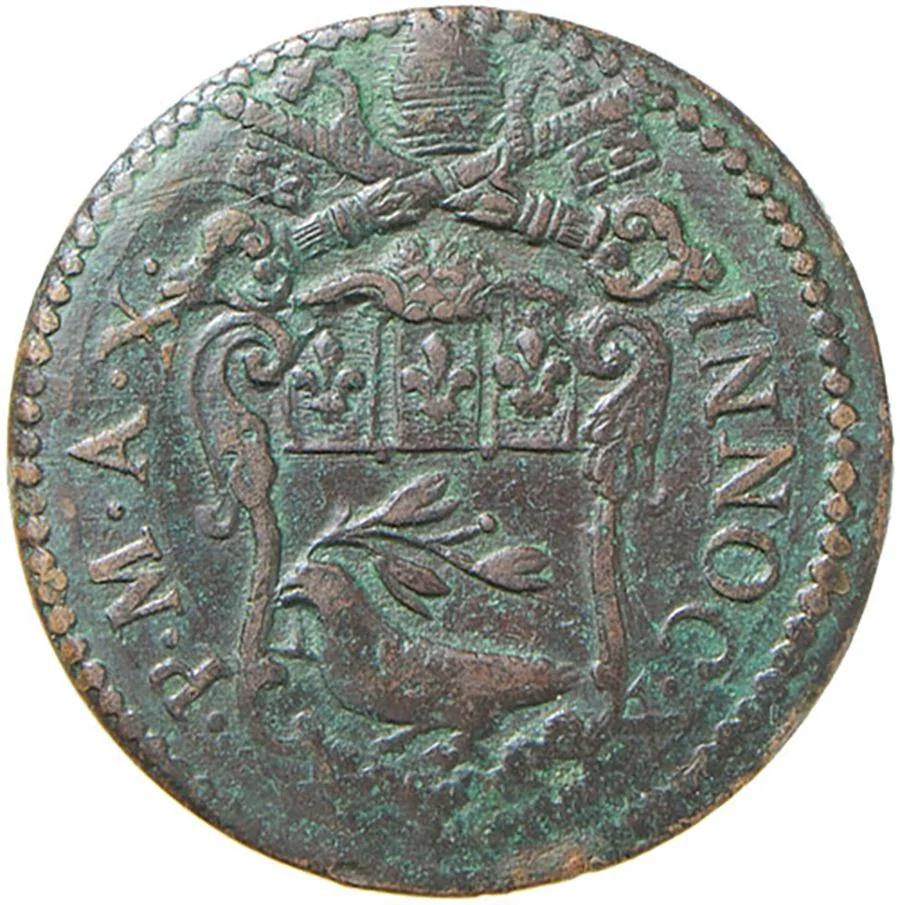
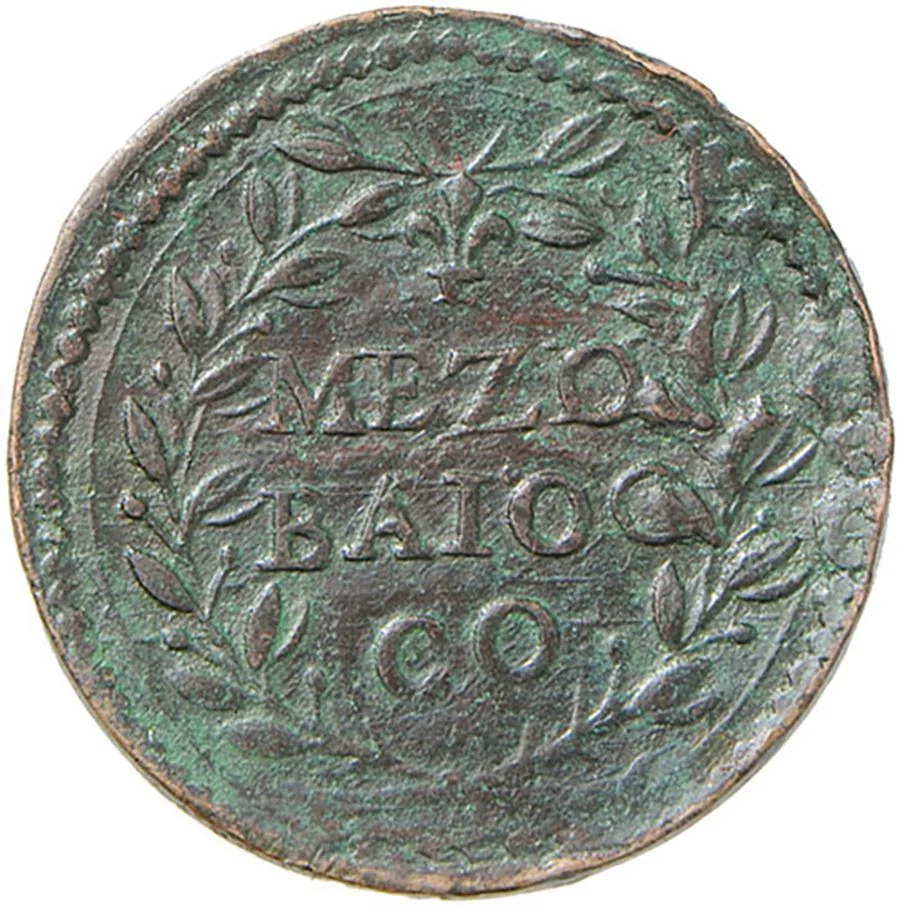
½ baiocco – Gubbio
Add to wishlist
Italy
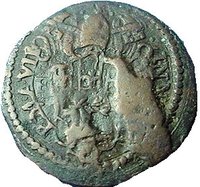
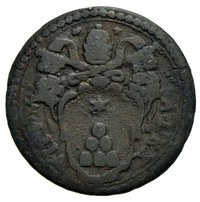
Obverse
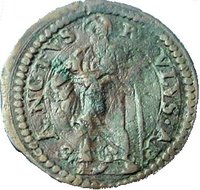
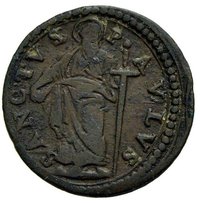
Reverse
Edge
Plain
Categories
| Animal> Bird |
| Symbol> Crown |
| Symbols> Coat of Arms |
| Symbol> Fleur-de-lis |
| Symbol> Wreath |
Mints
| Name | Mark |
|---|---|
| Gubbio | — |
Mintings
| Year | Mint Mark | Mintage | Quality | Collection |
|---|---|---|---|---|
| 1648 | — | — | ||
| 1651 | — | — | ||
| 1652 | — | — | ||
| 1653 | — | — |
Historical background
In 1648, the Italian city-state of Gubbio, like much of the Papal States under which it fell, was navigating a complex and strained monetary environment. The primary currency in circulation was the Papal scudo, a silver coin, but its value and reliability were under significant pressure. Decades of economic strain from warfare, poor harvests, and the shifting fortunes of the broader European economy had led to frequent debasement—the practice of reducing the precious metal content in coins. This resulted in a chronic shortage of "good" full-weight coinage, as older, purer coins were hoarded or melted down, leaving a circulation filled with lighter, less trustworthy pieces.
The local economy was further complicated by the persistence of older, regional monetary units for accounting, such as the lira and soldo, which existed only as notional values. Prices and contracts were often written in these units, but actual payment required constant and contentious calculation into the physical coins available, which included not only Papal issues but also a bewildering array of foreign coins from neighboring duchies and republics. This fragmentation created confusion, facilitated fraud, and hindered trade, as merchants and citizens alike struggled with uncertain exchange rates and the real value of their money.
For the people of Gubbio, this monetary instability had direct and painful consequences. It eroded purchasing power, effectively acting as a hidden tax that fueled inflation for basic goods. Trust in currency was low, often leading to disputes in markets and contracts. While the Papal authorities in Rome issued periodic decrees to set exchange rates and condemn counterfeiters, their control over the practical, day-to-day currency situation in a peripheral town like Gubbio was limited. Thus, in 1648, the monetary landscape was one of tangible anxiety, defined by the daily challenge of discerning real value from a pocketful of suspect metal.
The local economy was further complicated by the persistence of older, regional monetary units for accounting, such as the lira and soldo, which existed only as notional values. Prices and contracts were often written in these units, but actual payment required constant and contentious calculation into the physical coins available, which included not only Papal issues but also a bewildering array of foreign coins from neighboring duchies and republics. This fragmentation created confusion, facilitated fraud, and hindered trade, as merchants and citizens alike struggled with uncertain exchange rates and the real value of their money.
For the people of Gubbio, this monetary instability had direct and painful consequences. It eroded purchasing power, effectively acting as a hidden tax that fueled inflation for basic goods. Trust in currency was low, often leading to disputes in markets and contracts. While the Papal authorities in Rome issued periodic decrees to set exchange rates and condemn counterfeiters, their control over the practical, day-to-day currency situation in a peripheral town like Gubbio was limited. Thus, in 1648, the monetary landscape was one of tangible anxiety, defined by the daily challenge of discerning real value from a pocketful of suspect metal.
💎 Extremely Rare