

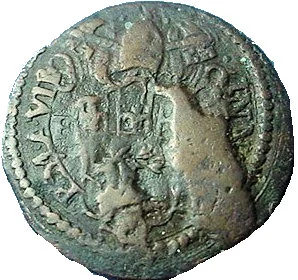
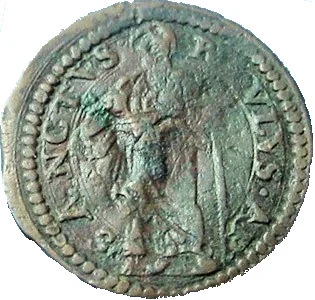
1 quattrino – Gubbio
Add to wishlist
Italy
Context
Years: 1645–1653
Country: Italy
Issuer: Gubbio
Ruler: Innocent X
Currency:
(1534—1835)
Demonetized: Yes
Material
References
KM: #
Numista: #7410
Obverse
Reverse
Edge
Categories
| Object> Cold weapons |
| Person> Religious figure |
| Symbol> Crown |
| Symbols> Coat of Arms |
Mints
| Name | Mark |
|---|---|
| Gubbio | — |
Mintings
| Year | Mint Mark | Mintage | Quality | Collection |
|---|---|---|---|---|
| 1645 | — | — | ||
| 1646 | — | — | ||
| 1647 | — | — | ||
| 1648 | — | — | ||
| 1649 | — | — | ||
| 1650 | — | — | ||
| 1651 | — | — | ||
| 1652 | — | — | ||
| 1653 | — | — |
Historical background
In 1645, the Italian city-state of Gubbio, like much of the Papal States under which it fell, was grappling with a complex and strained monetary system. The primary currency in official use was the Papal scudo, a silver coin, but its value and availability were under constant pressure. Decades of economic stagnation, exacerbated by the broader Thirty Years' War disrupting European trade, had led to a chronic shortage of full-weight silver coinage. This scarcity was worsened by the common practice of "clipping" precious metal from coin edges and the hoarding of good currency, which drove a wedge between the official and actual market value of money.
Consequently, daily transactions in Gubbio's markets were dominated by a chaotic mix of inferior subsidiary coins, including low-quality copper baiocchi and quattrini. The over-issuance of these small-denomination coins by the papal mint to raise seigniorage revenue led to rapid inflation for everyday goods, severely impacting the poor and working classes. Simultaneously, a variety of older, foreign, and even counterfeit coins circulated out of necessity, forcing merchants and citizens to be part-time money-changers, constantly assessing the metal content and legitimacy of each coin.
The monetary confusion reflected Gubbio's diminished economic position. Once a modest center for wool and ceramics, its economy had contracted, leaving it more reliant on regional agriculture and subject to the fiscal demands of the central papal authority in Rome. The currency situation of 1645 was thus a microcosm of a stagnant, controlled economy: a nominally unified currency under papal edict, but a de facto fragmented and inflationary system that complicated commerce and burdened the local populace, highlighting the weak economic integration of the Papal States' territories.
Consequently, daily transactions in Gubbio's markets were dominated by a chaotic mix of inferior subsidiary coins, including low-quality copper baiocchi and quattrini. The over-issuance of these small-denomination coins by the papal mint to raise seigniorage revenue led to rapid inflation for everyday goods, severely impacting the poor and working classes. Simultaneously, a variety of older, foreign, and even counterfeit coins circulated out of necessity, forcing merchants and citizens to be part-time money-changers, constantly assessing the metal content and legitimacy of each coin.
The monetary confusion reflected Gubbio's diminished economic position. Once a modest center for wool and ceramics, its economy had contracted, leaving it more reliant on regional agriculture and subject to the fiscal demands of the central papal authority in Rome. The currency situation of 1645 was thus a microcosm of a stagnant, controlled economy: a nominally unified currency under papal edict, but a de facto fragmented and inflationary system that complicated commerce and burdened the local populace, highlighting the weak economic integration of the Papal States' territories.
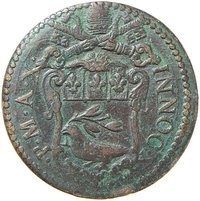
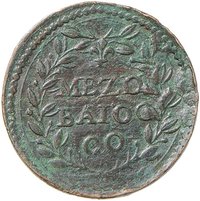
💎 Very Rare