

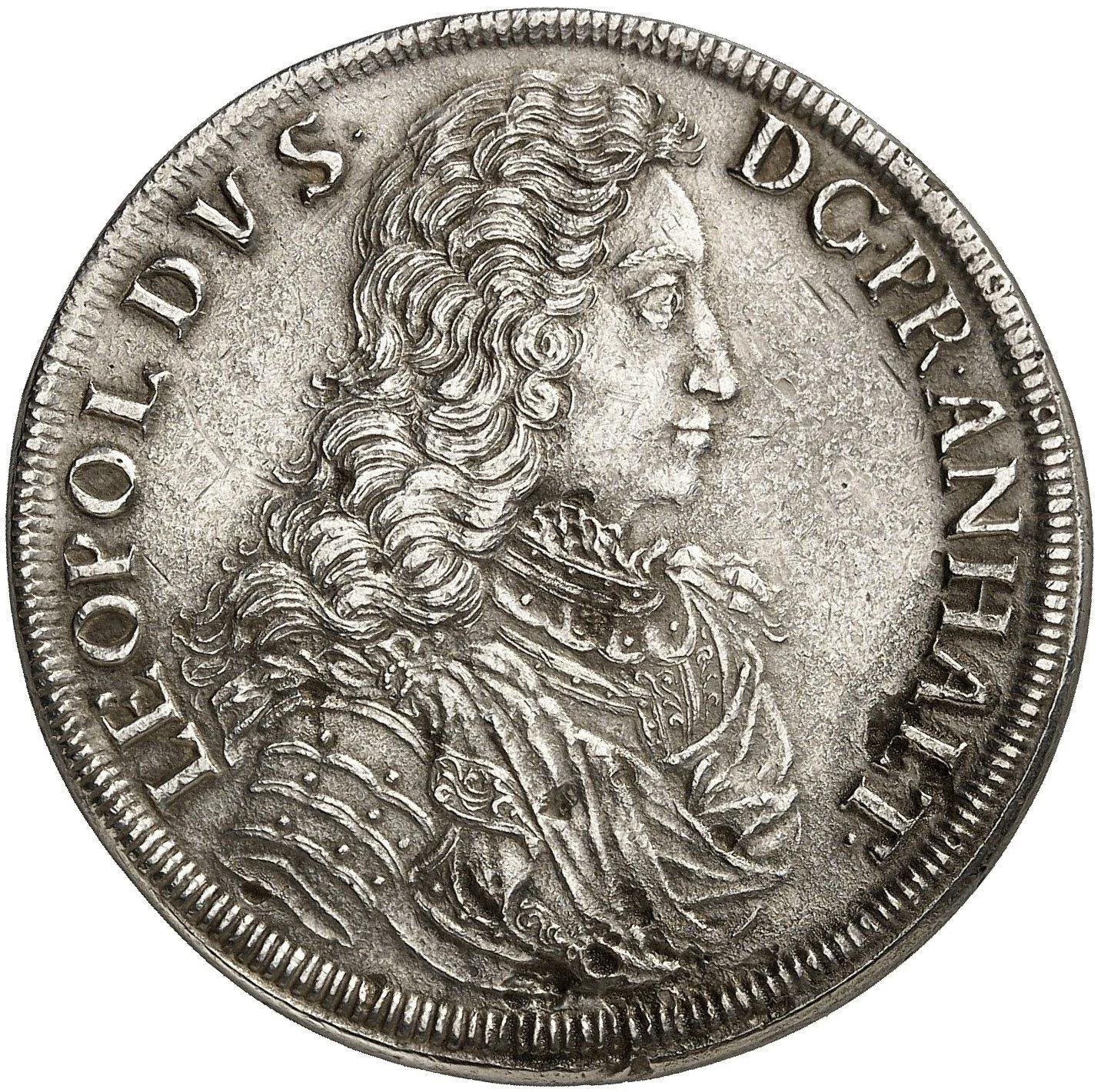
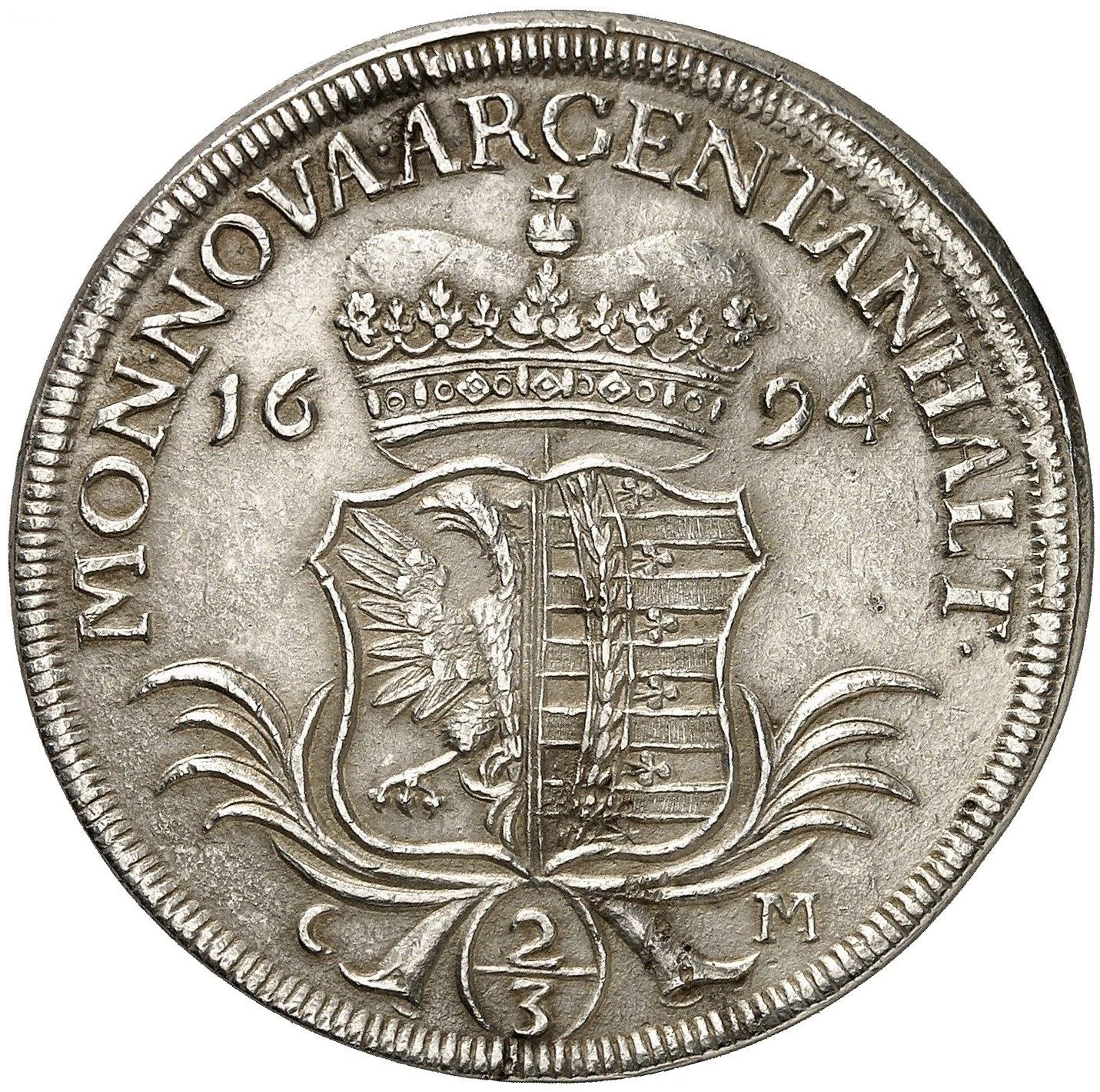
⅔ Thaler – Anhalt-Dessau
Germany

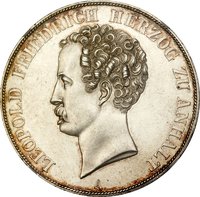
Obverse
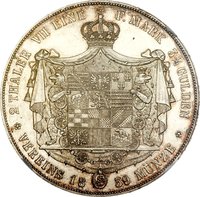
Reverse
Edge
Mints
| Name | Mark |
|---|---|
| Dessau | — |
Mintings
| Year | Mint Mark | Mintage | Quality | Collection |
|---|---|---|---|---|
| 1694 | — | — |
Historical background
In 1694, the currency situation in the small central German principality of Anhalt-Dessau was characterized by the widespread economic instability and monetary fragmentation of the Holy Roman Empire. The region operated within a complex web of competing coinage systems, where numerous states minted their own coins of varying silver content and value. For Anhalt-Dessau, like its neighbors, this created chronic challenges in trade, as the value of its currency was not only tied to its own fiscal policy but also to the fluctuating and often debased coins circulating from other principalities, leading to frequent exchange disputes and commercial uncertainty.
The specific pressures in 1694 were heavily influenced by the broader context of the Nine Years' War (1688-1697). Prince Leopold I of Anhalt-Dessau, a military leader in Prussian service, required substantial funds to maintain his regiment and his court's ambitions. This fiscal strain often tempted rulers to engage in Kipper- und Wipperzeit-style practices, debasing coinage by reducing its precious metal content to create more money from the same silver reserves. While a full-scale debasement crisis was not underway in 1694, the war-driven need for revenue placed immense pressure on the principality's monetary integrity.
Consequently, Anhalt-Dessau's currency in this period was likely a precarious balance. The prince would have sought to maintain the credibility of his coinage for domestic stability and external trade, while simultaneously exploring every financial avenue to meet his obligations. The situation underscored the vulnerability of small states within the Empire's decentralized monetary order, where wartime expenses could quickly lead to inflationary measures, eroding public trust and complicating economic recovery long after the war's conclusion.
The specific pressures in 1694 were heavily influenced by the broader context of the Nine Years' War (1688-1697). Prince Leopold I of Anhalt-Dessau, a military leader in Prussian service, required substantial funds to maintain his regiment and his court's ambitions. This fiscal strain often tempted rulers to engage in Kipper- und Wipperzeit-style practices, debasing coinage by reducing its precious metal content to create more money from the same silver reserves. While a full-scale debasement crisis was not underway in 1694, the war-driven need for revenue placed immense pressure on the principality's monetary integrity.
Consequently, Anhalt-Dessau's currency in this period was likely a precarious balance. The prince would have sought to maintain the credibility of his coinage for domestic stability and external trade, while simultaneously exploring every financial avenue to meet his obligations. The situation underscored the vulnerability of small states within the Empire's decentralized monetary order, where wartime expenses could quickly lead to inflationary measures, eroding public trust and complicating economic recovery long after the war's conclusion.
✨ Legendary