

1⁄12 Thaler – Anhalt-Dessau
Germany
Context

References
KM: #Click to copy to clipboard8
Numista: #458169
Obverse
Description:
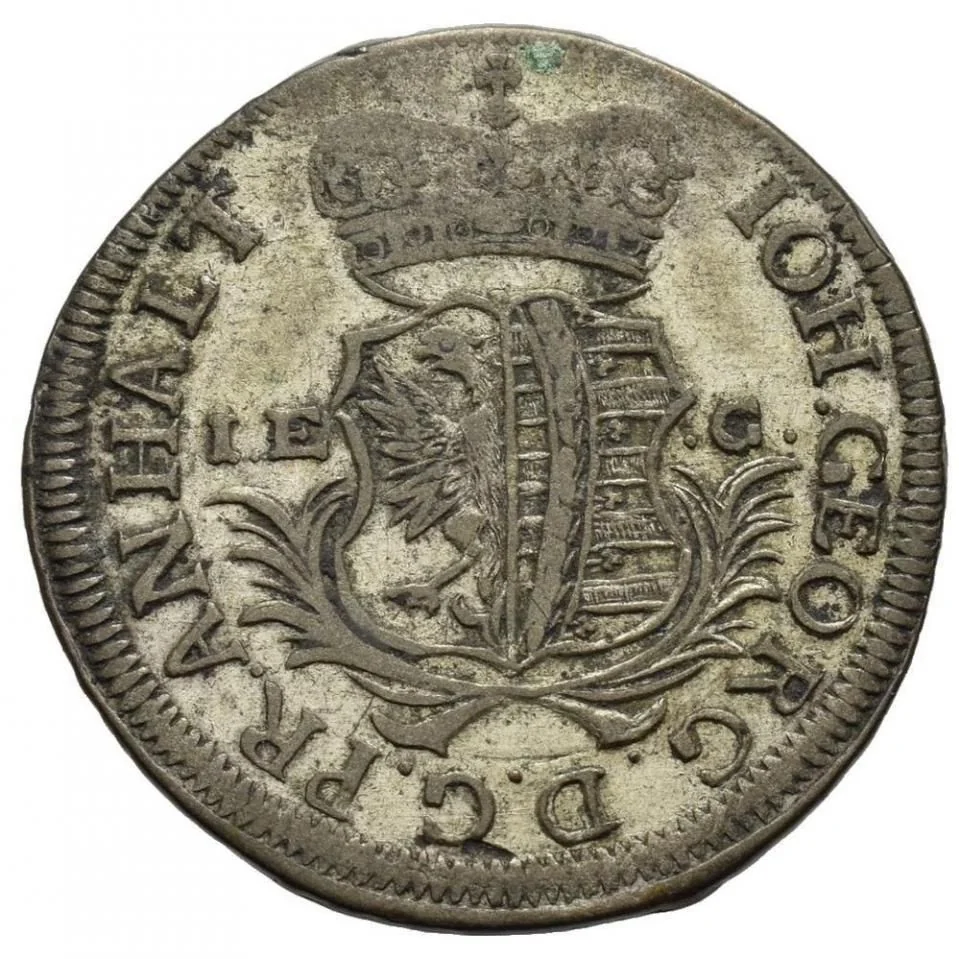
Crowned double-armed branch cross.
Inscription:
IOH GEORG D G PR ANHALT
IE G
IE G
Script: Latin
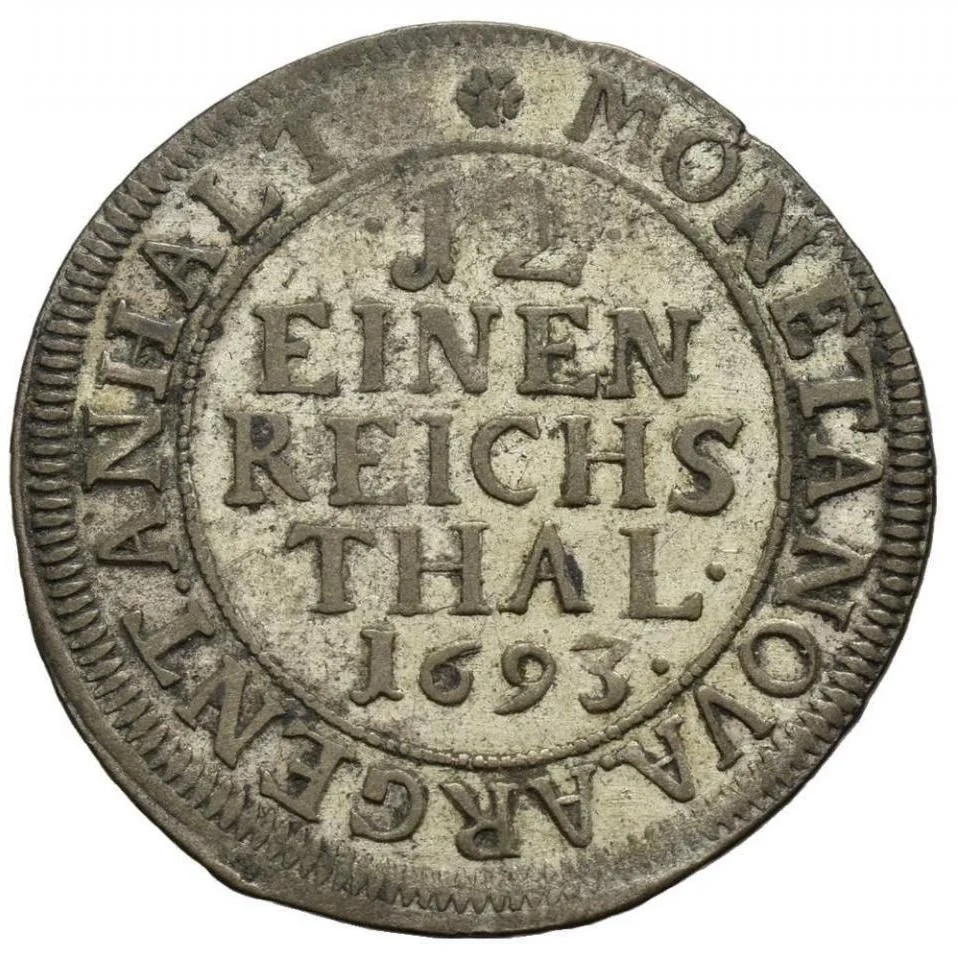
Reverse
Edge
Categories
| Symbol> Crown |
| Symbols> Coat of Arms |
Mints
| Name | Mark |
|---|---|
| Dessau | — |
Mintings
| Year | Mint Mark | Mintage | Quality | Collection |
|---|---|---|---|---|
| 1693 | — | — |
Historical background
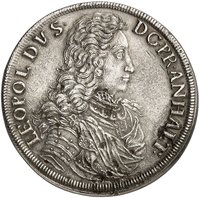
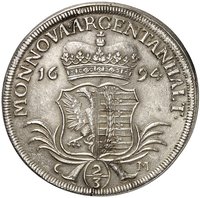
In 1693, the currency situation in the small central German principality of Anhalt-Dessau was characterized by the widespread economic instability and monetary fragmentation of the Holy Roman Empire. The region operated within a complex web of competing coinage systems, where the official Reichsthaler and Groschen existed alongside a plethora of coins issued by numerous neighboring states and cities. This proliferation of currencies of varying metallic content and value led to chronic confusion, facilitated clipping and counterfeiting, and hindered both local commerce and long-distance trade. The prince, Leopold I, faced the constant challenge of maintaining the integrity of his own minted coins while navigating the devaluations and manipulations of others.
The specific pressures of 1693 were acutely shaped by the Nine Years' War (1688-1697), in which Anhalt-Dessau, like many German states, was a participant through its military contributions to the Imperial army. The enormous cost of maintaining troops strained the principality's finances, creating a powerful temptation to engage in Kipper- und Wipperzeit practices—debasement of coinage by reducing the precious metal content to create more coins from the same silver stock. While the worst periods of debasement had occurred earlier in the century, the fiscal demands of war in 1693 kept monetary integrity under severe pressure, risking inflation and loss of public trust in the currency.
Consequently, Prince Leopold I's government was likely engaged in a delicate balancing act: attempting to fund military obligations without triggering a destructive inflationary spiral. This involved enforcing currency ordinances (Münzordnungen) that stipulated official exchange rates and trying to control the circulation of foreign and debased coins within its borders. The situation in Anhalt-Dessau in 1693 was thus a microcosm of the Empire's monetary woes—a struggle for sovereign fiscal stability within a disjointed system, exacerbated by the relentless financial demands of continental war.
The specific pressures of 1693 were acutely shaped by the Nine Years' War (1688-1697), in which Anhalt-Dessau, like many German states, was a participant through its military contributions to the Imperial army. The enormous cost of maintaining troops strained the principality's finances, creating a powerful temptation to engage in Kipper- und Wipperzeit practices—debasement of coinage by reducing the precious metal content to create more coins from the same silver stock. While the worst periods of debasement had occurred earlier in the century, the fiscal demands of war in 1693 kept monetary integrity under severe pressure, risking inflation and loss of public trust in the currency.
Consequently, Prince Leopold I's government was likely engaged in a delicate balancing act: attempting to fund military obligations without triggering a destructive inflationary spiral. This involved enforcing currency ordinances (Münzordnungen) that stipulated official exchange rates and trying to control the circulation of foreign and debased coins within its borders. The situation in Anhalt-Dessau in 1693 was thus a microcosm of the Empire's monetary woes—a struggle for sovereign fiscal stability within a disjointed system, exacerbated by the relentless financial demands of continental war.
✨ Legendary