

⅔ thaler – Anhalt-Dessau
Add to wishlist
Germany
Context
Years: 1692–1693
Country: Germany
Issuer: Anhalt-Dessau
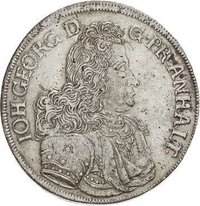
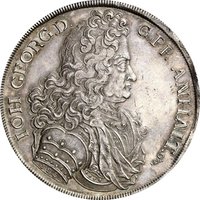
Ruler: John George II
Currency:
Demonetized: Yes
References
KM: #
Numista: #458120
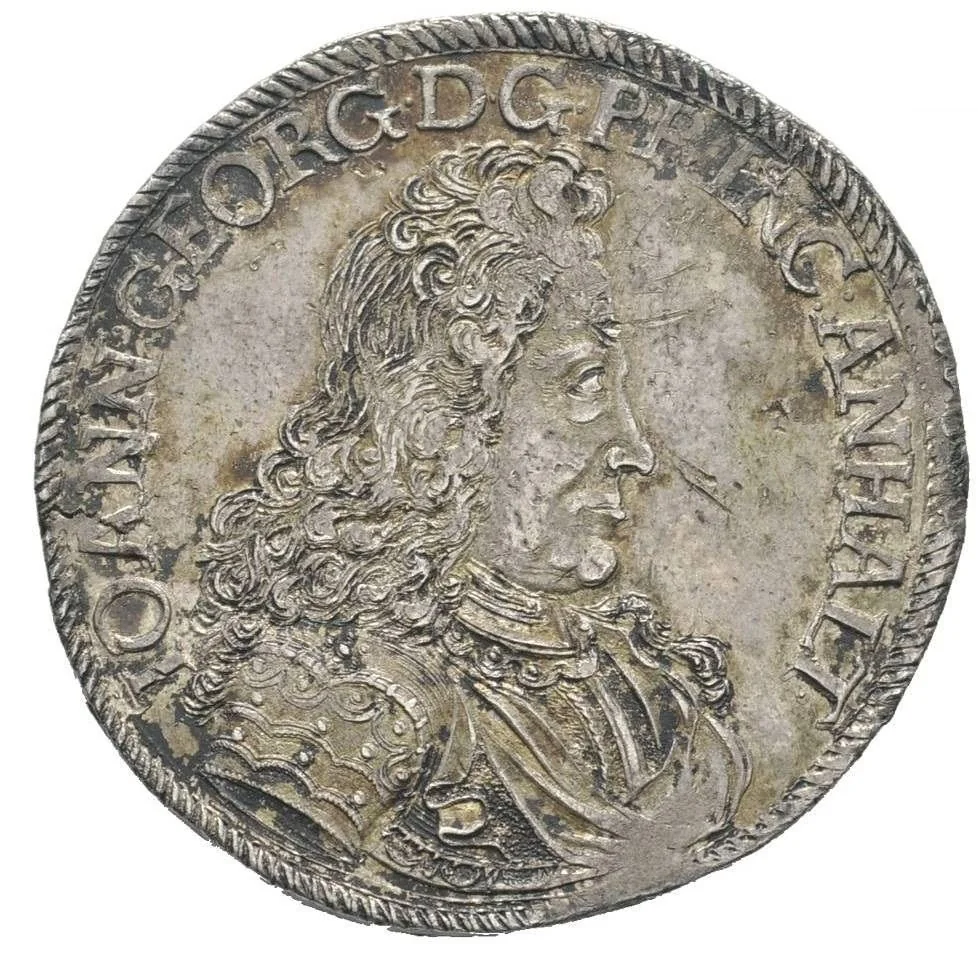
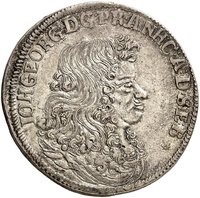
Obverse
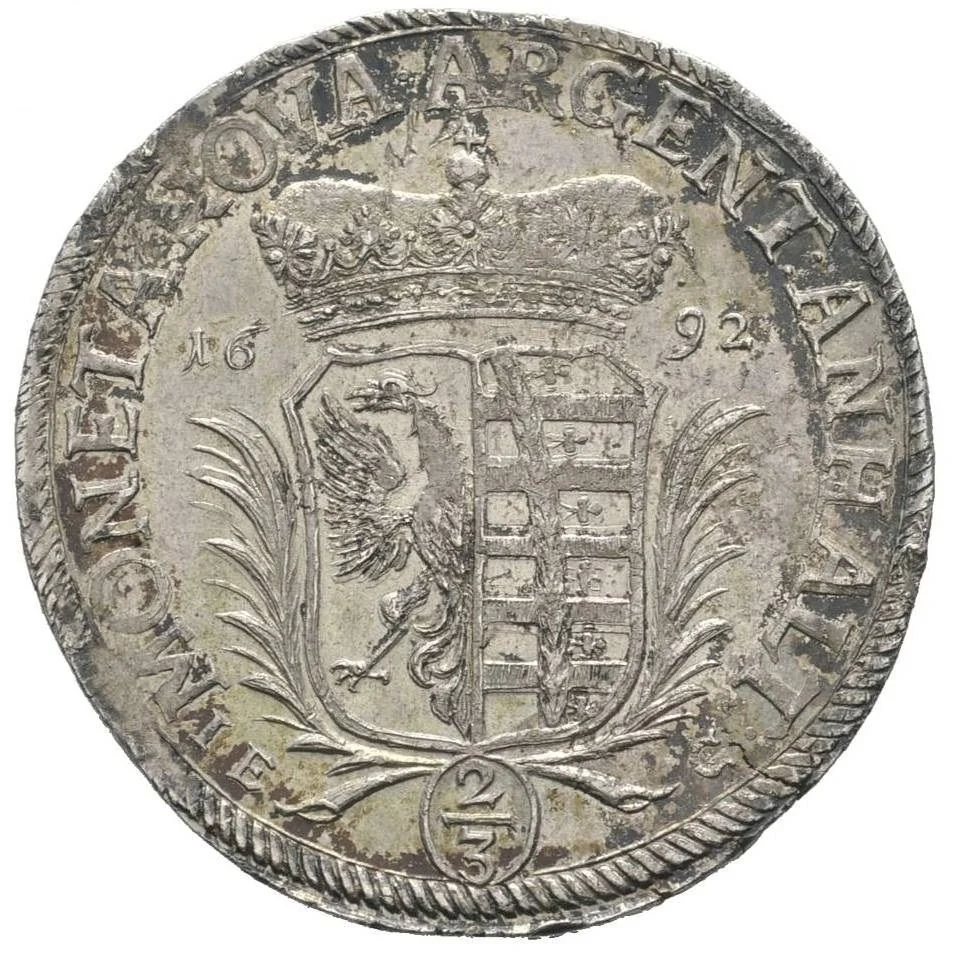
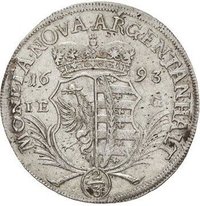
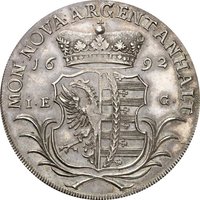
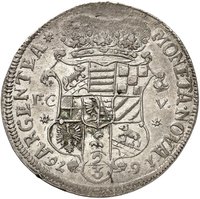
Reverse
Description:
Crowned arms amid sprays.
Inscription:
MONETA NOVA ARGENT ANHALT
16 92
IE G
2/3
16 92
IE G
2/3
Script: Latin
Edge
Mints
| Name | Mark |
|---|---|
| Dessau | — |
Mintings
| Year | Mint Mark | Mintage | Quality | Collection |
|---|---|---|---|---|
| 1692 | — | — | ||
| 1693 | — | — |
Historical background
In 1692, the currency situation in the small central German principality of Anhalt-Dessau was characterized by the pervasive and destabilizing effects of the Kipper- und Wipperzeit—a period of rampant currency debasement that had swept through the Holy Roman Empire earlier in the 17th century. While the peak crisis had passed decades before, its legacy lingered in the form of a fragmented and unreliable monetary landscape. The principality’s economy operated amidst a confusing plethora of circulating coins, not only those officially minted by Prince John George II but also coins from neighboring states and older, often degraded, regional currencies. This created chronic uncertainty in trade and daily transactions, as the intrinsic silver content of coins—their real value—often differed significantly from their face value.
Prince John George II himself contributed directly to this instability. Facing persistent financial pressures from maintaining his court and funding military obligations, the prince periodically engaged in the practice of Verschlechterung (worsening), reducing the silver content in his minted coins to generate seigniorage profit. This practice, while providing short-term fiscal relief, eroded trust in Anhalt-Dessau's currency both within and beyond its borders. Consequently, merchants and subjects alike tended to hoard older, "good" money with higher silver content, following Gresham’s Law that "bad money drives out good," which further exacerbated the scarcity of reliable specie.
Therefore, the 1692 monetary environment was one of fragile transition. The princely mint in Dessau was active, but its output was viewed with skepticism. The broader trend in the Empire was toward stabilization, exemplified by the Zinnaische Münzfuß convention of 1667 and the later Leipziger Münzfuß of 1690, which attempted to standardize coinage. Anhalt-Dessau was nominally aligned with these imperial frameworks, yet local fiscal necessity often conflicted with these standards. The currency situation thus reflected the wider tension in the Empire between territorial sovereignty and the need for a uniform, trustworthy monetary system to facilitate commerce and economic recovery in the aftermath of the Thirty Years' War.
Prince John George II himself contributed directly to this instability. Facing persistent financial pressures from maintaining his court and funding military obligations, the prince periodically engaged in the practice of Verschlechterung (worsening), reducing the silver content in his minted coins to generate seigniorage profit. This practice, while providing short-term fiscal relief, eroded trust in Anhalt-Dessau's currency both within and beyond its borders. Consequently, merchants and subjects alike tended to hoard older, "good" money with higher silver content, following Gresham’s Law that "bad money drives out good," which further exacerbated the scarcity of reliable specie.
Therefore, the 1692 monetary environment was one of fragile transition. The princely mint in Dessau was active, but its output was viewed with skepticism. The broader trend in the Empire was toward stabilization, exemplified by the Zinnaische Münzfuß convention of 1667 and the later Leipziger Münzfuß of 1690, which attempted to standardize coinage. Anhalt-Dessau was nominally aligned with these imperial frameworks, yet local fiscal necessity often conflicted with these standards. The currency situation thus reflected the wider tension in the Empire between territorial sovereignty and the need for a uniform, trustworthy monetary system to facilitate commerce and economic recovery in the aftermath of the Thirty Years' War.
✨ Legendary