

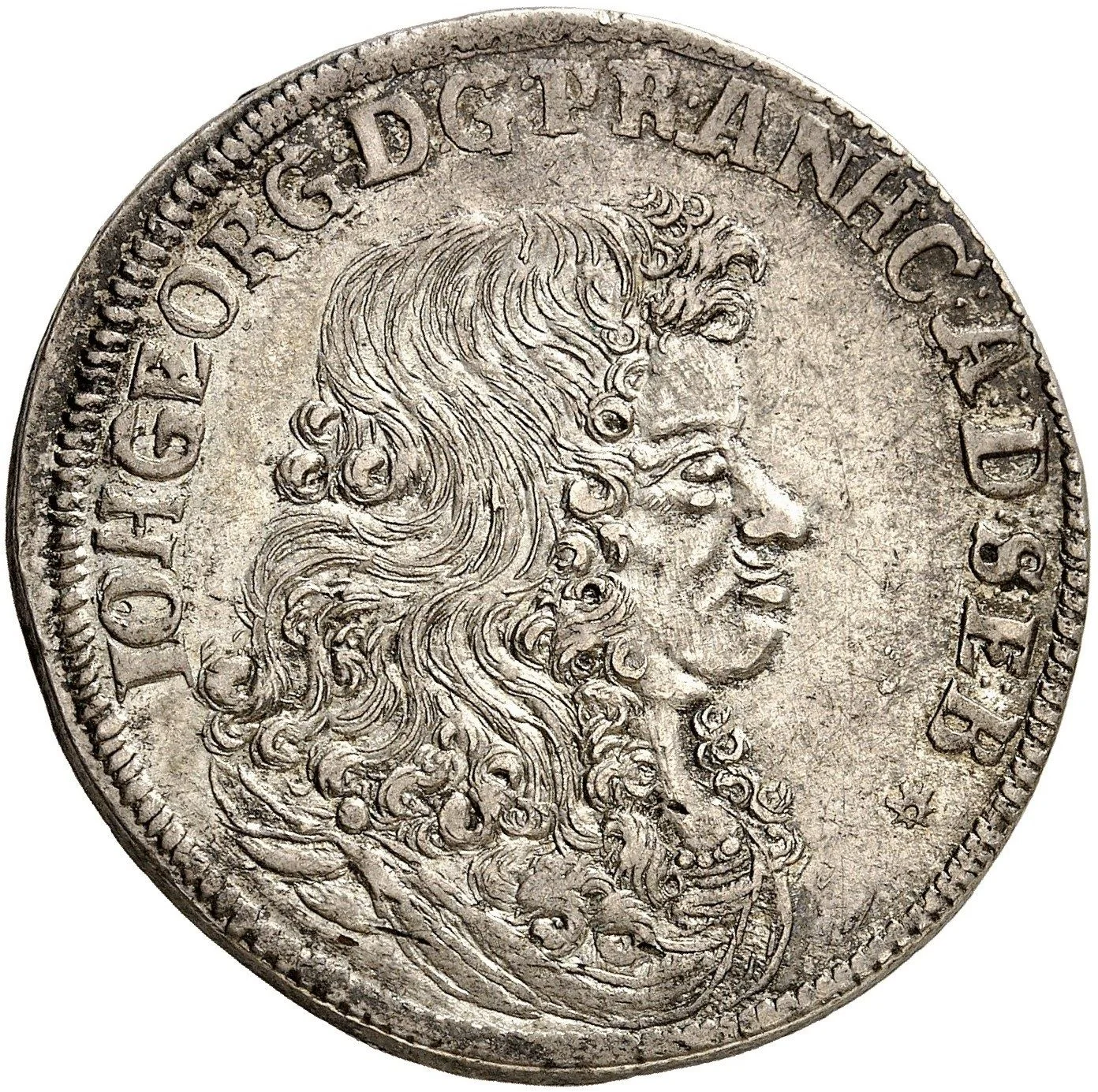
⅔ Thaler – Anhalt-Dessau
Germany
Context

References
KM: #Click to copy to clipboard5.4
Numista: #457787
Value
Bullion value: $52.31
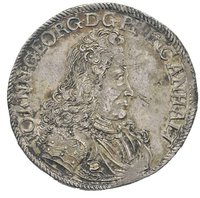
Obverse
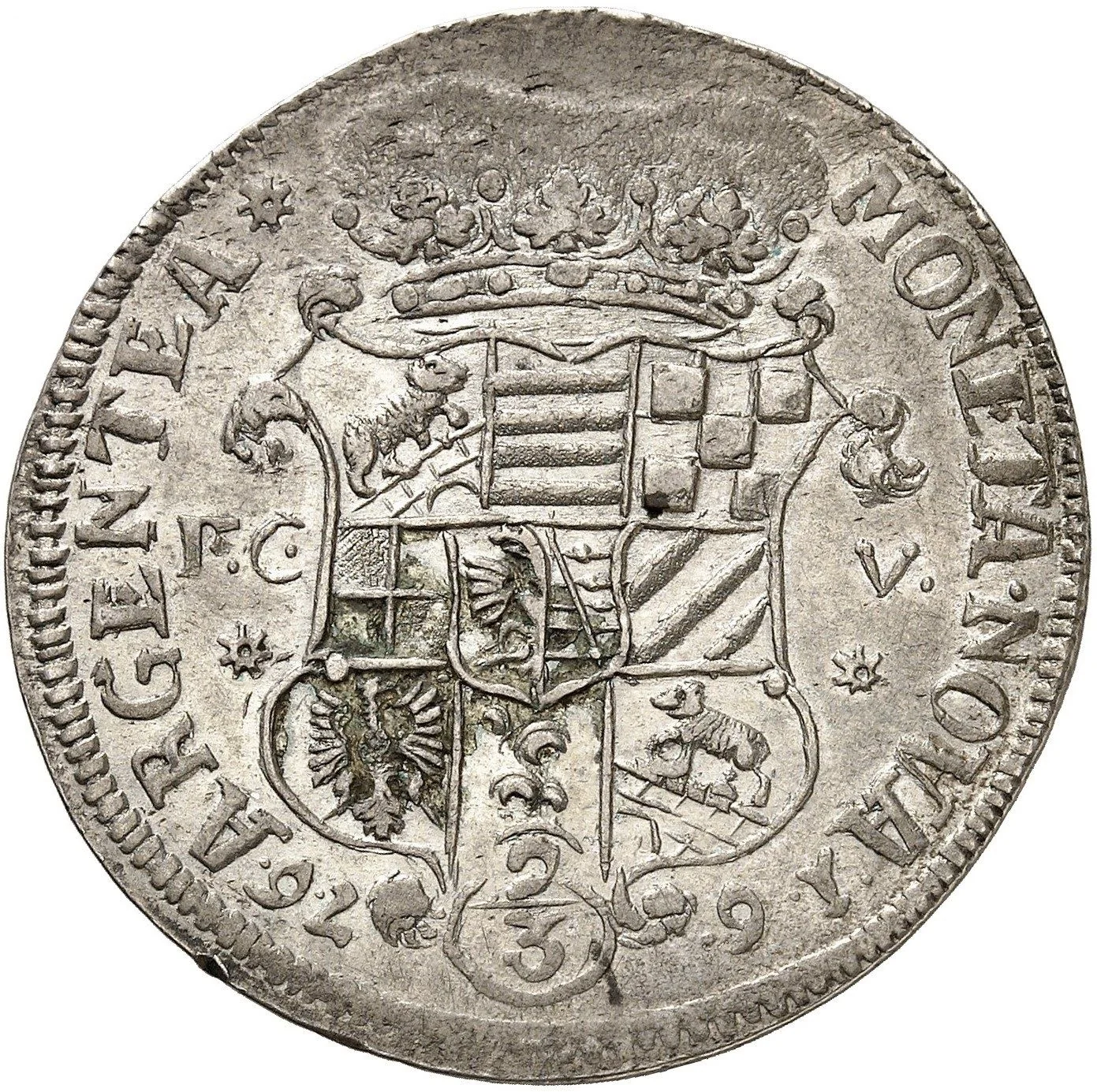
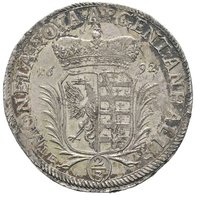
Reverse
Description:
Crowned arms flank date.
Inscription:
MONETA NOVA 16 76 ARGENTEA
FC V
(2/3)
FC V
(2/3)
Script: Latin
Edge
Mints
| Name | Mark |
|---|---|
| Dessau | — |
Mintings
| Year | Mint Mark | Mintage | Quality | Collection |
|---|---|---|---|---|
| 1676 | — | — |
Historical background
In 1676, the currency situation in the Principality of Anhalt-Dessau was characterized by the complex and debilitating fragmentation common across the Holy Roman Empire. The principality did not possess its own exclusive minting right but operated within a web of monetary agreements, most notably the Zinnaische Münzvertrag of 1667. This treaty, which Anhalt-Dessau adhered to alongside Brandenburg and Saxony, attempted to standardize the Reichsthaler and its subdivisions (Groschen, Pfennige) across their territories to combat the rampant debasement and proliferation of inferior coins from hundreds of other mints.
Despite this framework, monetary stability remained elusive. The treaty's standards were difficult to enforce, and the economic strain following the Thirty Years' War (1618-1648) created persistent pressure. Rulers, including Prince John George II of Anhalt-Dessau, often faced fiscal shortfalls, tempting them to engage in Kippermünze (debased coinage) or to tolerate the circulation of foreign and inferior coins within their borders to generate seigniorage revenue. This led to a chaotic mix of coins in circulation, varying widely in intrinsic silver content and real value, which hampered trade and created uncertainty for both merchants and the populace.
Consequently, the year 1676 would have seen a marketplace where officially minted Zinnaische coins competed with older, legacy coins and suspect foreign imports. The prince’s government likely struggled with the practical administration of exchange rates and the enforcement of legal tender laws. This unstable environment acted as a drag on the principality's economic recovery and integration, reflecting the broader struggle of German states to overcome monetary anarchy in the absence of a strong central imperial authority.
Despite this framework, monetary stability remained elusive. The treaty's standards were difficult to enforce, and the economic strain following the Thirty Years' War (1618-1648) created persistent pressure. Rulers, including Prince John George II of Anhalt-Dessau, often faced fiscal shortfalls, tempting them to engage in Kippermünze (debased coinage) or to tolerate the circulation of foreign and inferior coins within their borders to generate seigniorage revenue. This led to a chaotic mix of coins in circulation, varying widely in intrinsic silver content and real value, which hampered trade and created uncertainty for both merchants and the populace.
Consequently, the year 1676 would have seen a marketplace where officially minted Zinnaische coins competed with older, legacy coins and suspect foreign imports. The prince’s government likely struggled with the practical administration of exchange rates and the enforcement of legal tender laws. This unstable environment acted as a drag on the principality's economic recovery and integration, reflecting the broader struggle of German states to overcome monetary anarchy in the absence of a strong central imperial authority.
✨ Legendary