

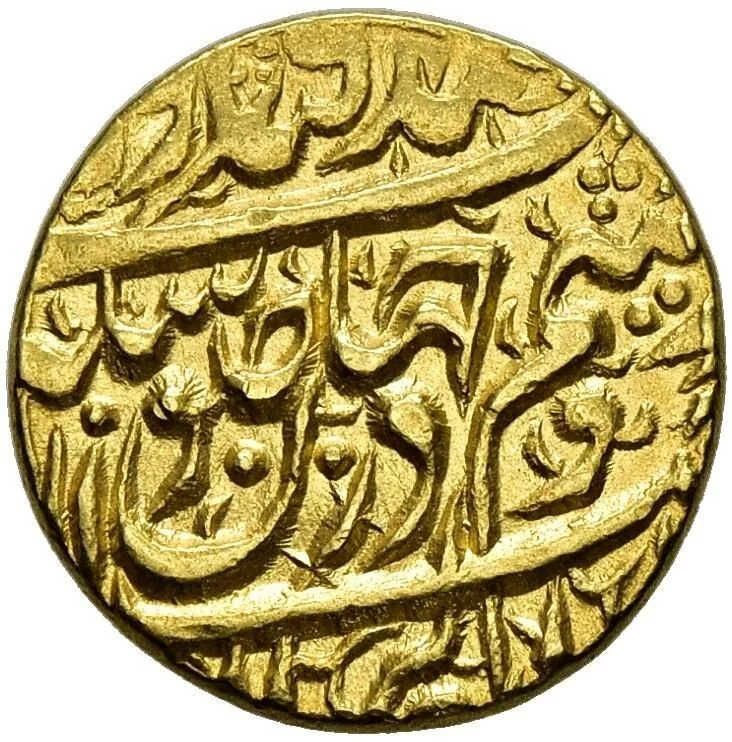
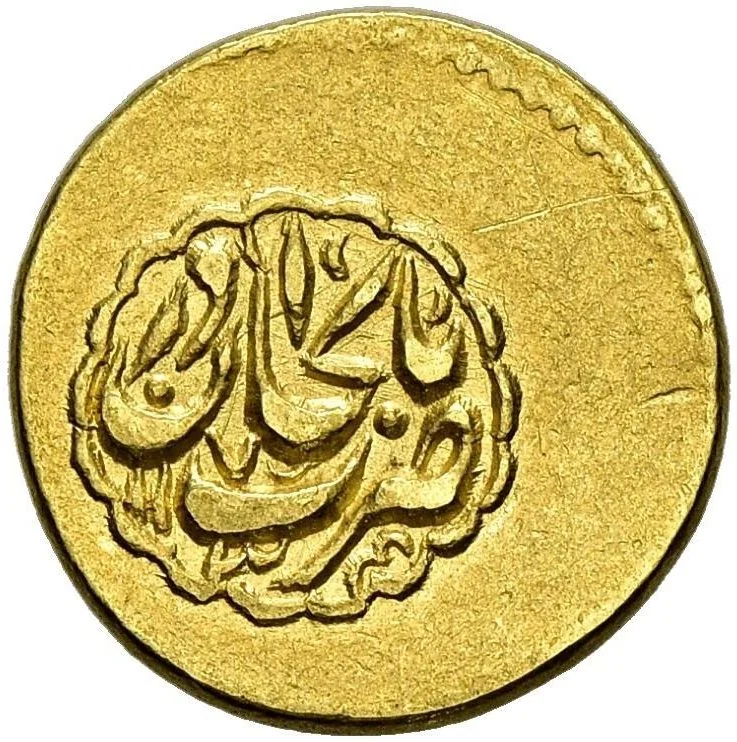
¼ Mohur – Iran
Iran
Context

Material
Weight: 2.75 g
Gold weight: 2.75 g
Shape: Irregular round
Composition: Gold
Magnetic: No
Technique: Hammered
References
KM: #Click to copy to clipboard525
Numista: #458014
Value
Bullion value: $459.29
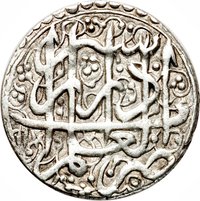
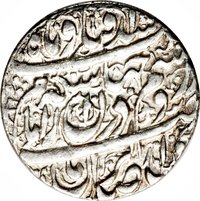
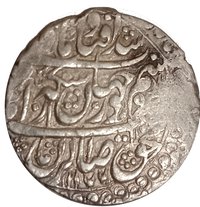
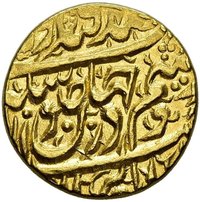
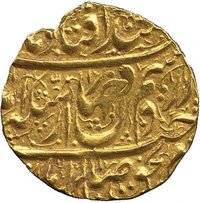
Obverse
Description:
Multiline inscription.
Inscription:
شد آفتاب و ماه زر و سیم در جهان
از سکه امام بحق صاحب الزمان
از سکه امام بحق صاحب الزمان
Script: Persian (nastaliq)
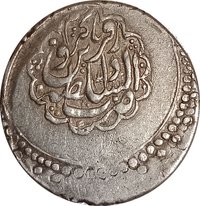
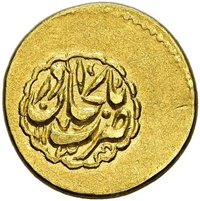
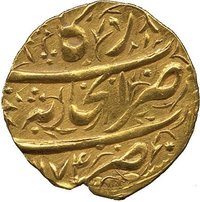
Reverse
Description:
Mint and date within a short-arc inner frame.
Inscription:
ضرب آذربایجان
۱۱۷۳
۱۱۷۳
Script: Persian (nastaliq)
Edge
Mints
| Name | Mark |
|---|---|
| Adharbayjan | آذربایجان |
Mintings
| Year | Mint Mark | Mintage | Quality | Collection |
|---|---|---|---|---|
| 1760 | — | — |
Historical background
In 1760, Iran was under the rule of the Zand dynasty, founded by Karim Khan Zand, who had recently established his authority over much of the country from his capital in Shiraz. This period followed decades of extreme instability, including the collapse of the Safavid Empire in 1722, destructive invasions by the Afghans and Ottomans, and the brutal, short-lived reign of Nader Shah. Nader Shah’s constant warfare, funded by exhausting the treasury and heavy taxation, had left the national economy in ruins and severely disrupted trade routes. Consequently, when Karim Khan took power, he inherited a monetary system that was debased, inconsistent, and lacked centralized control.
The currency situation was characterized by fragmentation and a severe shortage of specie. In practice, there was no single, unified Iranian currency. Various silver coins, such as the abbasi and the rial, circulated, but their weight and purity could vary significantly depending on the mint city (like Isfahan, Tabriz, or Shiraz). Furthermore, foreign coins, particularly the Dutch levendaalder and the Indian rupee, were widely used in commerce, especially in port cities like Bandar Abbas, highlighting Iran's integration into Indian Ocean trade networks and the weakness of its own minting authority. The copper falus was the primary coin for everyday small transactions among the populace.
Karim Khan pursued a policy of relative peace and economic reconstruction. Understanding that a stable currency was vital for recovery, he worked to standardize and improve the coinage issued from the royal mints, notably in Shiraz. His coins bore the deliberately modest title of Vakil al-Ra'aya (Representative of the People). While these reforms brought a measure of much-needed stability and helped revive internal trade, the system remained fragile. The economy was still primarily agrarian, and the state's financial foundations were shallow, leaving the currency vulnerable to future political shocks, which indeed followed after his death in 1779.
The currency situation was characterized by fragmentation and a severe shortage of specie. In practice, there was no single, unified Iranian currency. Various silver coins, such as the abbasi and the rial, circulated, but their weight and purity could vary significantly depending on the mint city (like Isfahan, Tabriz, or Shiraz). Furthermore, foreign coins, particularly the Dutch levendaalder and the Indian rupee, were widely used in commerce, especially in port cities like Bandar Abbas, highlighting Iran's integration into Indian Ocean trade networks and the weakness of its own minting authority. The copper falus was the primary coin for everyday small transactions among the populace.
Karim Khan pursued a policy of relative peace and economic reconstruction. Understanding that a stable currency was vital for recovery, he worked to standardize and improve the coinage issued from the royal mints, notably in Shiraz. His coins bore the deliberately modest title of Vakil al-Ra'aya (Representative of the People). While these reforms brought a measure of much-needed stability and helped revive internal trade, the system remained fragile. The economy was still primarily agrarian, and the state's financial foundations were shallow, leaving the currency vulnerable to future political shocks, which indeed followed after his death in 1779.
✨ Legendary