

¼ mohur – Iran
Add to wishlist
Iran
Material
Diameter: 20 mm
Weight: 2.72 g
Gold Weight:: 2.72 g
Shape: Irregular round
Composition: Gold
Magnetic: No
Alignment: Coin alignment
flip
References
KM: #
Numista: #61869
Value
Bullion value: $423.47
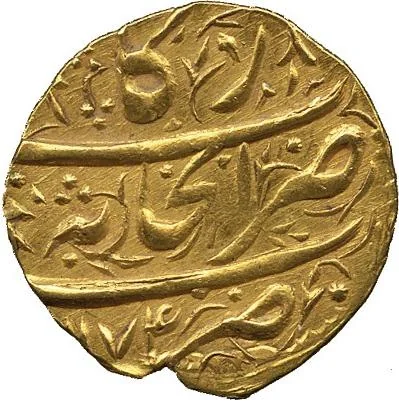
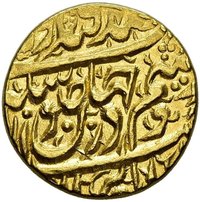
Obverse
Description:
Rikab Mint
Inscription:
ضرب ضرابخانه رکاب
۱۱۷۴
۱۱۷۴
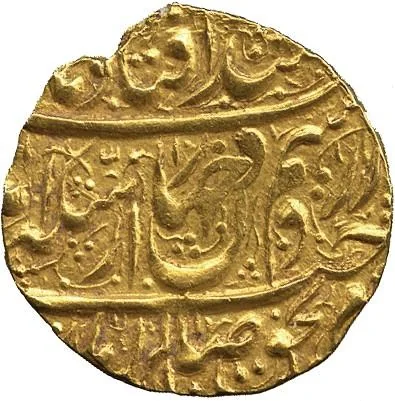
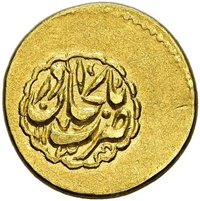
Reverse
Inscription:
شد آفتاب و ماه زر و سیم در جهان
از سکه امام بحق صاحب الزمان
از سکه امام بحق صاحب الزمان
Edge
Plain
Mintings
| Year | Mint Mark | Mintage | Quality | Collection |
|---|---|---|---|---|
| 1761 | — | — | ||
| 1762 | — | — |
Historical background
In 1761, Iran was under the rule of the Zand dynasty, founded by Karim Khan Zand, who had recently established his authority over much of the country following decades of civil war and instability after the collapse of the Safavid Empire. The currency system inherited by Karim Khan was in a state of severe disarray. The preceding decades of conflict, including invasions by the Afghans, Ottomans, and Russians, had led to widespread economic disruption, debasement of coinage, and a severe loss of confidence in the monetary system. Regional khans and military leaders often minted their own coins, leading to a lack of standardization and a complex, unreliable currency landscape.
The primary circulating coins were silver tomans and abbasis, and gold tumans, but their weight and purity varied significantly depending on the mint and the year. Karim Khan, ruling from Shiraz as Vakil al-Ra'aya (Representative of the People), understood that economic stability was crucial to consolidating his power. He therefore initiated a concerted effort to restore monetary order. His administration began minting new, high-quality silver coins, notably the abbasi and the rial, from the royal mints in Shiraz, Isfahan, and Tabriz, stamping them with his name to assert central authority and uniformity.
This reform was part of a broader policy to revive trade and agriculture, and for a time, it brought a measure of stability. The relative peace and reliable currency under Karim Khan facilitated a revival of commerce, particularly benefiting the southern port of Bushehr and trade with the British East India Company and the Dutch. However, the system remained fragile, heavily reliant on the import of silver bullion and the personal authority of Karim Khan himself. The underlying structural weaknesses meant that after his death in 1779, the currency system, along with the Zand state, would once again fragment into competing monetary zones during the ensuing civil wars.
The primary circulating coins were silver tomans and abbasis, and gold tumans, but their weight and purity varied significantly depending on the mint and the year. Karim Khan, ruling from Shiraz as Vakil al-Ra'aya (Representative of the People), understood that economic stability was crucial to consolidating his power. He therefore initiated a concerted effort to restore monetary order. His administration began minting new, high-quality silver coins, notably the abbasi and the rial, from the royal mints in Shiraz, Isfahan, and Tabriz, stamping them with his name to assert central authority and uniformity.
This reform was part of a broader policy to revive trade and agriculture, and for a time, it brought a measure of stability. The relative peace and reliable currency under Karim Khan facilitated a revival of commerce, particularly benefiting the southern port of Bushehr and trade with the British East India Company and the Dutch. However, the system remained fragile, heavily reliant on the import of silver bullion and the personal authority of Karim Khan himself. The underlying structural weaknesses meant that after his death in 1779, the currency system, along with the Zand state, would once again fragment into competing monetary zones during the ensuing civil wars.
✨ Legendary