

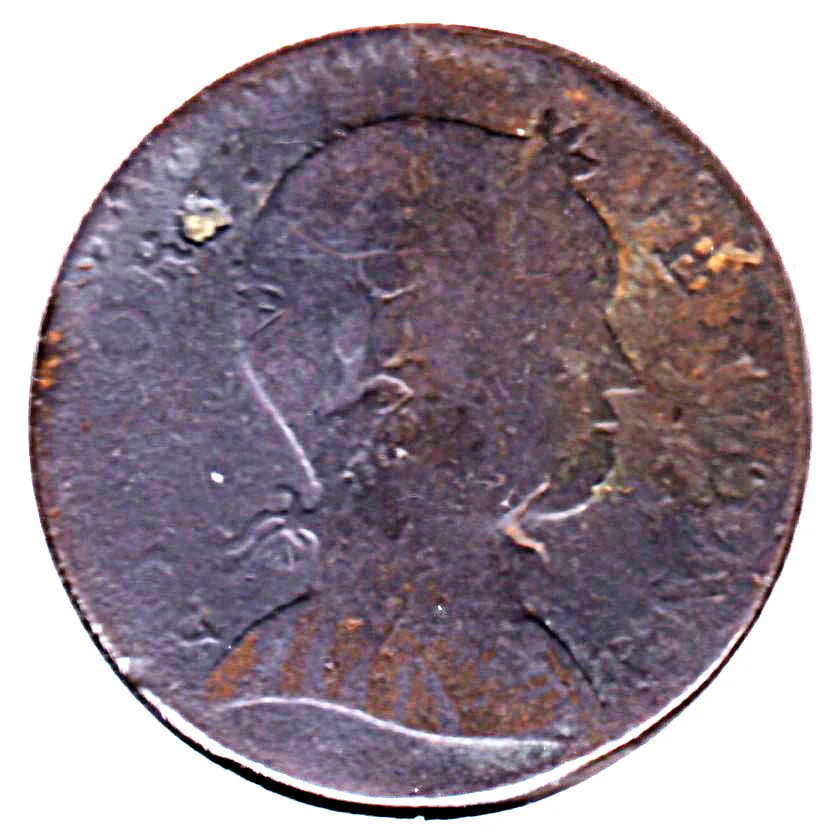

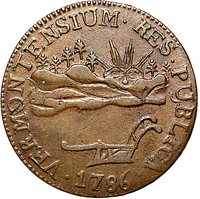
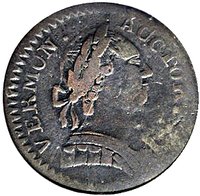
Obverse
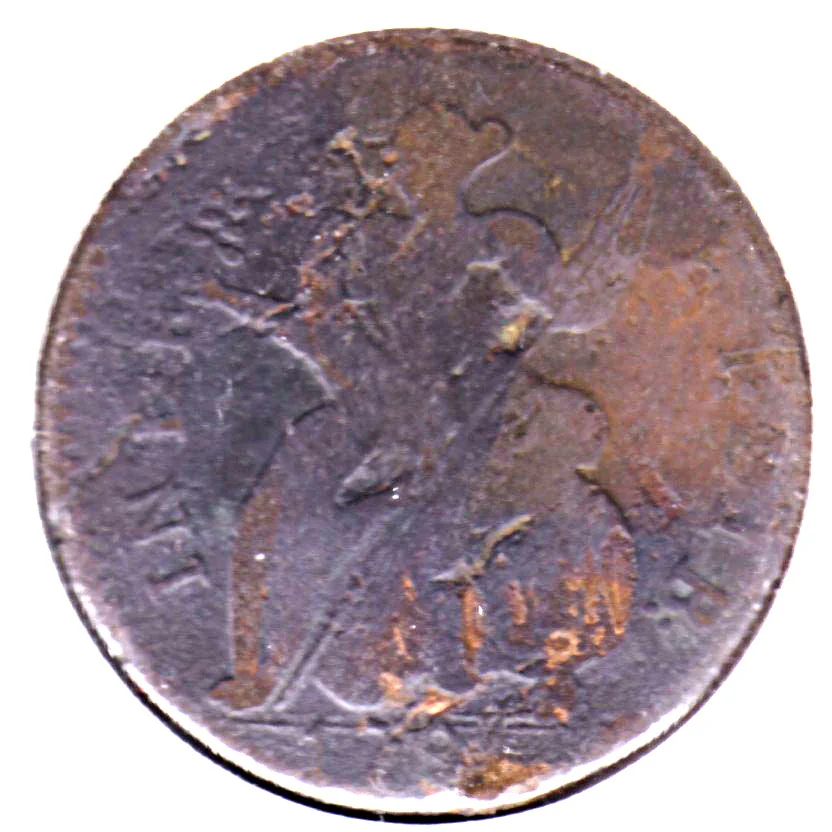
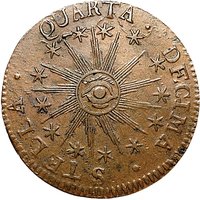
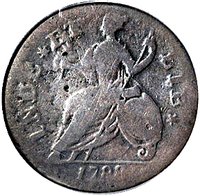
Reverse
Edge
Plain
Mints
| Name | Mark |
|---|---|
| Rupert, Vermont | — |
Mintings
| Year | Mint Mark | Mintage | Quality | Collection |
|---|---|---|---|---|
| 1786 | — | — |
Historical background
In 1786, the Republic of Vermont, operating as a de facto independent nation since 1777, faced a severe currency crisis rooted in its unresolved sovereignty. The fledgling state was caught between the economic pressures of the post-Revolutionary War period and its delicate diplomatic balancing act. While Vermont had fought alongside the American states, it was not part of the Confederation Congress due to competing land claims from New York and New Hampshire. This isolation meant Vermont lacked access to any stabilizing national financial systems and had to manage its own precarious fiscal affairs entirely on its own.
The primary currency in circulation was the Vermont pound, but its value was collapsing. Like the surrounding states, Vermont had printed significant paper money to finance its militia during the war and to stimulate its agrarian economy. However, with weak public confidence and no substantial specie (gold or silver) to back it, the currency suffered from rapid depreciation. This led to rampant inflation, where the price of essential goods soared, crippling trade and creating hardship for ordinary citizens. Debtors, including many farmers, found their obligations easier to pay with the devalued money, but creditors and merchants were severely disadvantaged, leading to social tension.
Governor Thomas Chittenden and the Vermont Assembly attempted to address the crisis through legislation, including laws to establish a state bank and to compel creditors to accept the depreciated paper currency at face value. These well-intentioned measures, however, proved ineffective in restoring confidence. The fundamental problem was political: without recognized sovereignty, Vermont's currency lacked the legitimacy and stability of a established nation. This economic instability became a powerful incentive for Vermont's leaders to secretly pursue negotiations for union with the United States, seeing annexation as the only viable path to financial security and a stable, unified currency.
The primary currency in circulation was the Vermont pound, but its value was collapsing. Like the surrounding states, Vermont had printed significant paper money to finance its militia during the war and to stimulate its agrarian economy. However, with weak public confidence and no substantial specie (gold or silver) to back it, the currency suffered from rapid depreciation. This led to rampant inflation, where the price of essential goods soared, crippling trade and creating hardship for ordinary citizens. Debtors, including many farmers, found their obligations easier to pay with the devalued money, but creditors and merchants were severely disadvantaged, leading to social tension.
Governor Thomas Chittenden and the Vermont Assembly attempted to address the crisis through legislation, including laws to establish a state bank and to compel creditors to accept the depreciated paper currency at face value. These well-intentioned measures, however, proved ineffective in restoring confidence. The fundamental problem was political: without recognized sovereignty, Vermont's currency lacked the legitimacy and stability of a established nation. This economic instability became a powerful incentive for Vermont's leaders to secretly pursue negotiations for union with the United States, seeing annexation as the only viable path to financial security and a stable, unified currency.
✨ Legendary