

1½ Thaler – Brunswick-Lüneburg-Celle
Germany
Context
Year: 1662
Country: Germany 
Issuer: Brunswick-Lüneburg-Celle
Ruler: Christian Louis
Currency:
Demonetized: Yes
Material
References
KM: #Click to copy to clipboard251.3
Numista: #455495
Value
Bullion value: $121.92
Obverse
Description:
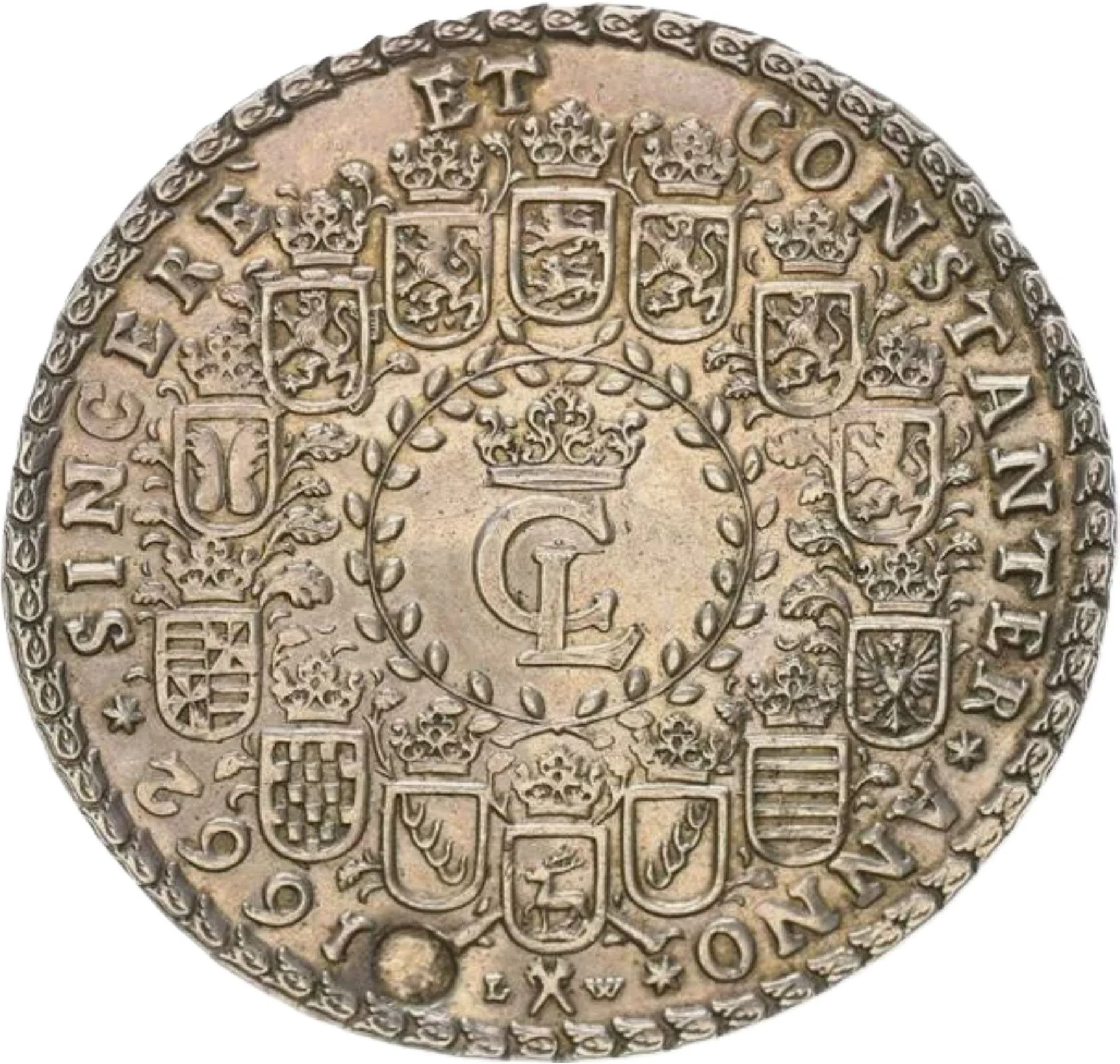
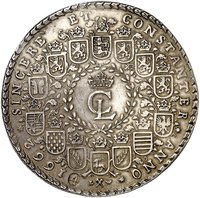
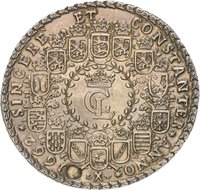
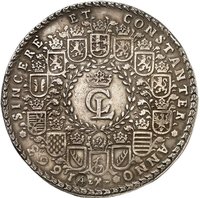
Crowned CL monogram within a wreath, encircled by fourteen shields.
Inscription:
SINCERE ET CONSTANTER ANNO 1662
CL
L W
CL
L W
Script: Latin
Reverse
Description:
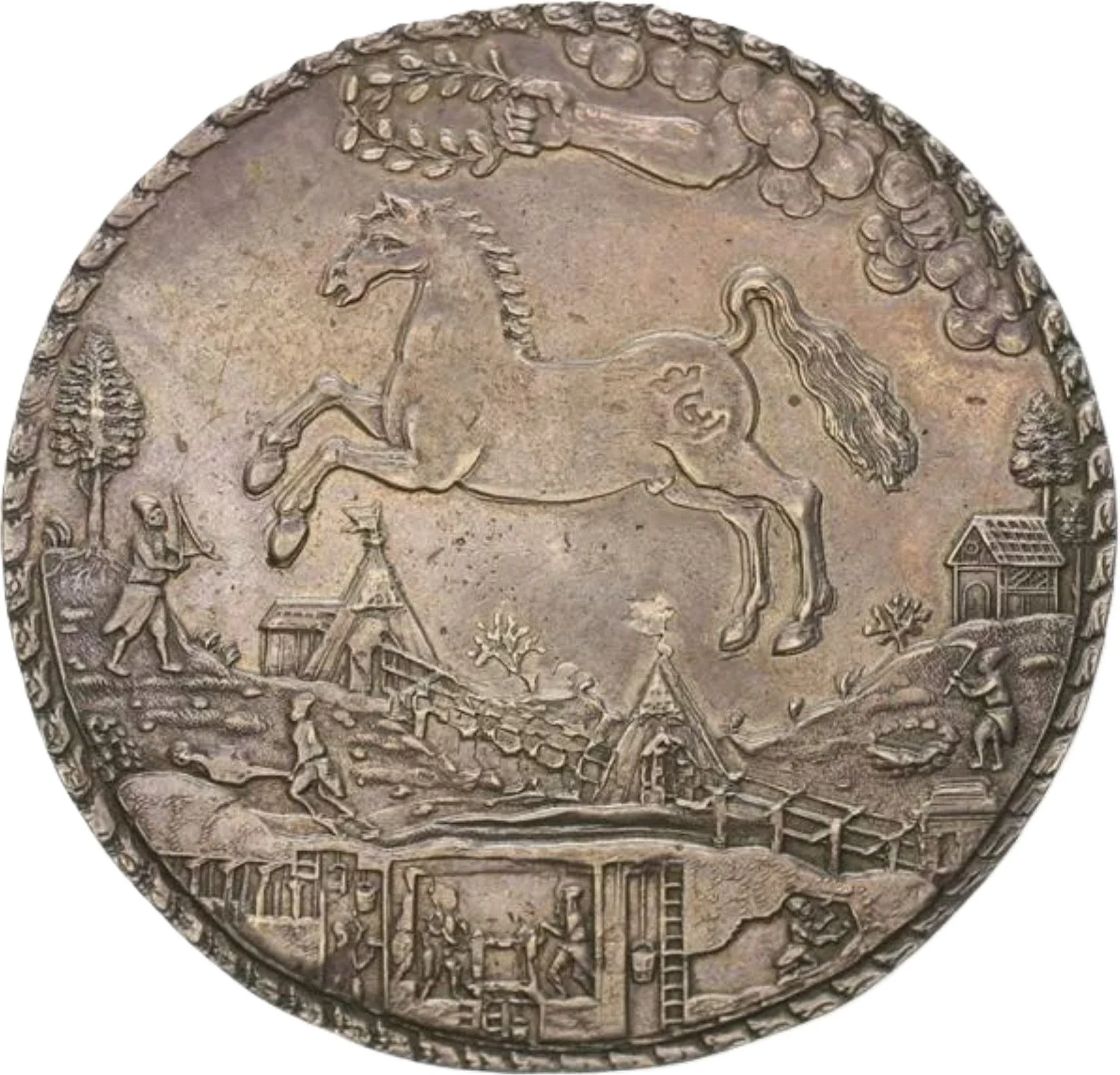
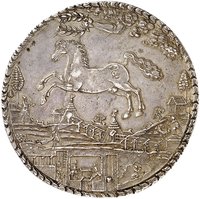
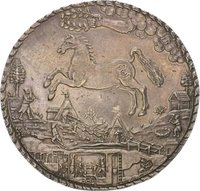
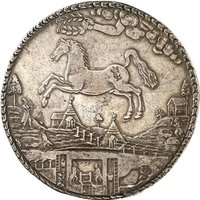
A divine hand in clouds crowns a right-flying horse above a silver mine.
Inscription:
CL
Script: Latin
Edge
Mints
| Name | Mark |
|---|---|
| Clausthal | — |
Mintings
| Year | Mint Mark | Mintage | Quality | Collection |
|---|---|---|---|---|
| 1662 | — | — |
Historical background
In 1662, the Duchy of Brunswick-Lüneburg, specifically the sub-principality of Celle under Duke George William, faced a complex and challenging currency situation typical of the Holy Roman Empire's fragmented monetary landscape. The region was plagued by the circulation of a bewildering variety of coins, not only those minted by the various Brunswick-Lüneburg lines but also by neighboring and distant states. This proliferation, combined with the widespread practice of debasement (reducing the precious metal content), led to chronic instability, hampering trade and creating uncertainty for both merchants and the populace.
Duke George William’s administration was actively engaged in attempts to impose order. The primary tool for this was the periodic issuance of Münzedikte (coinage edicts), which aimed to set official exchange rates between the myriad circulating species—from Thalers and Gulden to smaller Groschen and Pfennigs. The 1662 context would have been one of enforcing such regulations, trying to fix the value of both domestic and foreign coins in terms of the Reichsthaler, the theoretical imperial standard. However, these edicts were difficult to enforce consistently across territories.
The fundamental problem was structural: the right to mint coins was a cherished sovereign privilege (Münzregal), exercised independently by a multitude of princes and cities. This created an inherently competitive and inflationary environment where states often debased their coinage to finance expenditures, flooding the market with inferior money. Therefore, despite Duke George William's local efforts in Celle, the currency situation in 1662 remained a fragile and contested system, defined more by the struggle to manage monetary chaos than by the existence of a stable, uniform currency.
Duke George William’s administration was actively engaged in attempts to impose order. The primary tool for this was the periodic issuance of Münzedikte (coinage edicts), which aimed to set official exchange rates between the myriad circulating species—from Thalers and Gulden to smaller Groschen and Pfennigs. The 1662 context would have been one of enforcing such regulations, trying to fix the value of both domestic and foreign coins in terms of the Reichsthaler, the theoretical imperial standard. However, these edicts were difficult to enforce consistently across territories.
The fundamental problem was structural: the right to mint coins was a cherished sovereign privilege (Münzregal), exercised independently by a multitude of princes and cities. This created an inherently competitive and inflationary environment where states often debased their coinage to finance expenditures, flooding the market with inferior money. Therefore, despite Duke George William's local efforts in Celle, the currency situation in 1662 remained a fragile and contested system, defined more by the struggle to manage monetary chaos than by the existence of a stable, uniform currency.
✨ Legendary