

4 Thalers – Brunswick-Lüneburg-Celle
Germany
Context
Year: 1663
Country: Germany 
Issuer: Brunswick-Lüneburg-Celle
Ruler: Christian Louis
Currency:
Demonetized: Yes
Material
References
KM: #Click to copy to clipboard223.4
Numista: #266676
Value
Bullion value: $326.46
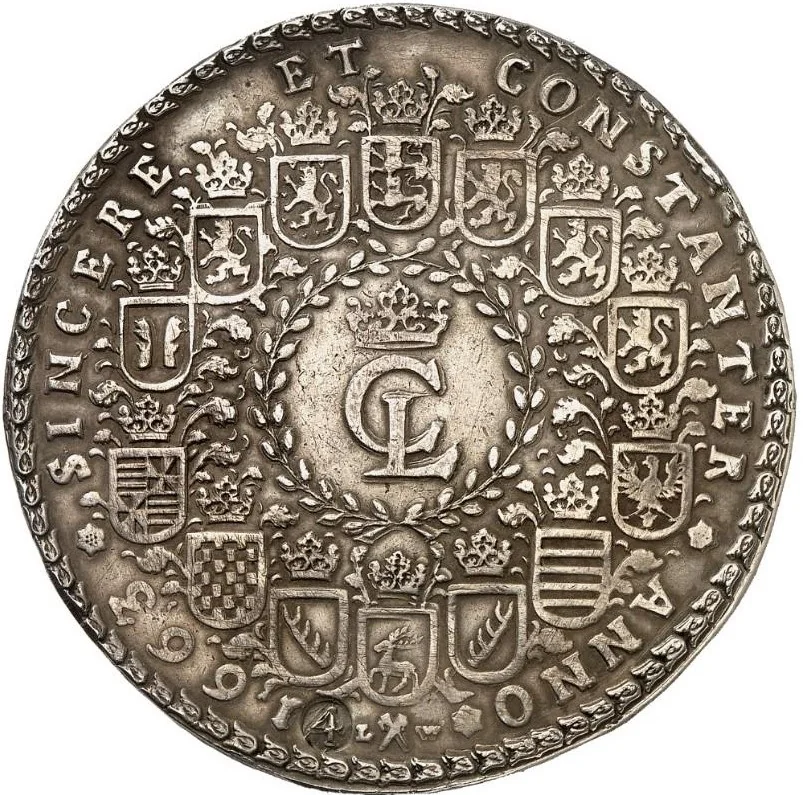
Obverse
Description:
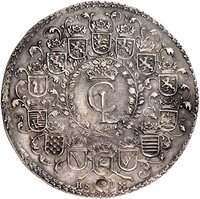
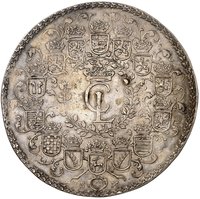
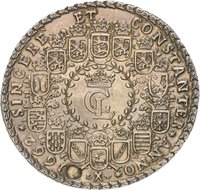
Monogram & coat of arms
Inscription:
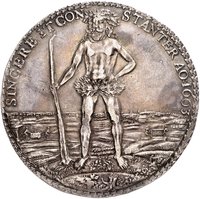
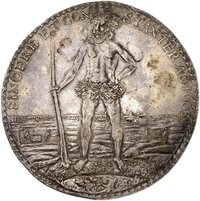
SINCERE ET CONSTANTER ANNO 1663
CL
4
LW
CL
4
LW
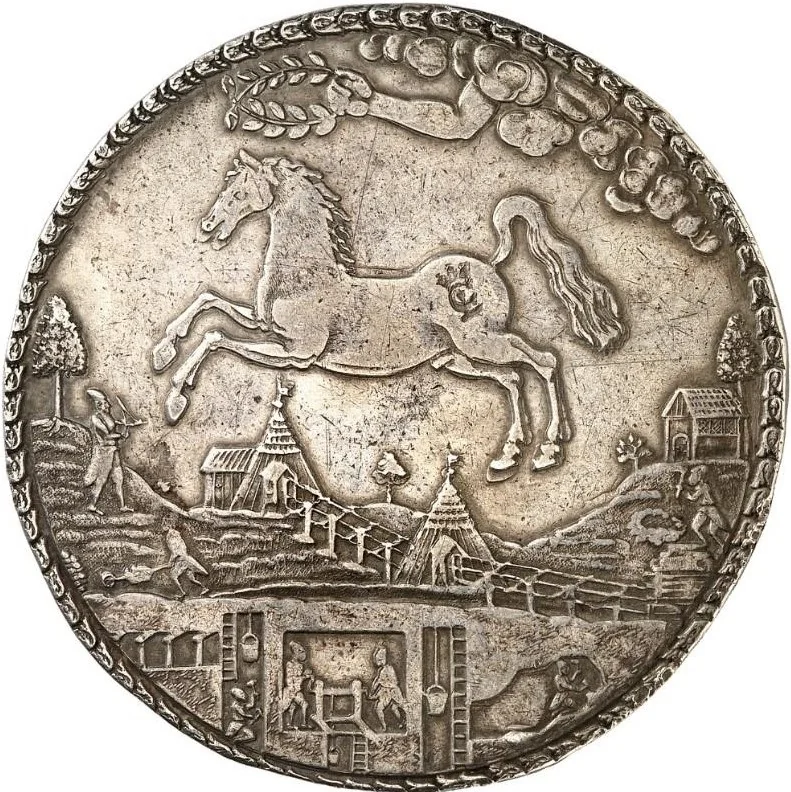
Reverse
Description:
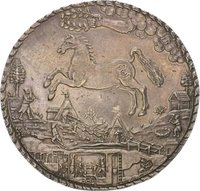
Horse leaping left over a mine.
Inscription:
CL
Edge
Mints
| Name | Mark |
|---|---|
| Clausthal | — |
Mintings
| Year | Mint Mark | Mintage | Quality | Collection |
|---|---|---|---|---|
| 1663 | — | — |
Historical background
In 1663, the Duchy of Brunswick-Lüneburg, specifically the Principality of Celle under Duke George William, was entangled in the complex and debilitating monetary fragmentation of the Holy Roman Empire. The region operated within a web of competing currency systems, where the official Reichsthaler (Imperial Thaler) coexisted with a plethora of circulating coins from neighboring states and cities. This proliferation of coins of varying weight, purity, and value, many debased by rulers seeking seigniorage profits, created chronic instability for trade and public trust.
Duke George William, like his contemporaries, faced the dual challenge of funding state expenditures while trying to maintain a reliable currency for his principality. The need for revenue often tempted rulers to reduce the silver content in their own minted coins, a practice that led to inflation and Gresham's Law ("bad money drives out good money"), where older, full-value coins were hoarded or melted down. Consequently, Celle's economy suffered from unpredictable exchange rates and the practical difficulties of everyday transactions, hindering commerce and economic planning.
The situation prompted ongoing discussions and attempts at regulation through imperial circles (Kreise) and regional agreements, like those within the Lower Saxon Circle. However, these measures often proved ineffective against the entrenched right of princes to mint coins. Therefore, in 1663, the currency situation in Celle was characterized by this persistent tension between the ideal of a uniform, stable monetary system and the political and fiscal realities of a fragmented empire, leaving the duchy's economy vulnerable to the whims of its own and its neighbors' minting policies.
Duke George William, like his contemporaries, faced the dual challenge of funding state expenditures while trying to maintain a reliable currency for his principality. The need for revenue often tempted rulers to reduce the silver content in their own minted coins, a practice that led to inflation and Gresham's Law ("bad money drives out good money"), where older, full-value coins were hoarded or melted down. Consequently, Celle's economy suffered from unpredictable exchange rates and the practical difficulties of everyday transactions, hindering commerce and economic planning.
The situation prompted ongoing discussions and attempts at regulation through imperial circles (Kreise) and regional agreements, like those within the Lower Saxon Circle. However, these measures often proved ineffective against the entrenched right of princes to mint coins. Therefore, in 1663, the currency situation in Celle was characterized by this persistent tension between the ideal of a uniform, stable monetary system and the political and fiscal realities of a fragmented empire, leaving the duchy's economy vulnerable to the whims of its own and its neighbors' minting policies.
✨ Legendary