

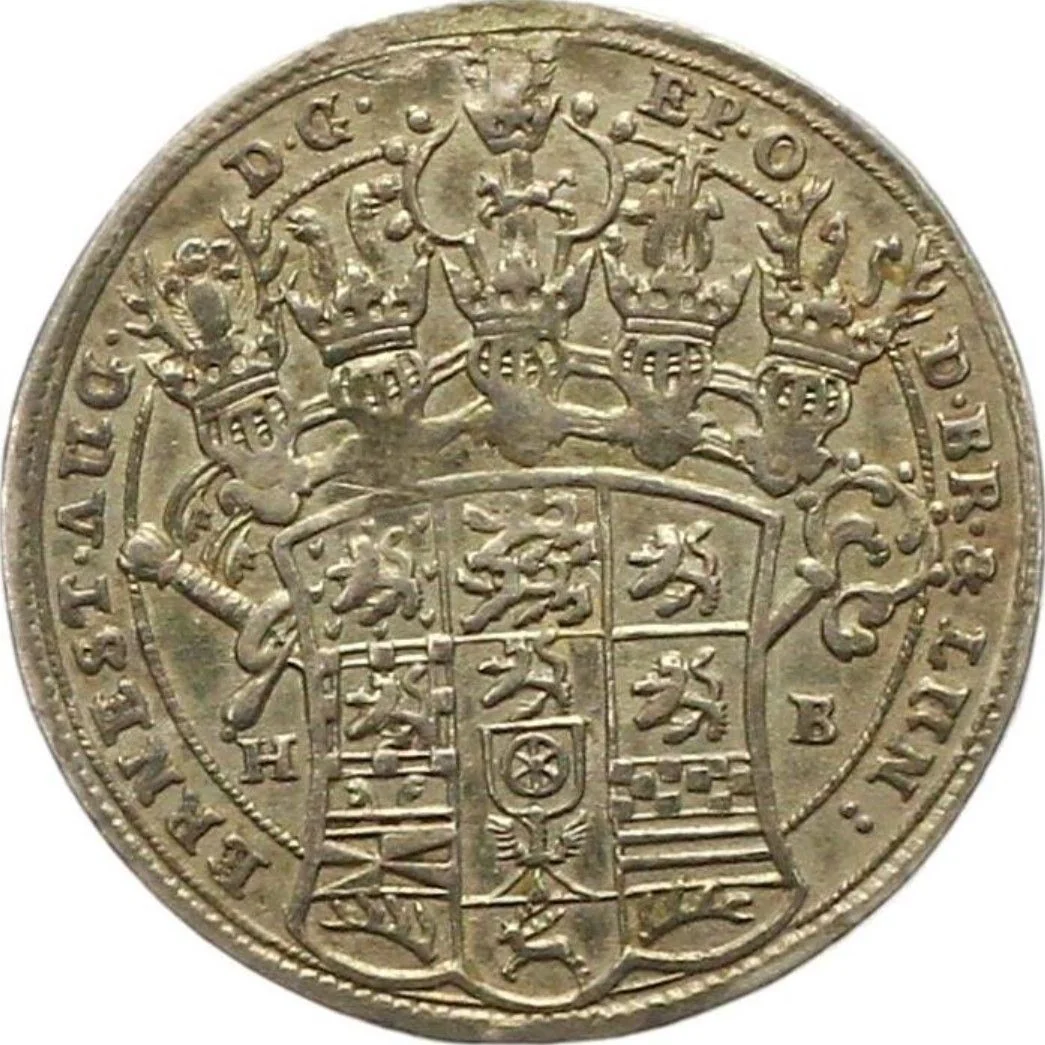
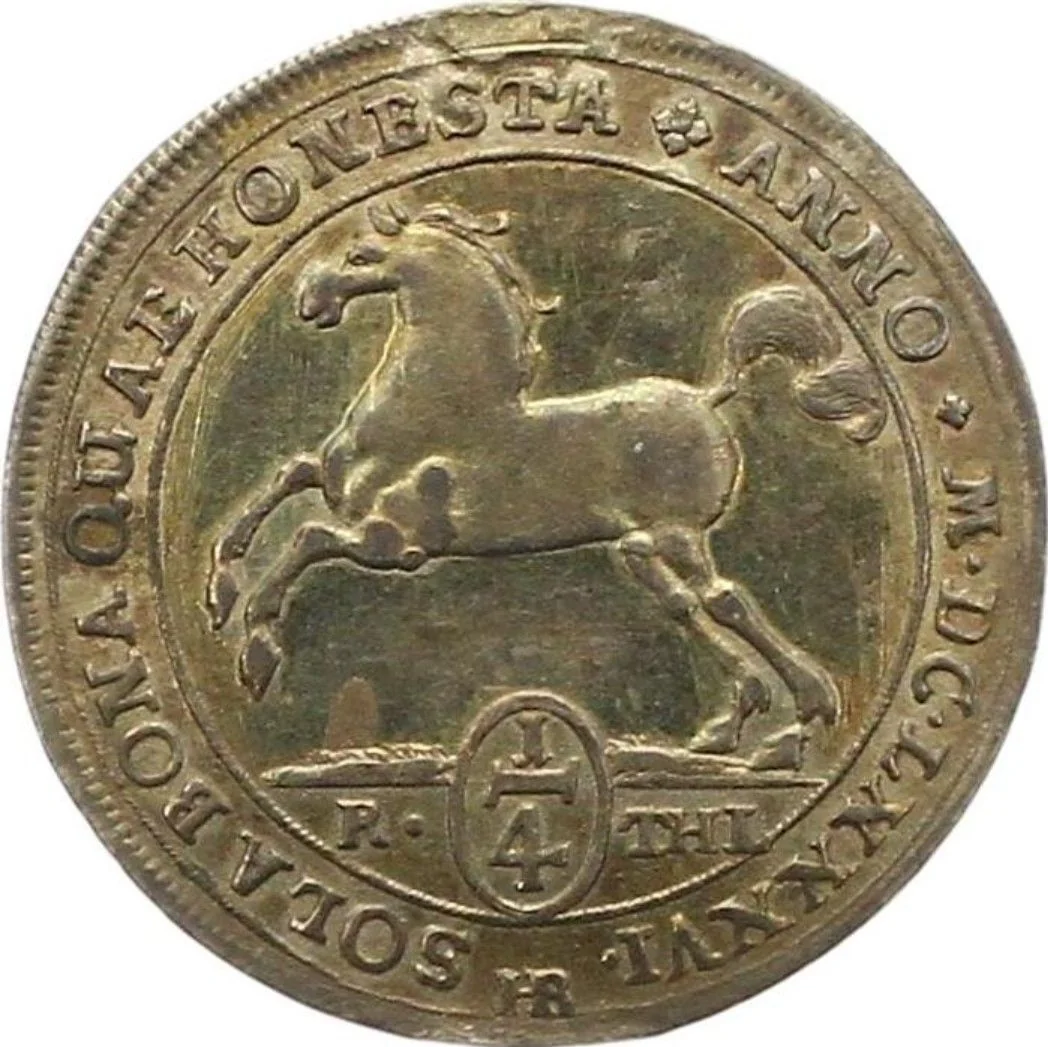
¼ Thaler – Brunswick-Lüneburg-Calenberg
Germany
Context
Year: 1686
Country: Germany 
Issuer: Brunswick-Lüneburg-Calenberg
Ruler: Ernest Augustus
Currency:
Demonetized: Yes
References
KM: #Click to copy to clipboard331
Numista: #451258
Obverse
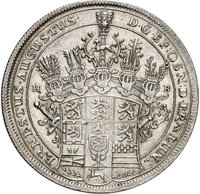
Description:
Helmeted with 12 arms; HB on both sides.
Inscription:
ERNEST·AUG· D·G· EP·O D·BR·& LUN:
H B
H B
Script: Latin
Engraver: Heinrich Bonhorst
Reverse
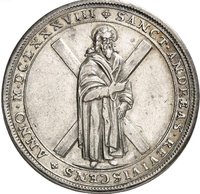
Description:
Horse leaping left, lower quarter.
Inscription:
SOLA BONA QUAE HONESTA ✿ ANNO + M·DC·LXXXVI·
R· THI
(1/4)
HB
R· THI
(1/4)
HB
Script: Latin
Engraver: Heinrich Bonhorst
Edge
Mints
| Name | Mark |
|---|---|
| Clausthal | — |
Mintings
| Year | Mint Mark | Mintage | Quality | Collection |
|---|---|---|---|---|
| 1686 | — | — |
Historical background
In 1686, the Duchy of Brunswick-Lüneburg, specifically the Principality of Calenberg under Duke Ernst August, was grappling with the profound monetary disorder common across the Holy Roman Empire after the Thirty Years' War. The currency landscape was fragmented and debased, characterized by a chaotic circulation of multiple coin types. These included not only coins minted by the various Brunswick-Lüneburg lines (like the Gute Groschen and Mariengroschen), but also a flood of inferior foreign coins and older, clipped, or counterfeit pieces. This proliferation severely undermined public trust in the money supply, disrupted trade, and complicated state finances.
The core of the problem was the Kipper- und Wipperzeit inflation of the early 17th century, which had set a precedent for rulers to debase coinage for short-term profit. By 1686, Ernst August, like his contemporaries, faced the tension between the need for sound money and the temptation to generate seigniorage revenue. His mint in Hanover was actively producing coinage, but within a competitive and unstable regional system where neighboring states' debasements could force retaliatory measures. The value of coins was therefore unstable, often tied to their fluctuating silver content rather than a reliable face value.
This monetary instability directly impacted the principality's economy and the Duke's ambitions. Reliable revenue collection was hindered, and the costs of maintaining a court and army—key to Ernst August's pursuit of the prestigious Electorate of Hanover—were harder to manage. While a major currency reform was still a few years away (the Leipziger Münzfuß of 1690 would later establish a stricter regional standard), the situation in 1686 was one of pressing need for reform. It was a period of assessment and mounting pressure to rationalize the coinage to ensure economic stability and strengthen the principality's fiscal and political standing.
The core of the problem was the Kipper- und Wipperzeit inflation of the early 17th century, which had set a precedent for rulers to debase coinage for short-term profit. By 1686, Ernst August, like his contemporaries, faced the tension between the need for sound money and the temptation to generate seigniorage revenue. His mint in Hanover was actively producing coinage, but within a competitive and unstable regional system where neighboring states' debasements could force retaliatory measures. The value of coins was therefore unstable, often tied to their fluctuating silver content rather than a reliable face value.
This monetary instability directly impacted the principality's economy and the Duke's ambitions. Reliable revenue collection was hindered, and the costs of maintaining a court and army—key to Ernst August's pursuit of the prestigious Electorate of Hanover—were harder to manage. While a major currency reform was still a few years away (the Leipziger Münzfuß of 1690 would later establish a stricter regional standard), the situation in 1686 was one of pressing need for reform. It was a period of assessment and mounting pressure to rationalize the coinage to ensure economic stability and strengthen the principality's fiscal and political standing.
✨ Legendary