

1 Thaler – Brunswick-Lüneburg-Calenberg
Germany
Context
Year: 1688
Country: Germany 
Issuer: Brunswick-Lüneburg-Calenberg
Ruler: Ernest Augustus
Currency:
Demonetized: Yes
Material
References
KM: #Click to copy to clipboard335.1
Numista: #266511
Value
Bullion value: $81.11
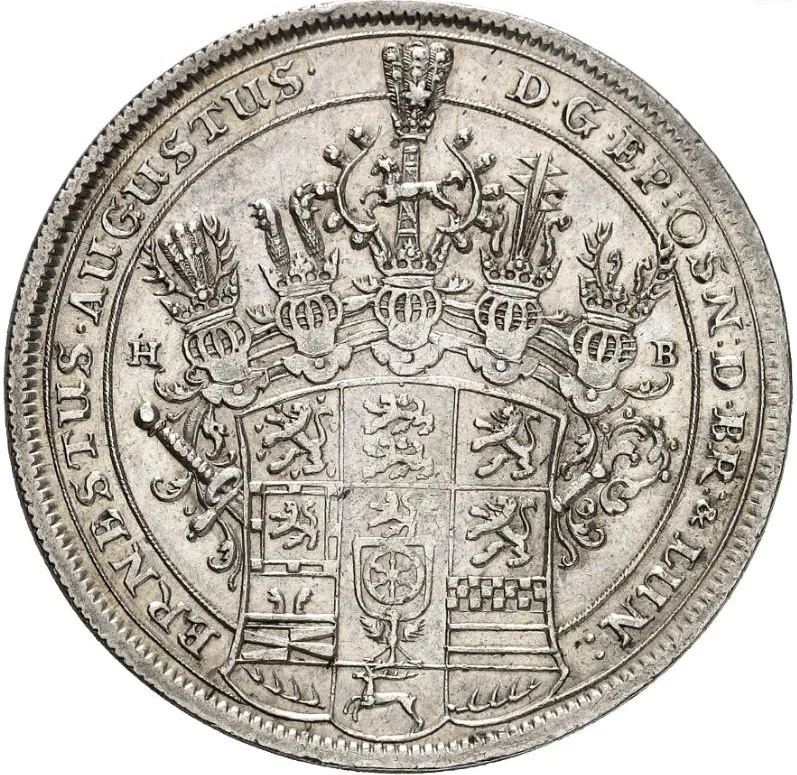
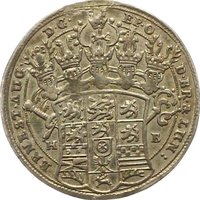
Obverse
Description:
Armed and helmeted.
Inscription:
ERNESTUS AUGUSTUS D G EP OSN D BR & LUN
HB
HB
Script: Latin
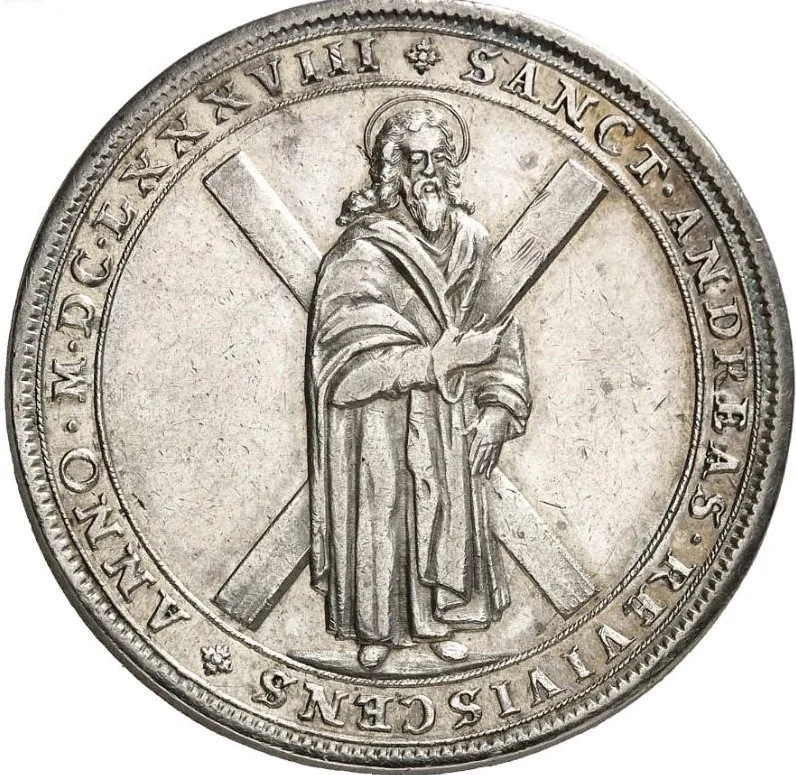
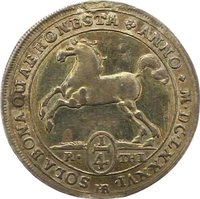
Reverse
Description:
St. Andrew holding his cross.
Inscription:
SANCT ANDREAS REVIVISCENS ANNO MDCCLXXVIII
Script: Latin
Edge
Mints
| Name | Mark |
|---|---|
| Clausthal | — |
Mintings
| Year | Mint Mark | Mintage | Quality | Collection |
|---|---|---|---|---|
| 1688 | — | — |
Historical background
In 1688, the Duchy of Brunswick-Lüneburg, specifically the Principality of Calenberg under Duke Ernst August, was entangled in the complex and debilitating monetary fragmentation of the Holy Roman Empire. The region suffered from a proliferation of disparate coinage systems, where multiple territorial rulers exercised their Münzregal (right of coinage), leading to a chaotic mix of circulating species. Alongside locally minted coins, numerous foreign currencies, particularly from the neighboring economic powerhouse of the Dutch Republic, circulated widely, creating constant exchange difficulties and undermining confidence in the value of money. This environment was ripe for exploitation through practices like clipping and the circulation of intentionally debased coins, which eroded public trust and hampered commerce.
The core of the monetary problem was severe and chronic debasement. Rulers, often in need of revenue for state-building projects and military expenditures, frequently reduced the precious metal content of their coinage while maintaining its face value—a form of seigniorage. This practice, however, triggered Gresham’s Law (“bad money drives out good”), as older, full-weight coins were hoarded or melted down, leaving only the inferior currency in daily circulation. The result was inflationary pressure, unpredictable pricing, and significant hardship for the populace, whose wages and savings were effectively devalued. For a state like Calenberg, seeking to consolidate power and modernize its administration, this monetary instability was a direct obstacle to economic growth and fiscal stability.
Duke Ernst August was acutely aware of these issues, and the year 1688 fell within a period of active, though challenging, monetary reform. He was a participant in regional agreements, such as the Zinnaische Münzfuß (1667) and the later Leipziger Münzfuß (1690), which aimed to standardize coinage values and silver content across several German territories. The goal was to create a stable, uniform Reichsthaler standard to facilitate trade and state finance. Therefore, the situation in 1688 was one of transition, caught between the entrenched chaos of the past and the ongoing, difficult political negotiations required to implement a more orderly and reliable monetary system for the future.
The core of the monetary problem was severe and chronic debasement. Rulers, often in need of revenue for state-building projects and military expenditures, frequently reduced the precious metal content of their coinage while maintaining its face value—a form of seigniorage. This practice, however, triggered Gresham’s Law (“bad money drives out good”), as older, full-weight coins were hoarded or melted down, leaving only the inferior currency in daily circulation. The result was inflationary pressure, unpredictable pricing, and significant hardship for the populace, whose wages and savings were effectively devalued. For a state like Calenberg, seeking to consolidate power and modernize its administration, this monetary instability was a direct obstacle to economic growth and fiscal stability.
Duke Ernst August was acutely aware of these issues, and the year 1688 fell within a period of active, though challenging, monetary reform. He was a participant in regional agreements, such as the Zinnaische Münzfuß (1667) and the later Leipziger Münzfuß (1690), which aimed to standardize coinage values and silver content across several German territories. The goal was to create a stable, uniform Reichsthaler standard to facilitate trade and state finance. Therefore, the situation in 1688 was one of transition, caught between the entrenched chaos of the past and the ongoing, difficult political negotiations required to implement a more orderly and reliable monetary system for the future.
✨ Legendary