

Obverse
Description:
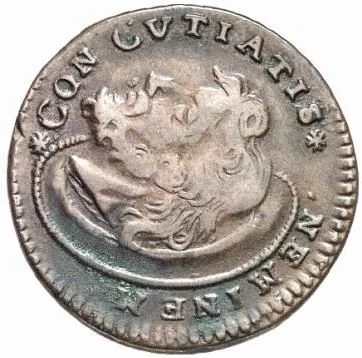
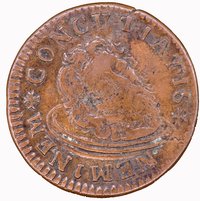
John the Baptist's head on a platter, facing left.
Inscription:
+ CONCVTIATIS + NEMINEM
Script: Latin
Reverse
Description:
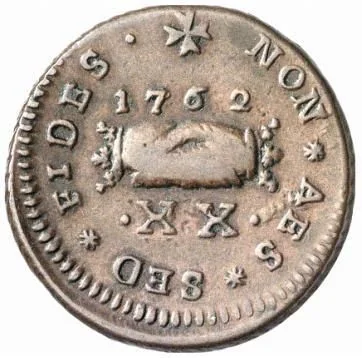
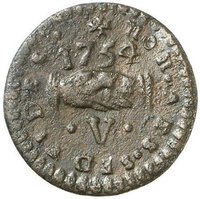
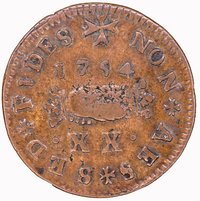
Clasped hands above date, denomination below. Legend separated by Maltese crosses.
Inscription:
NON + AES + SED + FIDES.
1762
·XX·
1762
·XX·
Script: Latin
Edge
Mintings
| Year | Mint Mark | Mintage | Quality | Collection |
|---|---|---|---|---|
| 1752 | — | — | ||
| 1762 | — | — |
Historical background
In 1752, Malta’s currency situation was complex and problematic, characterised by a chaotic circulation of multiple coinages. The Knights Hospitaller, who ruled the islands, had long struggled to control the monetary system. A key issue was the widespread use of heavily debased Spanish and Sicilian copper coins, known as piccioli, which flooded the market and drove full-weight silver coins out of circulation (Gresham’s Law). This created a severe shortage of reliable specie for trade and government finance, leading to inflation and public discontent, especially among the poor who used copper for daily transactions.
The situation reached a critical point, prompting Grand Master Manuel Pinto da Fonseca to enact a major monetary reform that very year. His solution was to introduce a new, stable copper coinage minted at Malta’s own zecca (mint). These new coins, notably the grano and tari, were issued with a fixed fiduciary value and were not intended to be valued by their intrinsic metal content. To enforce this, the decree of 1752 demonetised the old foreign copper piccioli and made the new Maltese copper the sole legal tender for small transactions.
This reform was a significant assertion of sovereign monetary authority and brought a measure of stability. However, it was not a complete solution. The new copper coinage remained a fiduciary currency, meaning its value was based on government decree rather than its metal worth, requiring public confidence to function. Furthermore, larger transactions continued to rely on a variety of foreign silver and gold coins, such as Spanish pieces of eight and Sicilian scudi, leaving Malta with a dual system of local fiduciary copper and international precious metal specie that would define its currency for decades to come.
The situation reached a critical point, prompting Grand Master Manuel Pinto da Fonseca to enact a major monetary reform that very year. His solution was to introduce a new, stable copper coinage minted at Malta’s own zecca (mint). These new coins, notably the grano and tari, were issued with a fixed fiduciary value and were not intended to be valued by their intrinsic metal content. To enforce this, the decree of 1752 demonetised the old foreign copper piccioli and made the new Maltese copper the sole legal tender for small transactions.
This reform was a significant assertion of sovereign monetary authority and brought a measure of stability. However, it was not a complete solution. The new copper coinage remained a fiduciary currency, meaning its value was based on government decree rather than its metal worth, requiring public confidence to function. Furthermore, larger transactions continued to rely on a variety of foreign silver and gold coins, such as Spanish pieces of eight and Sicilian scudi, leaving Malta with a dual system of local fiduciary copper and international precious metal specie that would define its currency for decades to come.
✨ Legendary