

5 Grani – Malta
Malta
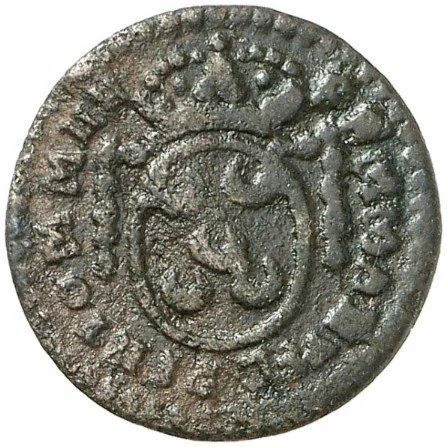
Obverse
Description:
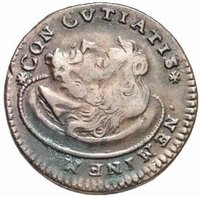
Crowned, garlanded arms on an oval shield.
Inscription:
F · EMMANVEL PINTO M · M · H · H
Script: Latin
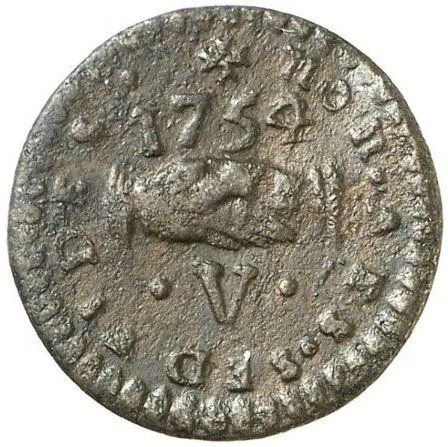
Reverse
Description:
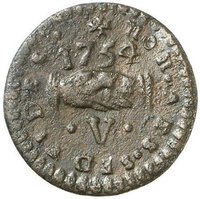
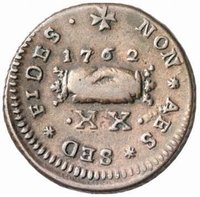
Clasped hands, date above, value below.
Inscription:
☩ NON · AES · SED · FIDES ·
1754
· V ·
1754
· V ·
Script: Latin
Edge
Mintings
| Year | Mint Mark | Mintage | Quality | Collection |
|---|---|---|---|---|
| 1751 | — | — | ||
| 1752 | — | — | ||
| 1753 | — | — | ||
| 1754 | — | — | ||
| 1755 | — | — | ||
| 1762 | — | — |
Historical background
In 1751, Malta’s currency situation was a complex and fragmented system, a direct legacy of the island's strategic position and the various powers that had influenced it. The official tender was the Sicilian Piastra, reflecting Malta's political status as a possession of the Kingdom of Sicily under the Knights Hospitaller (Order of St. John). However, the Piastra was not a single, unified coin but a unit of account, with actual commerce conducted using a bewildering array of physical coins. These included not only Sicilian and Knights' own coinage but also a heavy circulation of Spanish silver pieces of eight (reales), French écus, Venetian sequins, and Ottoman coins, all brought by trade, corsairing, and the constant movement of people and ships through the central Mediterranean port of Valletta.
This monetary multiplicity created significant practical problems. Merchants and officials needed constantly updated exchange lists to navigate the fluctuating values of dozens of different coins, all with varying weights and precious metal content. The Knights attempted to impose order by minting their own copper grani and silver tari and scudi, and by officially setting exchange rates through periodic bando (edicts). Yet, the sheer volume of foreign specie, often clipped or debased, undermined these efforts. The system was prone to confusion, fraud, and arbitrage, hindering smooth commercial transactions and state revenue collection.
Consequently, the year 1751 fell within a period of ongoing but struggling monetary reform. The Order, under Grand Master Manuel Pinto da Fonseca, was actively trying to assert greater control over the currency to stabilize the economy and centralize its own fiscal authority. Efforts included recalling old coins for re-minting and issuing new, higher-quality specie bearing the Grand Master's emblem. However, the fundamental challenge of replacing an entrenched, international monetary ecosystem with a local standard would persist throughout the 18th century, making the currency situation in 1751 one of managed chaos rather than orderly uniformity.
This monetary multiplicity created significant practical problems. Merchants and officials needed constantly updated exchange lists to navigate the fluctuating values of dozens of different coins, all with varying weights and precious metal content. The Knights attempted to impose order by minting their own copper grani and silver tari and scudi, and by officially setting exchange rates through periodic bando (edicts). Yet, the sheer volume of foreign specie, often clipped or debased, undermined these efforts. The system was prone to confusion, fraud, and arbitrage, hindering smooth commercial transactions and state revenue collection.
Consequently, the year 1751 fell within a period of ongoing but struggling monetary reform. The Order, under Grand Master Manuel Pinto da Fonseca, was actively trying to assert greater control over the currency to stabilize the economy and centralize its own fiscal authority. Efforts included recalling old coins for re-minting and issuing new, higher-quality specie bearing the Grand Master's emblem. However, the fundamental challenge of replacing an entrenched, international monetary ecosystem with a local standard would persist throughout the 18th century, making the currency situation in 1751 one of managed chaos rather than orderly uniformity.
✨ Legendary