

Obverse
Description:
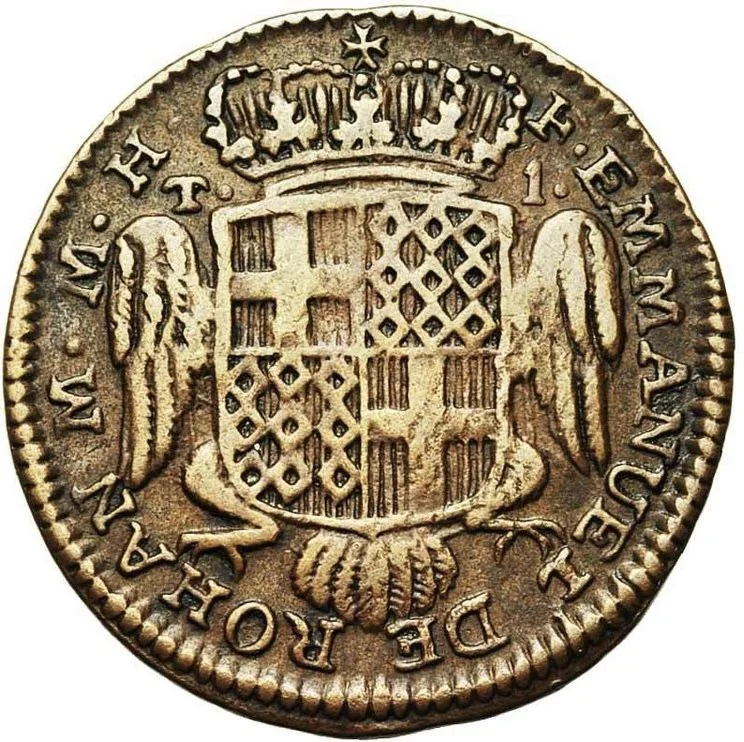
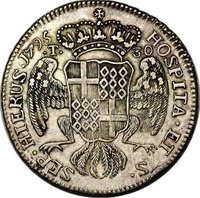
A headless eagle bears the quartered arms of Rohan and the Order upon its breast, crowned.
Inscription:
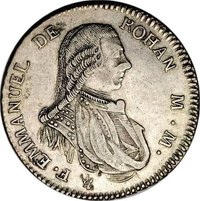
F EMMANUEL DE ROHAN M M H
Script: Latin
Reverse
Edge
Mintings
| Year | Mint Mark | Mintage | Quality | Collection |
|---|---|---|---|---|
| 1787 | — | — |
Historical background
In 1787, Malta's currency situation was a complex tapestry reflecting its unique political and economic position. The islands were under the rule of the Sovereign Military Order of St. John of Jerusalem (the Knights Hospitaller), which minted its own distinctive coinage. The primary unit was the Scudo, subdivided into 12 Tari, each of 20 Grani. However, due to Malta's vital role as a trading hub in the central Mediterranean, a multitude of foreign coins also circulated freely, including Spanish pieces of eight, Venetian sequins, and Ottoman piastres. This created a de facto multi-currency system where merchants and bankers needed extensive knowledge of exchange rates and metal purity.
The system was fraught with challenges. The intrinsic value of silver and gold in foreign coins often exceeded their face value in the local Maltese system, leading to the frequent export and melting down of full-weight specie. This in turn caused a shortage of sound coinage on the islands. Consequently, the Order frequently struggled to maintain a stable and sufficient money supply for local commerce and its own administrative expenses. To address this, the Treasury periodically issued proclamations to re-tariff the value of specific foreign coins, attempting to legally fix their exchange rates against the Maltese scudo in an effort to control the market.
Ultimately, the monetary instability of 1787 was a symptom of the Order's declining economic power in its final decades. The system relied heavily on inconsistent inflows from its European estates and the activities of corsairing, which were becoming less profitable. This precarious financial backdrop, combined with the cumbersome multi-currency reality, hindered smooth trade and economic planning. Within a generation, these financial strains would be subsumed by greater political change when Napoleon Bonaparte seized the islands in 1798, abruptly ending the Order's rule and its monetary system.
The system was fraught with challenges. The intrinsic value of silver and gold in foreign coins often exceeded their face value in the local Maltese system, leading to the frequent export and melting down of full-weight specie. This in turn caused a shortage of sound coinage on the islands. Consequently, the Order frequently struggled to maintain a stable and sufficient money supply for local commerce and its own administrative expenses. To address this, the Treasury periodically issued proclamations to re-tariff the value of specific foreign coins, attempting to legally fix their exchange rates against the Maltese scudo in an effort to control the market.
Ultimately, the monetary instability of 1787 was a symptom of the Order's declining economic power in its final decades. The system relied heavily on inconsistent inflows from its European estates and the activities of corsairing, which were becoming less profitable. This precarious financial backdrop, combined with the cumbersome multi-currency reality, hindered smooth trade and economic planning. Within a generation, these financial strains would be subsumed by greater political change when Napoleon Bonaparte seized the islands in 1798, abruptly ending the Order's rule and its monetary system.
✨ Legendary