

Italy
Context
Years: 1726–1736
Country: Italy 
Issuer: Milan
Ruler: Charles III
Currency:
(1515—1796)
Demonetized: Yes
Material
References
KM: #Click to copy to clipboard144
Numista: #44527
Obverse
Description:
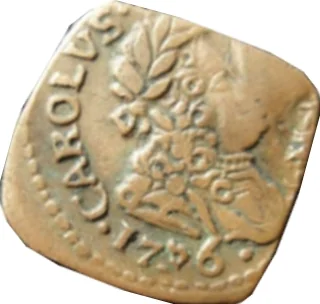
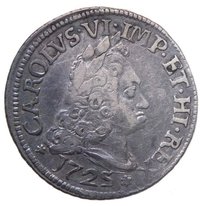
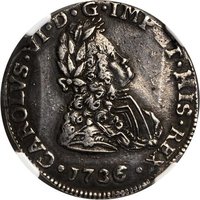
Laureate bust right, date below.
Inscription:
1726 · CAROLVS · VI · IMP · ET · H · R
Script: Latin
Reverse
Edge
Mints
| Name | Mark |
|---|---|
| Milan | — |
Mintings
| Year | Mint Mark | Mintage | Quality | Collection |
|---|---|---|---|---|
| 1726 | — | — | ||
| 1728 | — | — | ||
| 1736 | — | — |
Historical background
In 1726, the Duchy of Milan, then under Austrian Habsburg rule following the War of Spanish Succession, faced a severe monetary crisis rooted in decades of debasement. The circulating medium was a chaotic mix of old Spanish, local Milanese, and new Austrian coins, alongside a plethora of foreign currencies from neighboring Italian states. The intrinsic silver content of these coins had been steadily reduced by successive governments to fund military campaigns, leading to a situation where "good" full-weight coins were hoarded or exported, while "bad" debased coins flooded the market, causing inflation and crippling everyday commerce.
Recognizing the destabilizing economic effects, the Austrian administration, under Emperor Charles VI and his Milanese officials, enacted a sweeping monetary reform in 1726. The central policy was the introduction of a new, stable silver-based currency: the lira imperiale (imperial lira). This new system established a fixed relationship between gold zecchini and silver scudi, defining their value in the new lire, and aimed to demonetize and recall the old, debased pieces. The reform was not merely a recoinage but a fundamental standardization, seeking to impose uniform Habsburg monetary authority across the duchy.
The reform of 1726 was a bold attempt to impose order and restore public confidence, characteristic of the centralizing "enlightened absolutism" of the Austrian administration. While it succeeded in simplifying the monetary landscape and providing a stable accounting unit, the transition was challenging. The recall of old coins was protracted, and the strict fixed ratio between gold and silver struggled to hold against fluctuating international bullion markets. Nevertheless, the lira imperiale established the framework for Milanese currency until the end of the century, marking a pivotal moment in the financial integration of Lombardy into the Habsburg economic sphere.
Recognizing the destabilizing economic effects, the Austrian administration, under Emperor Charles VI and his Milanese officials, enacted a sweeping monetary reform in 1726. The central policy was the introduction of a new, stable silver-based currency: the lira imperiale (imperial lira). This new system established a fixed relationship between gold zecchini and silver scudi, defining their value in the new lire, and aimed to demonetize and recall the old, debased pieces. The reform was not merely a recoinage but a fundamental standardization, seeking to impose uniform Habsburg monetary authority across the duchy.
The reform of 1726 was a bold attempt to impose order and restore public confidence, characteristic of the centralizing "enlightened absolutism" of the Austrian administration. While it succeeded in simplifying the monetary landscape and providing a stable accounting unit, the transition was challenging. The recall of old coins was protracted, and the strict fixed ratio between gold and silver struggled to hold against fluctuating international bullion markets. Nevertheless, the lira imperiale established the framework for Milanese currency until the end of the century, marking a pivotal moment in the financial integration of Lombardy into the Habsburg economic sphere.
⭐ Rare