

20 Soldi – Milan
Italy
Obverse
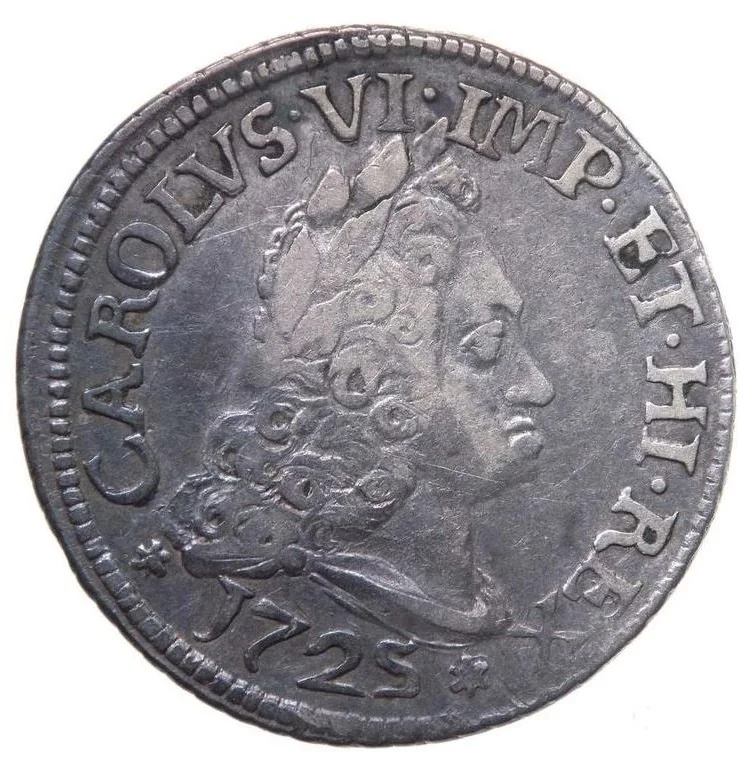
Description:
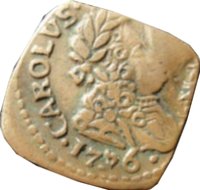
Laureate bust right, date below.
Inscription:
CAROLVS. VI. IMP. ET. HI. REX
Script: Latin
Reverse
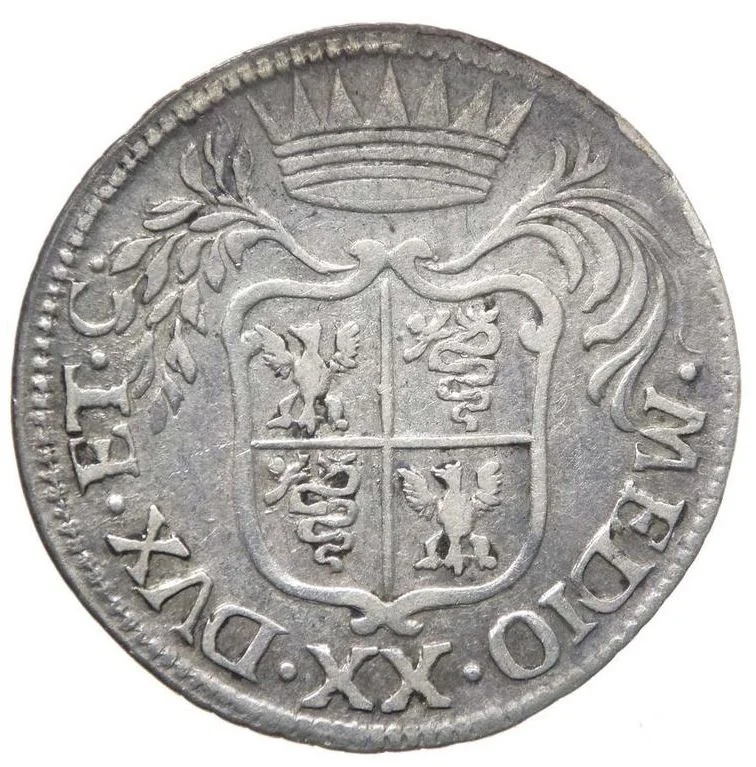
Description:
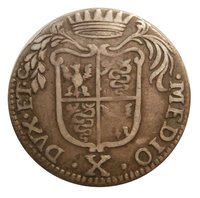
Crown with two branches above a quartered shield; 'XX' below.
Inscription:
.MEDIO. XX. DVX. ET. C.
Script: Latin
Edge
Mints
| Name | Mark |
|---|---|
| Milan | — |
Mintings
| Year | Mint Mark | Mintage | Quality | Collection |
|---|---|---|---|---|
| 1723 | — | — | ||
| 1724 | — | — | ||
| 1725 | — | — | ||
| 1726 | — | — |
Historical background
In 1723, Milan found itself in a complex monetary situation, caught between its political reality as a territory of the Habsburg Austrian Empire and its deep-seated economic traditions within the Italian and Lombard regional system. Officially, the currency was the Milanese scudo (divided into 6 lire, each of 20 soldi), but the monetary landscape was a crowded tapestry of both domestic and foreign coins. Alongside local issues from the Milan mint, Spanish silver reales, Venetian ducats, and French louis d’or all circulated widely, their values fluctuating based on metallic content and market demand. This created a constant challenge for merchants and the state, requiring official "agios" (exchange rate lists) to equate these diverse coins.
The underlying problem was one of chronic instability and debasement. The need to finance the Habsburgs' military campaigns, particularly during the recent War of the Spanish Succession, had led successive administrations to reduce the silver content in the Milanese lira to raise seigniorage revenue. This inflationary practice eroded public trust in the local currency, prompting hoarding of full-weight foreign gold and silver coins. Consequently, everyday transactions became fraught with calculation and suspicion, hindering commerce and creating a disparity between the official legal tender and the coins the populace actually valued.
Recognizing these disorders, the Austrian administration under Emperor Charles VI was in a period of attempted monetary reform. Efforts were being made to reassert control over the mint and standardize the coinage, aligning it more closely with the Empire's broader financial system. However, progress was slow, as the authorities had to balance imperial fiscal needs with the practical realities of Milan’s vibrant commercial economy, which was deeply integrated into Mediterranean and European trade networks. Thus, in 1723, the situation remained in flux—a transitional moment of imperial consolidation grappling with a legacy of monetary fragmentation and inflation.
The underlying problem was one of chronic instability and debasement. The need to finance the Habsburgs' military campaigns, particularly during the recent War of the Spanish Succession, had led successive administrations to reduce the silver content in the Milanese lira to raise seigniorage revenue. This inflationary practice eroded public trust in the local currency, prompting hoarding of full-weight foreign gold and silver coins. Consequently, everyday transactions became fraught with calculation and suspicion, hindering commerce and creating a disparity between the official legal tender and the coins the populace actually valued.
Recognizing these disorders, the Austrian administration under Emperor Charles VI was in a period of attempted monetary reform. Efforts were being made to reassert control over the mint and standardize the coinage, aligning it more closely with the Empire's broader financial system. However, progress was slow, as the authorities had to balance imperial fiscal needs with the practical realities of Milan’s vibrant commercial economy, which was deeply integrated into Mediterranean and European trade networks. Thus, in 1723, the situation remained in flux—a transitional moment of imperial consolidation grappling with a legacy of monetary fragmentation and inflation.
✨ Legendary