

1 Ducat – Austrian Empire
Austria
Context
Years: 1609–1612
Country: Austria 
Issuer: Austrian Empire
Ruler: Matthias
Currency:
(1520—1754)
Demonetized: Yes
Material
References
KM: #Click to copy to clipboard109
Numista: #437840
Value
Bullion value: $584.06
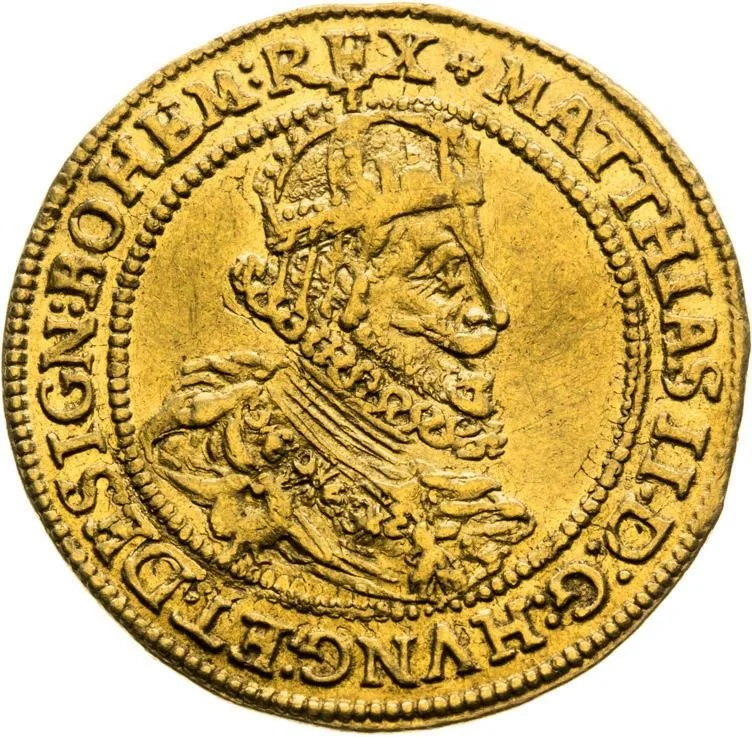
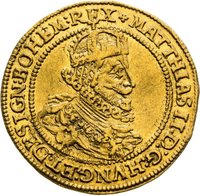
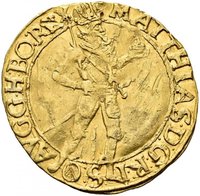
Obverse
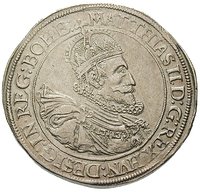
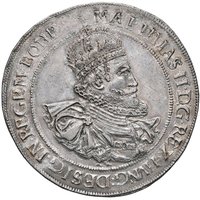
Description:
Crowned head facing right.
Inscription:
MATTHIAS II D G HVNG ET DESIGN BOHEM REX
Script: Latin
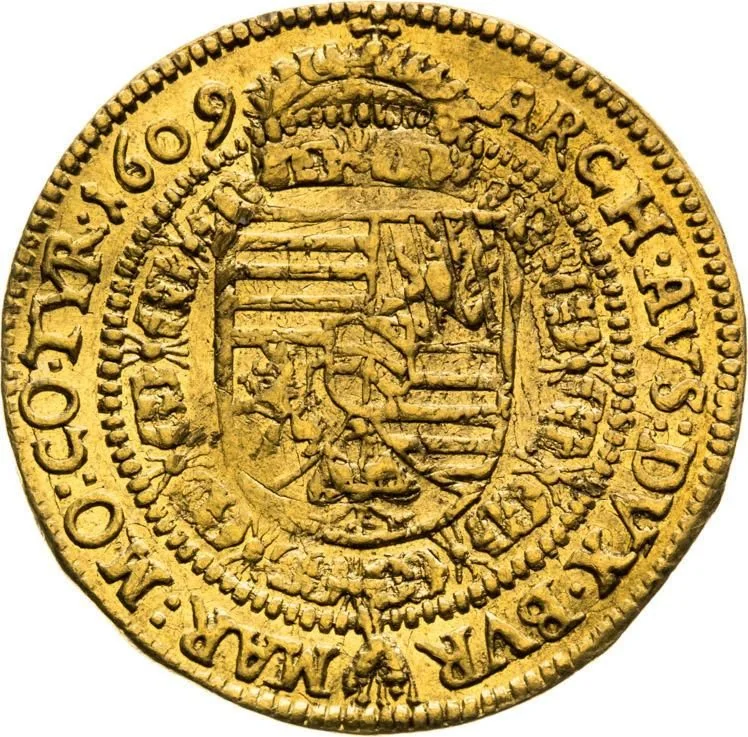
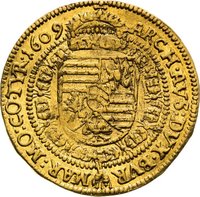
Reverse
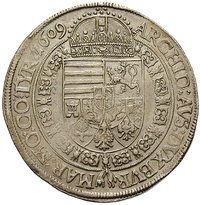
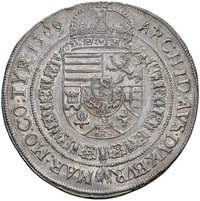
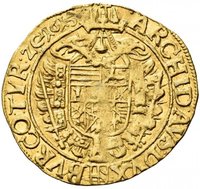
Description:
Shield with crowned composite arms, encircled by the Golden Fleece chain; date at legend's end.
Inscription:
ARCH AVS DVX BVR MAR MO CO TYR 1609
Script: Latin
Edge
Mints
| Name | Mark |
|---|---|
| Münze Österreich | — |
Mintings
| Year | Mint Mark | Mintage | Quality | Collection |
|---|---|---|---|---|
| 1609 | — | — | ||
| 1610 | — | — | ||
| 1611 | — | — | ||
| 1612 | — | — |
Historical background
In 1609, the currency situation within the Habsburg-ruled Austrian Empire was complex and fragmented, reflecting the decentralized political structure of the realm. There was no single, unified imperial currency. Instead, the Empire functioned as a monetary union where various constituent territories—such as the Archduchy of Austria, the Kingdom of Bohemia, and the Kingdom of Hungary—minted their own coins according to loosely agreed-upon standards. The most important large silver coin was the Reichsthaler (Imperial Thaler), a theoretical benchmark, but in daily circulation, people used a plethora of regional coins like Kreuzers, Groschen, and Guldens from different mints, each with varying silver content and value.
This period was one of significant monetary instability, largely driven by the relentless financial demands of the Long Turkish War (1593-1606) and rising tensions leading toward the Thirty Years' War (1618-1648). To fund massive military expenditures, the Habsburg state and individual territories increasingly resorted to debasement—reducing the precious metal content in coins while maintaining their face value. This practice, alongside the influx of lower-quality coinage from neighboring German states, led to inflation, confusion in trade, and a loss of public trust in the currency. The value of money was in constant flux, causing hardship for common people and complicating commerce and tax collection.
Efforts to impose order were largely ineffective. Imperial ordinances, like the Reichsmünzordnung (Imperial Coinage Ordinance) of 1559, were intended to standardize coinage across the Holy Roman Empire, but by 1609 they were widely ignored. Sovereign princes and estates within the Habsburg lands often prioritized their immediate fiscal needs over monetary stability. Consequently, the currency landscape remained a chaotic patchwork, undermining economic cohesion and exposing the structural weaknesses of Habsburg finance on the eve of a century of further conflict.
This period was one of significant monetary instability, largely driven by the relentless financial demands of the Long Turkish War (1593-1606) and rising tensions leading toward the Thirty Years' War (1618-1648). To fund massive military expenditures, the Habsburg state and individual territories increasingly resorted to debasement—reducing the precious metal content in coins while maintaining their face value. This practice, alongside the influx of lower-quality coinage from neighboring German states, led to inflation, confusion in trade, and a loss of public trust in the currency. The value of money was in constant flux, causing hardship for common people and complicating commerce and tax collection.
Efforts to impose order were largely ineffective. Imperial ordinances, like the Reichsmünzordnung (Imperial Coinage Ordinance) of 1559, were intended to standardize coinage across the Holy Roman Empire, but by 1609 they were widely ignored. Sovereign princes and estates within the Habsburg lands often prioritized their immediate fiscal needs over monetary stability. Consequently, the currency landscape remained a chaotic patchwork, undermining economic cohesion and exposing the structural weaknesses of Habsburg finance on the eve of a century of further conflict.
✨ Legendary