

1 Ducat – Austrian Empire
Austria
Context
Years: 1612–1618
Country: Austria 
Issuer: Austrian Empire
Ruler: Matthias
Currency:
(1520—1754)
Demonetized: Yes
References
KM: #Click to copy to clipboard147
Numista: #437882
Value
Bullion value: $580.91
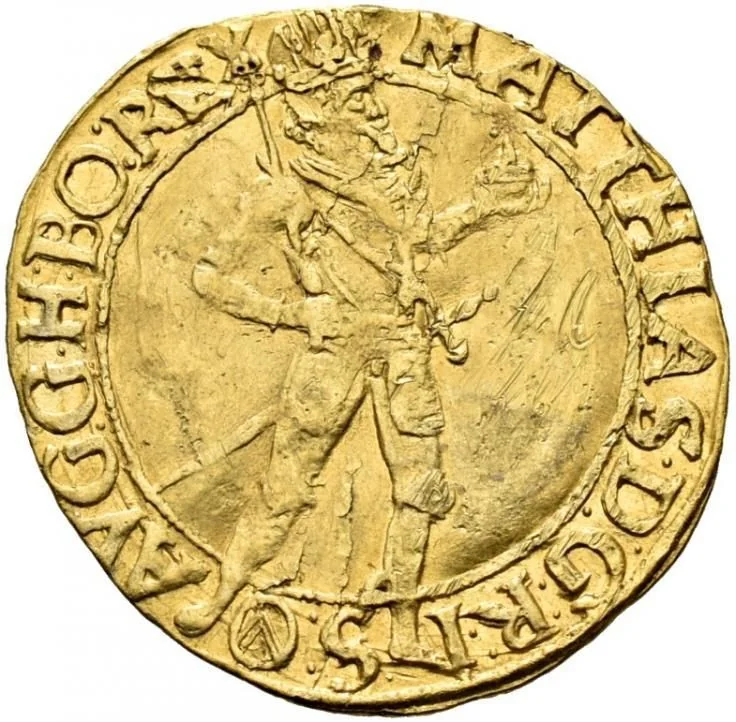
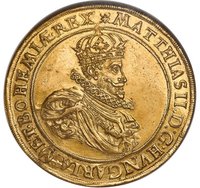
Obverse
Description:
Matthias holding scepter and orb.
Inscription:
MATTHIAS II D G R I S AVG G H BO REX
Script: Latin
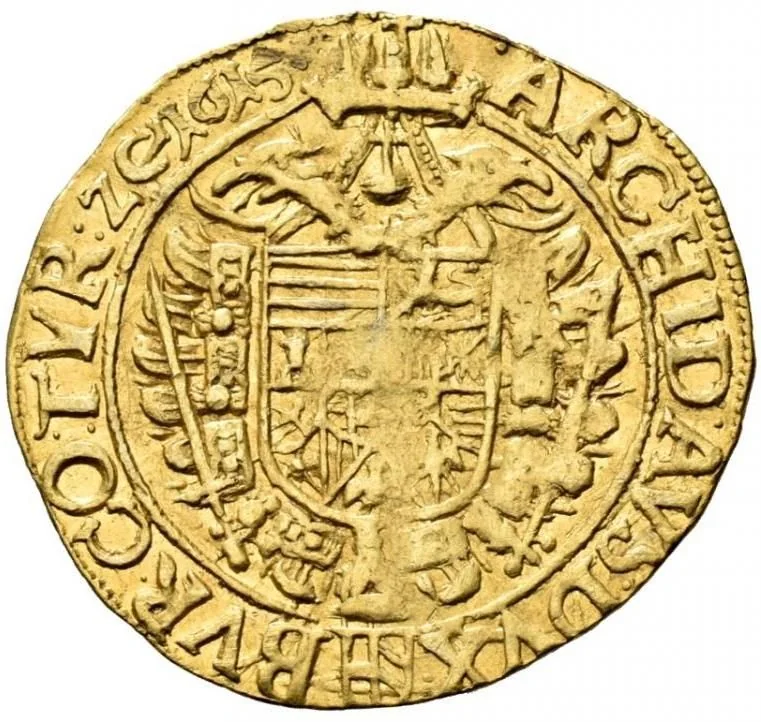
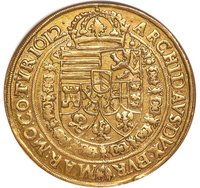
Reverse
Description:
Imperial eagle crowned, bearing a large shield.
Inscription:
ARCHID AVS DVX BVR CO TYR ZC 1615
Script: Latin
Edge
Mints
| Name | Mark |
|---|---|
| Münze Österreich | — |
Mintings
| Year | Mint Mark | Mintage | Quality | Collection |
|---|---|---|---|---|
| 1612 | — | — | ||
| 1613 | — | — | ||
| 1614 | — | — | ||
| 1615 | — | — | ||
| 1617 | — | — | ||
| 1618 | — | — |
Historical background
In 1612, the Austrian Habsburg monarchy, a sprawling and decentralized empire, faced significant and growing currency instability. This was largely a legacy of the "Kipper- und Wipperzeit" (the clipping and culling period), a Europe-wide crisis of debased coinage that had begun around the 1610s. Regional minting rights, held by various estates and even private individuals, led to the rampant production of inferior coins. These minters would intentionally reduce the precious metal content (especially silver) in coins while maintaining their face value, creating short-term profit but destroying public trust and causing severe inflation. The situation was a chaotic patchwork, with the quality and value of coins varying drastically from one territory to another.
The financial pressures on the central Habsburg government, particularly under Emperor Matthias (r. 1612-1619), were acute. Continuous military expenditure to defend the empire's long borders against the Ottoman Empire, combined with the costs of maintaining the imperial court, created a constant need for revenue. The traditional remedy of currency debasement became a tempting but destructive tool. This practice not only disrupted daily commerce but also undermined long-distance trade and state credit, as merchants and foreign bankers grew wary of the unstable Austrian currency.
Furthermore, this monetary disorder exacerbated the deep political and religious tensions within the empire, which would soon erupt into the Thirty Years' War (1618-1648). The estates (representing the nobility and towns) fiercely resisted the centralizing fiscal reforms proposed by the crown, seeing control over currency and taxation as a key privilege. Thus, in 1612, the currency situation was not merely an economic issue but a symptom of the empire's fundamental weaknesses: fragmented political authority, chronic financial shortage, and the looming conflict between the Habsburg central power and the estates, setting the stage for the devastating conflicts to come.
The financial pressures on the central Habsburg government, particularly under Emperor Matthias (r. 1612-1619), were acute. Continuous military expenditure to defend the empire's long borders against the Ottoman Empire, combined with the costs of maintaining the imperial court, created a constant need for revenue. The traditional remedy of currency debasement became a tempting but destructive tool. This practice not only disrupted daily commerce but also undermined long-distance trade and state credit, as merchants and foreign bankers grew wary of the unstable Austrian currency.
Furthermore, this monetary disorder exacerbated the deep political and religious tensions within the empire, which would soon erupt into the Thirty Years' War (1618-1648). The estates (representing the nobility and towns) fiercely resisted the centralizing fiscal reforms proposed by the crown, seeing control over currency and taxation as a key privilege. Thus, in 1612, the currency situation was not merely an economic issue but a symptom of the empire's fundamental weaknesses: fragmented political authority, chronic financial shortage, and the looming conflict between the Habsburg central power and the estates, setting the stage for the devastating conflicts to come.
✨ Legendary