

Iran
Context

Material
Diameter: 24 mm
Weight: 7.39 g
Silver weight: 7.39 g
Shape: Irregular round
Composition: Silver
Magnetic: No
Technique: Hammered
References
KM: #Click to copy to clipboard226.2
Numista: #435319
Value
Bullion value: $21.37
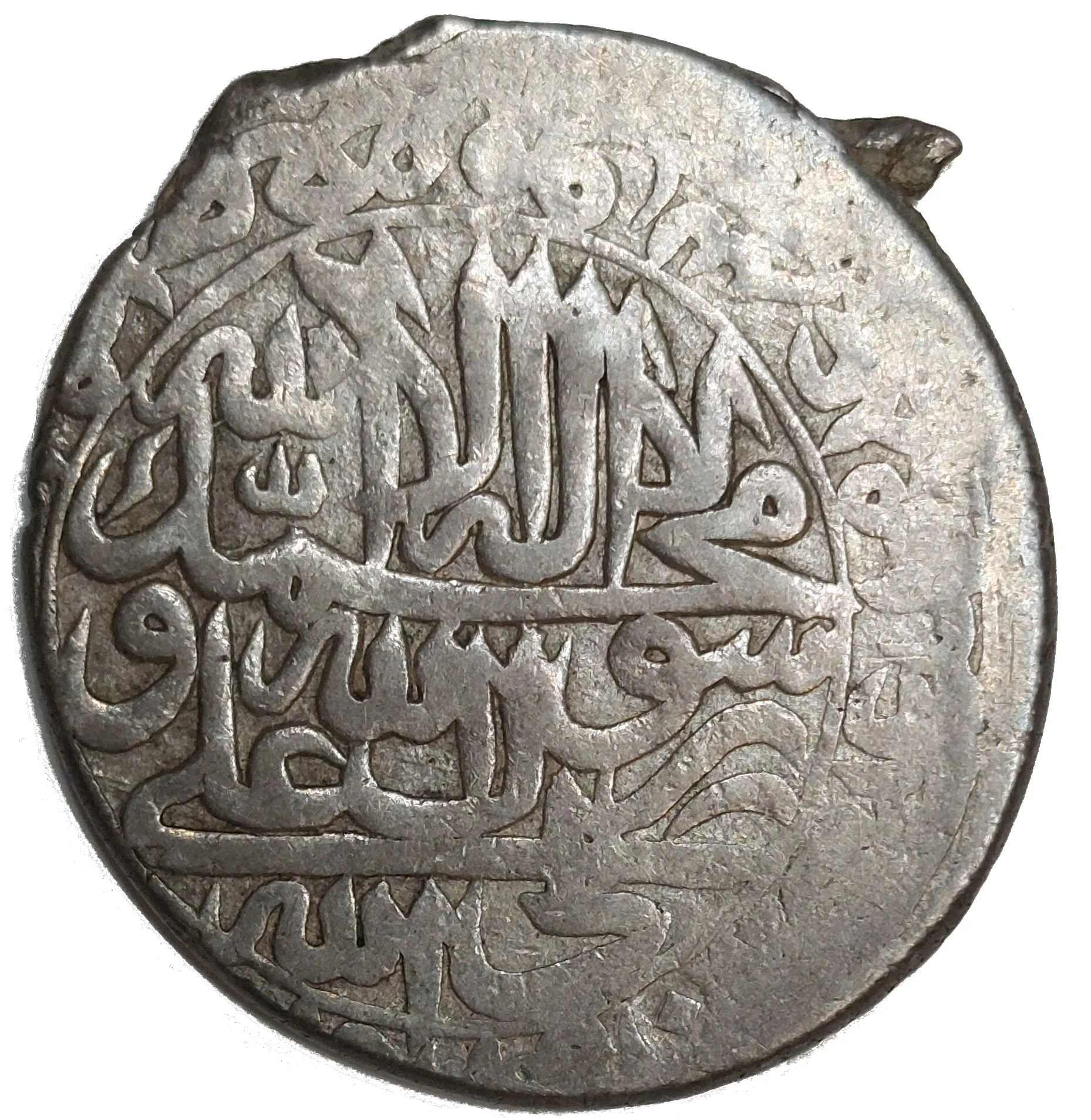
Obverse
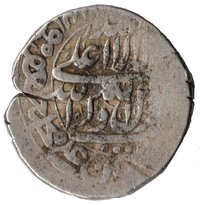
Description:
Central Shia Kalima inscription in three lines, encircled by a circular legend.
Inscription:
لا اله الا الله
محمد رسول الله
علی ولی الله
علی حسن حسین علی محمد جعفر موسی علی محمد علی حسن محمد
محمد رسول الله
علی ولی الله
علی حسن حسین علی محمد جعفر موسی علی محمد علی حسن محمد
Script: Persian (nastaliq)
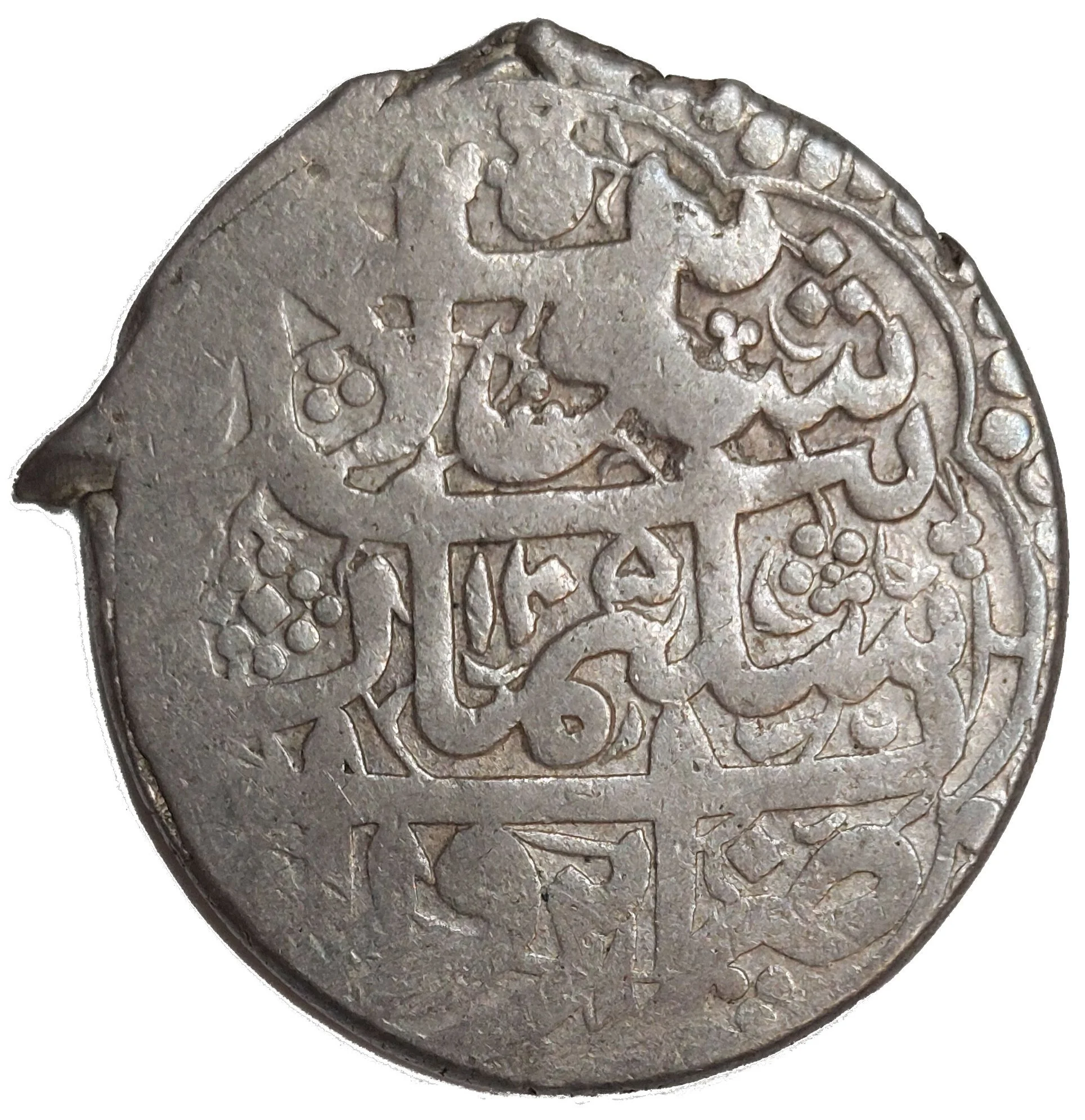
Reverse
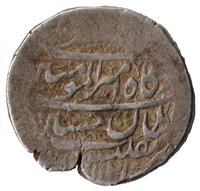
Description:
Mint and date within beaded border.
Inscription:
١١٠۵
بنده شاه ولایت سلیمان
ضرب ایروان
بنده شاه ولایت سلیمان
ضرب ایروان
Script: Persian (nastaliq)
Edge
Plain
Mints
| Name | Mark |
|---|---|
| Revan | ایروان |
Mintings
| Year | Mint Mark | Mintage | Quality | Collection |
|---|---|---|---|---|
| 1692 | — | — | ||
| 1693 | — | — | ||
| 1694 | — | — |
Historical background
In 1692 CE (1073 AH), the Safavid Empire under Shah Suleiman I was grappling with significant monetary instability, a chronic issue rooted in systemic economic weaknesses. The primary currency was the silver abbasi, but its value and reliability were under severe pressure. A critical and persistent problem was the severe shortage of precious metals, particularly silver, within Iran's mines. This forced the state to heavily rely on imported bullion, chiefly from the Ottoman Empire and Europe via trade. Any disruption to these flows—whether from political conflict, shifting trade routes, or hoarding—immediately crippled the mint's ability to produce sufficient, high-quality coinage.
The result was widespread debasement. To meet fiscal demands, especially for court expenditure and military costs, the royal mints frequently reduced the silver content in newly minted abbasis, mixing in more copper. This practice led to the circulation of underweight and inferior coins alongside older, purer ones, creating a chaotic multi-tiered currency system. The public, understandably, hoarded the older, full-weight coins (Gresham's Law in action), further removing good silver from circulation. This debasement triggered price inflation, eroded public trust in the currency, and created complexities in both domestic trade and international commerce, as merchants struggled to assess real values.
Furthermore, the currency system was fragmented. Alongside the royal mint in the capital, Isfahan, numerous provincial mints operated with varying degrees of quality control, leading to regional disparities in coinage. The situation was exacerbated by the government's often ineffective attempts at monetary reform, such as issuing decrees to fix exchange rates between old and new coins or to standardize weights—measures that typically failed in practice due to market forces and administrative corruption. Consequently, the currency situation in 1692 was one of entrenched crisis, characterized by scarcity, debasement, and confusion, reflecting the broader economic and administrative challenges facing the later Safavid state.
The result was widespread debasement. To meet fiscal demands, especially for court expenditure and military costs, the royal mints frequently reduced the silver content in newly minted abbasis, mixing in more copper. This practice led to the circulation of underweight and inferior coins alongside older, purer ones, creating a chaotic multi-tiered currency system. The public, understandably, hoarded the older, full-weight coins (Gresham's Law in action), further removing good silver from circulation. This debasement triggered price inflation, eroded public trust in the currency, and created complexities in both domestic trade and international commerce, as merchants struggled to assess real values.
Furthermore, the currency system was fragmented. Alongside the royal mint in the capital, Isfahan, numerous provincial mints operated with varying degrees of quality control, leading to regional disparities in coinage. The situation was exacerbated by the government's often ineffective attempts at monetary reform, such as issuing decrees to fix exchange rates between old and new coins or to standardize weights—measures that typically failed in practice due to market forces and administrative corruption. Consequently, the currency situation in 1692 was one of entrenched crisis, characterized by scarcity, debasement, and confusion, reflecting the broader economic and administrative challenges facing the later Safavid state.
✨ Legendary